
You followed the recipe exactly. You used the same ingredients. You even watched the YouTube video three times. But when you sat down to eat, it tasted like a polite imitation of the restaurant dish that inspired you — not the real thing. That gap between what you made and what you ate at the restaurant is real, and it has nothing to do with your talent or your equipment.
Chefs aren’t cooking with secret ingredients unavailable to you. They’re applying a handful of specific habits — some so automatic they don’t think about them anymore — that stack up into a completely different result. Every single one of them is something you can start doing tonight.
Here are the seven techniques that separate restaurant food from home cooking, along with the exact action that closes each gap.
1. They Season at Every Single Step (Not Just at the End)
The most common home-cook habit is to taste the finished dish and reach for the salt. Chefs do the opposite: they season at every transition. Salt goes into the pan before the oil, onto the protein before it hits the heat, into the pasta water before the pasta, and into the sauce as it reduces. Each addition builds a layer of flavor into the food itself, not onto the surface.
When you only season at the end, you’re adding salinity — a sharp, surface-level saltiness. When you season throughout, you’re building depth. The food tastes more like itself, not saltier. A perfectly seasoned piece of chicken shouldn’t taste salty; it should taste like the best version of chicken.
The action: Add a small pinch every time you add a new ingredient to the pan. It takes three seconds and changes everything.
2. They Use Way More Butter Than You Think
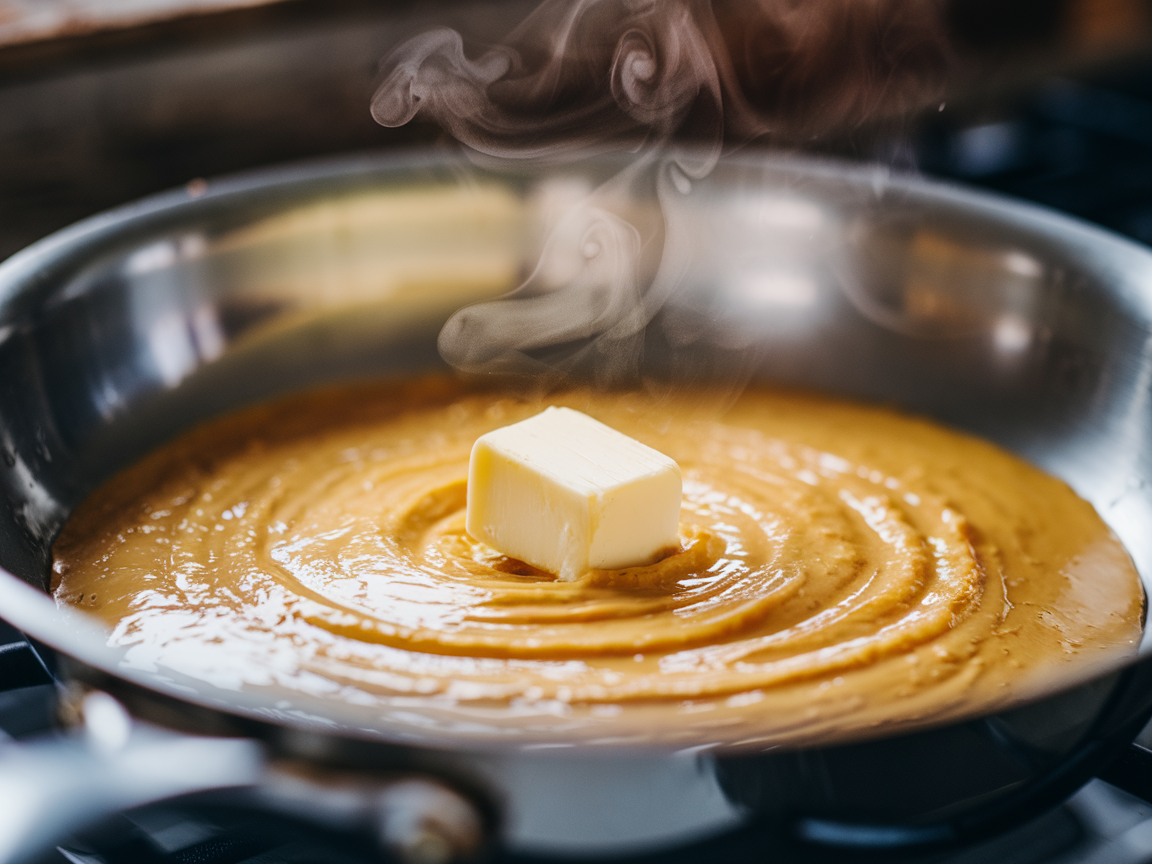
Butter is the most underused ingredient in the home kitchen and the most overused in every professional one. There’s a reason restaurant sauces taste glossy and rich in a way yours don’t: a technique called monter au beurre — finishing a sauce by swirling in cold butter off the heat. The cold butter emulsifies into the sauce, giving it body, sheen, and a rounded richness that can’t be replicated any other way.
The ratio most home cooks miss: roughly one tablespoon of cold butter per portion, added after you pull the pan off heat, swirled in a circular motion until it melts into the sauce. Do it while the pan is too hot and the butter breaks, turning greasy. Do it right and the sauce transforms in 30 seconds.
This applies to pan sauces, pasta, risotto, and roasted vegetables. You don’t need to use butter in every dish — but knowing when and how to finish with it is one of the most transferable skills from a professional kitchen.
The action: Next time you make a pan sauce or pasta, pull the pan off heat and swirl in one tablespoon of cold, cubed butter. Notice the difference immediately.
3. They Use the Brown Bits in the Pan (You’re Rinsing Away the Best Part)
Here’s the moment that separates most home cooks from restaurant results: after searing a steak or browning chicken, you look at the pan and see a layer of dark, sticky residue stuck to the bottom. If your instinct is to call that burned and rinse it out, you’re throwing away the best part of your meal.
That residue is called fond — concentrated proteins and caramelized sugars from the food you just cooked. It’s pure flavor. Professional cooks build entire sauces from it. The technique is deglazing: adding a liquid (wine, stock, even water) to the hot pan and scraping the fond loose with a wooden spoon. It dissolves into the liquid in about 30 seconds and becomes the base of a pan sauce that tastes like it took hours.
Almost no competing cooking guide teaches this properly, which is why so many home cooks produce sauces from a separate pot while all the real flavor sits in the pan they’re about to wash.
The action: After searing any protein, don’t touch the fond. Add ¼ cup of wine or stock, scrape the bottom, and let it reduce by half. That’s your sauce. Season it, finish with butter (see above), done.
4. Their Heat Is Higher Than Yours
Restaurant burners run at 25,000–30,000 BTU. The average home stove tops out at 7,000–12,000. That gap is significant: it’s the difference between a deep, crackling sear that develops in 2 minutes and a pale, steaming piece of protein that takes 6 minutes and never really browns. The Maillard reaction — the browning process that creates hundreds of new flavor compounds — requires sustained high heat at the surface of the food. Lower heat gives you gray meat instead of a crust.
You can’t upgrade your burners without a renovation. But you can work around the gap with equipment and technique. Cast iron retains heat far better than thin stainless or nonstick pans — once it’s hot, it stays hot when cold protein hits it. The other half is patience: preheat your pan for longer than feels comfortable, at least 3–4 minutes over medium-high before the oil goes in.
The action: For anything you’re trying to sear — chicken, steak, fish — use your cast iron skillet, preheated for a full 4 minutes before oil, and don’t move the food for the first 2–3 minutes.
5. They Always Rest the Meat
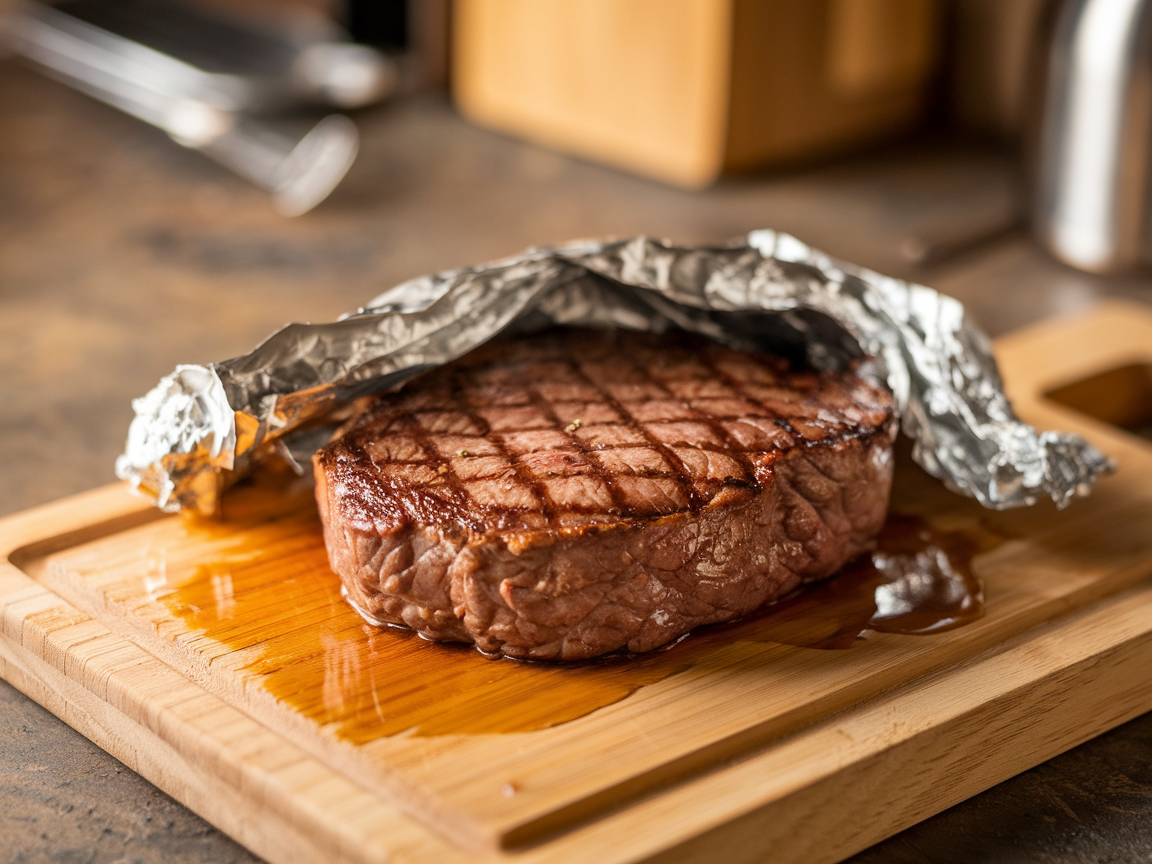
Every professional kitchen has a resting rack. Every chef sets a timer after protein leaves the heat. Most home cooks cut into the chicken the moment it hits the plate and wonder why the juices run everywhere. That pool of liquid on your cutting board is flavor and moisture that should have stayed in the meat — and it would have, given 3–5 minutes.
When protein is cooking, the muscle fibers contract and push moisture toward the center. Resting gives those fibers time to relax and reabsorb the liquid. A chicken breast rested for 5 minutes under loose foil stays juicy throughout; the same breast cut immediately loses 25–30% of its moisture to the board. That’s the difference between moist and dry, between restaurant chicken and home chicken.
The action: Set a timer every single time you pull protein off heat. Even a 3-minute rest makes a measurable difference for chicken breasts. Steaks need 5–8 minutes. A whole roasted chicken needs 15.
6. They Finish with Acid
This is the least-known move on this list, and it has an outsized effect. A small amount of acid — a squeeze of fresh lemon, a splash of white wine vinegar, a dash of sherry vinegar — added at the very end of cooking doesn’t make food taste sour. It makes every other flavor in the dish taste brighter, cleaner, and more present. Acid is a flavor amplifier, not a flavor itself.
Think about why restaurant salads taste so vivid compared to home versions. It’s not the lettuce. It’s that the dressing has a precise acid-to-fat ratio that wakes up every element. The same principle applies to soups, stews, roasted vegetables, and pan sauces. A finished dish that tastes flat often just needs a few drops of acidity to come alive, not more salt.
The action: Before you plate any savory dish, taste it and add a small squeeze of lemon or a few drops of vinegar. Taste again. The before-and-after will make you do this forever.
7. They Use Homemade or High-Quality Stock
Most restaurant sauces, risottos, braises, and soups are built on real stock — liquid made from roasting bones, vegetables, and aromatics for hours. Real stock has a richness, body (from gelatin in the bones), and a clean savory depth that carton stock can’t replicate. Carton stock tends to be over-salted and one-dimensional, which is why dishes built on it taste flat and salty rather than rich and complex.
You don’t need to make stock every week. A batch of simple chicken stock takes about 2 hours of mostly unattended cooking, freezes beautifully in ice cube trays, and lasts 3 months in the freezer. Those little stock cubes let you add a tablespoon of real flavor to a weeknight pan sauce without committing to a project.
If homemade isn’t realistic, look for low-sodium, gelatinous (they shake slightly in the carton) stocks from quality brands. The gelatin content is what gives body to your sauces.
The action: Make one batch of chicken stock this month. Freeze it in 2-tablespoon portions. Pull one out every time you deglaze a pan or make a sauce, and notice how much rounder the result tastes.
Frequently Asked Questions
Do restaurants use MSG to make food taste better?
Some do, yes — and there’s nothing wrong with it. MSG is glutamate, the same compound that makes parmesan, mushrooms, and soy sauce taste savory. It’s safe and effective. But the techniques on this list — layered seasoning, fond, butter finishing, acid — are far more responsible for the flavor gap than MSG. You’ll close most of the gap without it.
Why do restaurant steaks taste better than homemade?
Three things: higher heat for a better sear, proper resting before cutting, and finishing with butter. Restaurant steaks are often seared in cast iron or on a ripping-hot flat-top, then basted with butter and herbs, and always rested before plating. The combination of deep crust, rested juices, and butter basting is almost impossible to replicate without those techniques working together.
How do chefs use salt differently than home cooks?
Chefs season at every stage of cooking, not just at the end. They also tend to use kosher salt (larger flakes, easier to control with fingers) rather than fine table salt, and they season from higher up so it distributes evenly. The amount isn’t necessarily more — it’s the timing and distribution that changes the result.
Why does restaurant pasta taste better than homemade?
Two reasons most home cooks miss: properly salted pasta water (it should taste like mild seawater — about 1 tablespoon of salt per 4 quarts) and finishing the pasta in the sauce rather than draining it and plating separately. When you toss pasta in the sauce with a splash of starchy pasta water, the sauce emulsifies and clings to every strand instead of pooling at the bottom of the bowl.
Can I recreate restaurant food at home without professional equipment?
Yes, and that’s exactly what this list is about. The techniques here require nothing beyond a cast iron skillet, a wooden spoon, butter, lemons, and a timer. The gap between restaurant and home food is almost entirely technique, not equipment. A cheap cast iron skillet performs better for searing than an expensive nonstick pan if you use it correctly.
Your Restaurant-at-Home Cheat Sheet
You don’t need to apply all seven of these tonight. Pick two, make them habits, and then add more. The chefs who cook the food you love didn’t learn everything at once — they built these habits one by one until they were automatic.
- Season at every stage, not just at the end
- Finish pan sauces with one tablespoon of cold butter, swirled off heat
- Never discard fond — deglaze it with ¼ cup liquid and make it your sauce
- Preheat your cast iron for 4 minutes before adding oil
- Set a timer when protein leaves heat: 3 min for chicken breast, 5-8 min for steak
- Add a squeeze of lemon or a dash of vinegar just before plating
- Build sauces on real stock, even if it’s frozen cubes from a batch you made last month
Start with the fond and the butter finish. Both take under a minute, require no new ingredients, and will immediately make you wonder why no one told you sooner. When you’re ready to practice these techniques on an actual recipe, browse the chef secrets and pro tips collection for dishes designed around exactly these methods — and check the cooking tips category for deeper technique guides on everything from knife skills to sauce-making.