
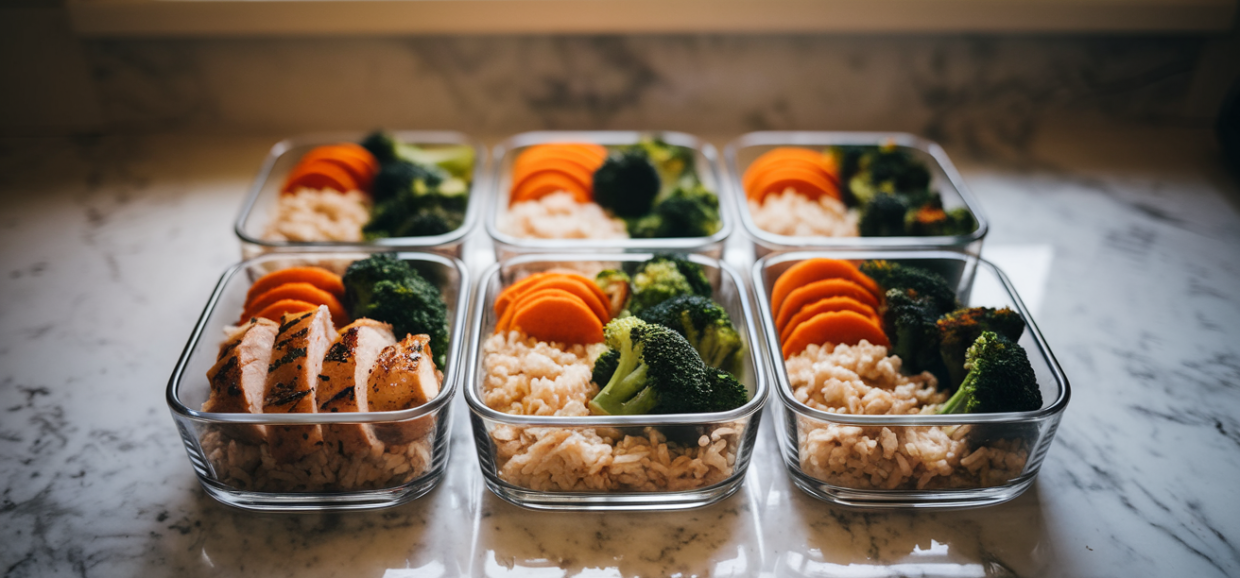
It’s 6:30 on a Tuesday evening. You just got home, you’re tired, and when you open the fridge there’s nothing ready. You stare at a package of raw chicken, a bag of rice, and three half-used condiments. Twenty minutes later you’re ordering delivery again — and feeling guilty about it.
That moment — not weight loss, not Instagram, not a wellness goal — is the real reason to learn how to meal prep for the week as a beginner. When dinner is already in the fridge, your exhausted Tuesday brain doesn’t have to negotiate with itself. You just eat.
This guide gives you one simple, repeatable system: the 2-2-3 framework. It takes about 90 minutes on Sunday, creates four to five days of varied meals, and requires no spreadsheets, no special equipment, and no cooking experience beyond the basics.
Why Meal Prep Actually Works (It’s Not About Willpower)
Researchers have found that the average person makes over 200 food-related decisions every day — what to buy, what to prep, what to eat, when to eat it. By dinnertime, that mental bandwidth is largely spent. This is called decision fatigue, and it’s why you keep choosing the path of least resistance at 6 PM even when you genuinely planned to cook.
Meal prep solves this in a way that willpower never can. When you open your fridge and dinner is already assembled, there’s no decision to make. The mental work happened on Sunday when you were rested and had time. Tuesday evening you just reheat and eat.
You also don’t need to be a skilled cook to do this. The system in this article uses four techniques: roasting, boiling, sautéing, and storing. That’s it. If you can manage those, you can meal prep.
The Biggest Beginner Mistake: Prepping Full Meals
Most people start meal prep by portioning out five identical containers — same protein, same grain, same vegetable, same sauce — lined up in the fridge like soldiers. It works for about two days. By Wednesday the thought of opening another container of that exact chicken and rice makes you miserable, and the system falls apart.
The fix is to stop thinking in meals and start thinking in components. Cook your proteins, grains, and vegetables separately, with simple seasoning, and combine them differently throughout the week. The components stay the same. What you do with them changes every day.
This single shift — ingredients instead of meals — is what separates the people who meal prep for years from the people who try it once and quit. The variety isn’t in what you cook. It’s in how you assemble it.
The 2-2-3 System: Your First Beginner Framework
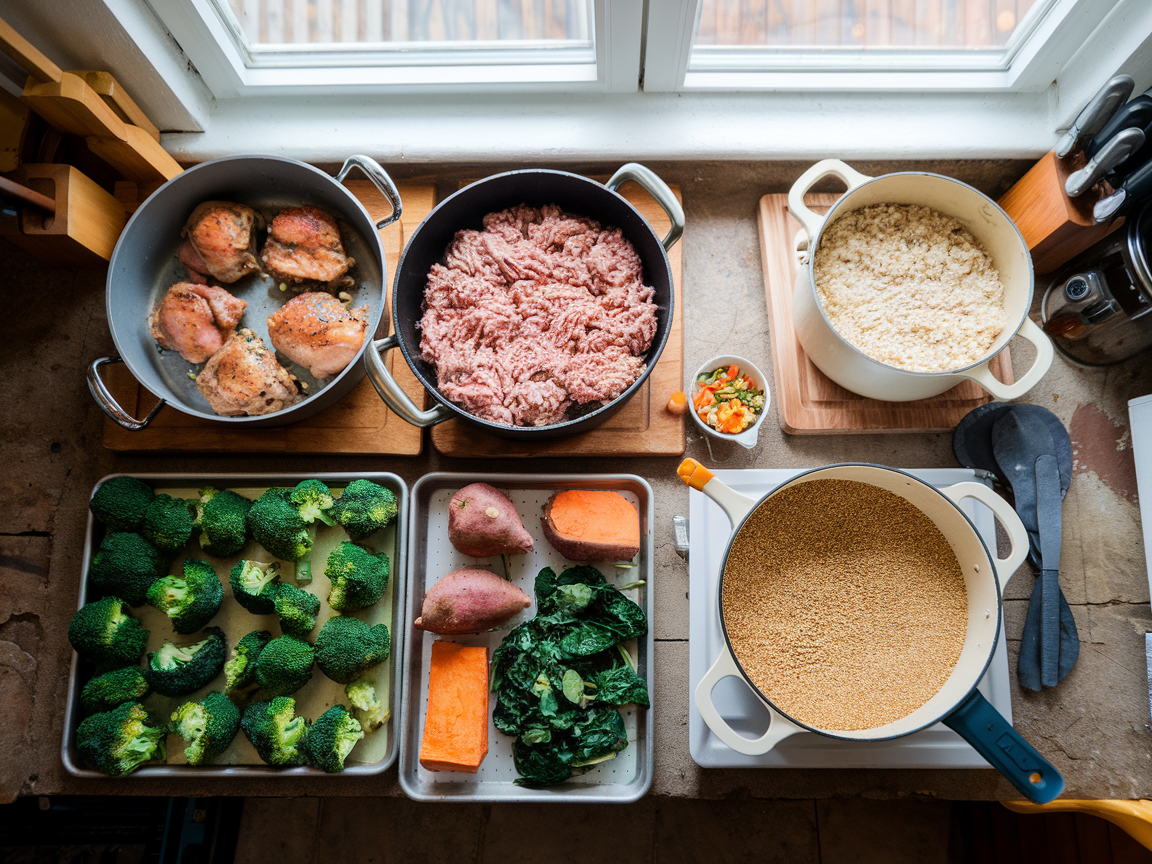
Every Sunday, prepare exactly this:
- 2 proteins — cooked simply, with just salt, pepper, and maybe garlic
- 2 grains — one plain, one with a little more seasoning if you like
- 3 vegetables — roasted or sautéed, minimal seasoning so they work in multiple combinations
A good starting combination: chicken thighs and ground turkey for proteins; white rice and quinoa for grains; roasted broccoli, roasted sweet potato, and sautéed spinach for vegetables.
From those seven components, you can build 10 to 15 different meal combinations over four days just by switching what you pair together and changing the sauce. Monday might be chicken over rice with broccoli and soy-ginger dressing. Tuesday might be ground turkey over quinoa with sweet potato and buffalo sauce. Same ingredients. Completely different meal.
The key is keeping the seasoning on each component neutral enough that it plays well with multiple sauces. A chicken thigh cooked with salt and pepper goes with everything. One cooked with a strong marinade only goes with one thing.
Step 1: Plan Before You Shop (15 Minutes)
Before Sunday, spend 15 minutes choosing your 2-2-3 and writing a shopping list. This is the step most people skip, and it’s the reason their prep sessions feel chaotic.
Choose your proteins based on what’s on sale or what you’ve been eating lately. Check your fridge for any grains or vegetables you already have — use those first to reduce waste. Write the list down. Then shop with it.
Also stock your prep staples if you’re running low: olive oil, kosher salt, black pepper, garlic, lemons, and two or three sauces or dressings you enjoy. The sauces are what make the same components feel different each day, so having variety here matters more than variety in the components themselves.
Step 2: Your 90-Minute Sunday Prep Session
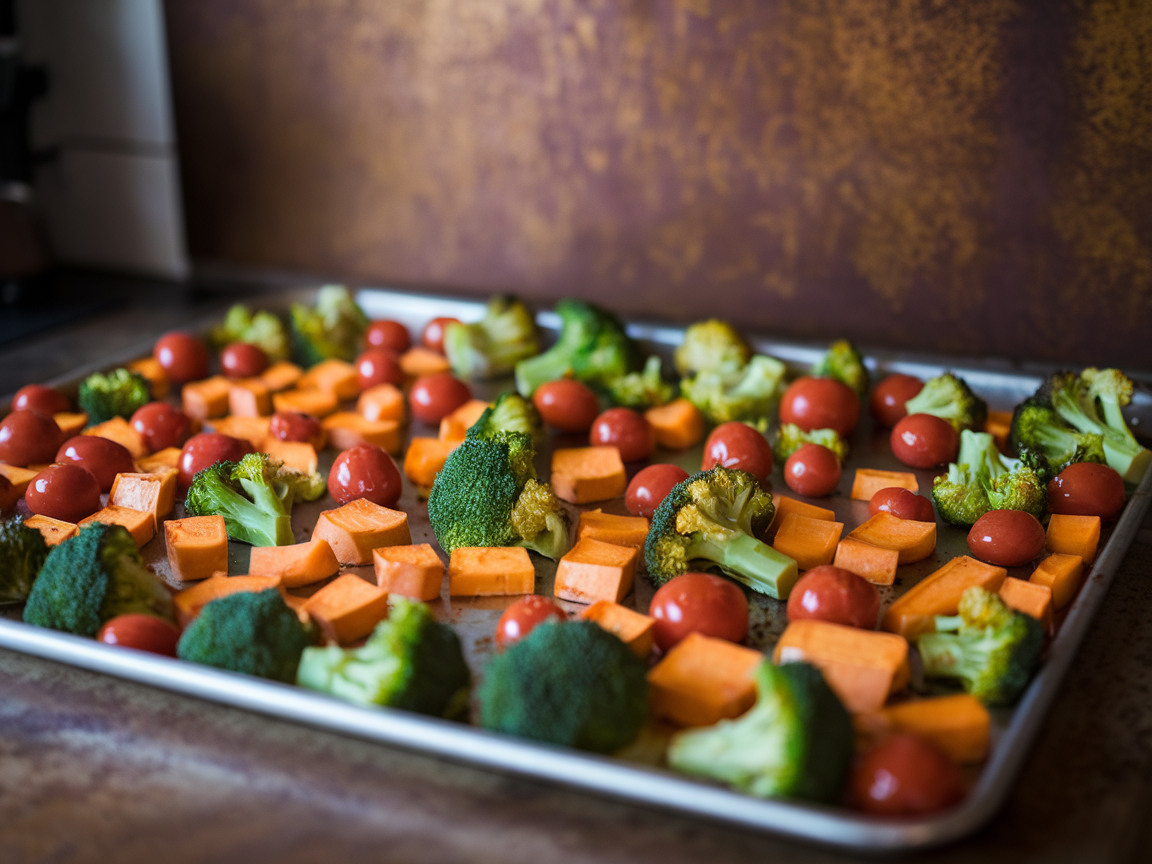
Start with whatever takes longest. Preheat your oven to 400°F and put your grains on the stovetop first — rice takes about 18 minutes, quinoa about 15. While those are going, chop your vegetables and season your proteins.
Sheet pan your harder vegetables first (sweet potato, broccoli) since they take 20 to 25 minutes at 400°F. While the first pan roasts, cook your proteins on the stovetop. Tender vegetables like spinach take only 3 to 4 minutes in a pan and can go last.
Here’s a rough order that works well:
- Oven on, grains on stovetop (minutes 0–5)
- Chop all vegetables, season both proteins (minutes 5–20)
- Sheet pan 1 in oven: sweet potato (minutes 20–45)
- Cook proteins on stovetop while sweet potato roasts (minutes 25–45)
- Sheet pan 2 in oven: broccoli (minutes 45–65)
- Sauté spinach, finish any remaining items (minutes 65–75)
- Cool everything before storing (minutes 75–90)
Keep the seasoning minimal and deliberate. Salt and pepper on the proteins. A drizzle of olive oil and salt on the vegetables. You want them to taste good on their own, but neutral enough to absorb whatever sauce you add at mealtime.
Do not skip the cooling step. Storing food that’s still warm creates condensation inside your containers, which makes things soggy and speeds up bacterial growth. Give everything at least 20 to 30 minutes to come to room temperature before sealing.
Step 3: Store It Right So It Actually Lasts
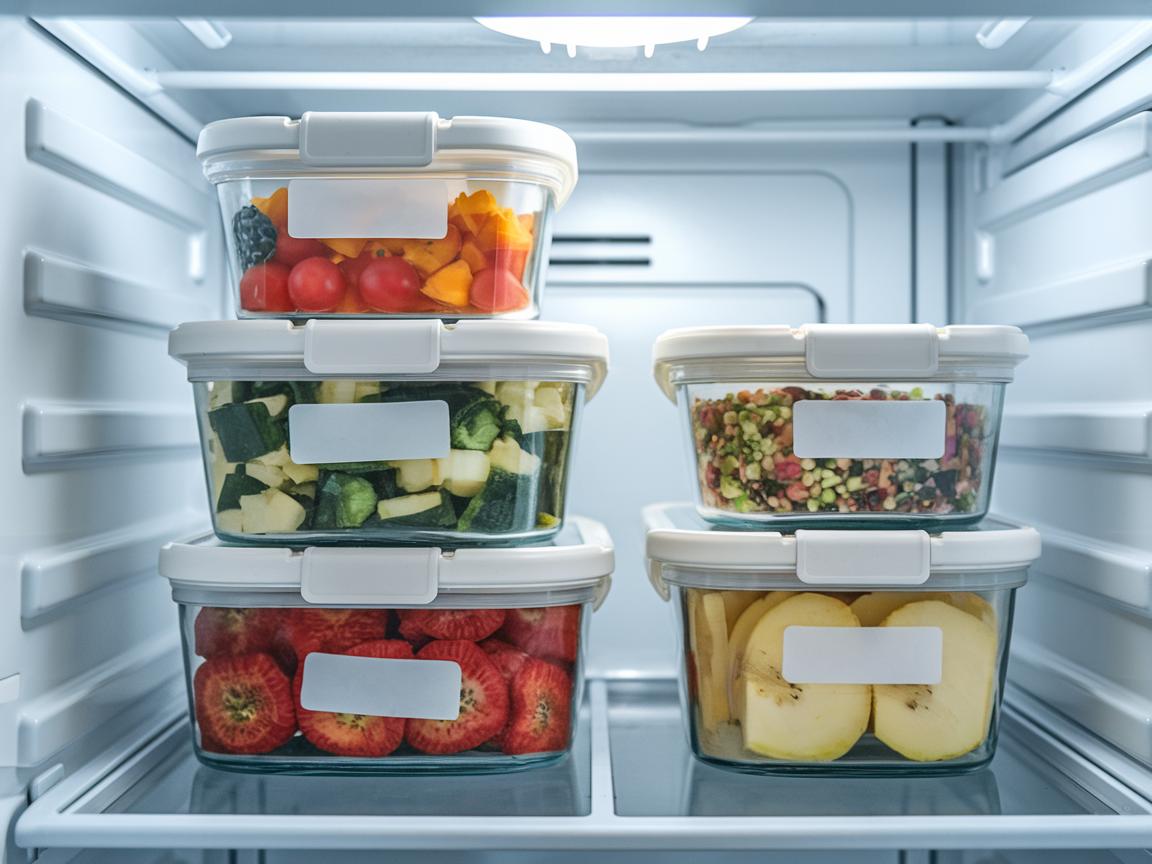
Follow the 4-day fridge rule: most cooked proteins and grains are safe and good for four days refrigerated. That covers Monday through Thursday without any mid-week cooking. If you want Friday covered too, do a small Wednesday refresh — just one protein, 10 minutes.
For containers, airtight glass is the best option for anything you’ll reheat. Plastic works fine for cold components like spinach. Label each container with a piece of tape and a date — it sounds fussy, but after four days you’ll forget which protein went in first.
Store sauces and dressings in small jars, separate from everything else. This is important: the sauce is what makes a meal feel fresh. When it’s mixed into your container already, everything turns soggy and the meal tastes dull. Add the sauce when you eat, not when you store.
For longer storage, cooked grains and proteins freeze well in zip-lock bags or freezer containers. Most roasted vegetables do not — they turn mushy when frozen and thawed. If you want to freeze ahead, stick to proteins and grains only.
How to Mix and Match Through the Week
Once your components are in the fridge, the week runs itself. A quick look at how this plays out with the chicken-turkey, rice-quinoa, broccoli-sweet potato-spinach combination:
- Monday: chicken thighs + white rice + broccoli + soy-ginger sauce
- Tuesday: ground turkey + quinoa + roasted sweet potato + buffalo sauce
- Wednesday: chicken thighs + quinoa + spinach + lemon-tahini dressing
- Thursday: ground turkey + white rice + broccoli + sweet chili sauce
Same seven components. Four completely different meals. The sauce does all the heavy lifting.
Keep two or three sauces on rotation: something soy-based, something creamy or tahini-based, and something bright and acidic like a citrus vinaigrette. That variety covers most flavor profiles and pairs with almost every combination of protein, grain, and vegetable.
Frequently Asked Questions
How long does meal prep last in the fridge?
Most cooked proteins and grains last 4 days refrigerated in airtight containers. Cooked vegetables can vary — harder roasted vegetables like sweet potato hold up well for 4 days, while leafy greens and delicate vegetables are best eaten within 2 to 3 days. When in doubt, use the sniff test and look for any signs of discoloration or sliminess.
What’s the best day to meal prep for the week?
Sunday works for most people because it’s before the workweek starts and stores are fully stocked. If Sunday doesn’t work for your schedule, any day when you have 90 to 120 uninterrupted minutes is fine. Some people do Saturday evening, others do two smaller sessions — a bigger one on Sunday and a small refresh on Wednesday.
What containers should I use for meal prep?
Glass airtight containers are the best choice for anything you’ll reheat — they don’t absorb odors, they don’t stain, and they go straight from fridge to microwave. BPA-free plastic containers work well for cold items or if you’re packing lunch to carry. Avoid containers without a tight-fitting lid, as food stored without a proper seal dries out faster and absorbs fridge odors.
How do I meal prep without eating the same thing every day?
The 2-2-3 component system is the answer. By cooking proteins, grains, and vegetables separately with neutral seasoning, you can mix and match freely all week. The sauce or dressing you add at mealtime is what changes the flavor profile — keep two or three different options in the fridge and your meals will feel genuinely varied even when the base components repeat.
Is it cheaper to meal prep than to buy food daily?
For most households, yes — significantly so. Buying ingredients in bulk for the week almost always costs less per meal than daily grocery runs, takeout, or delivery. A basic 2-2-3 prep for one person typically runs $25 to $40 in groceries and covers 10 to 15 meals. That’s $2 to $4 per meal, which is difficult to beat with any other approach.
Your First Meal Prep Shopping List
Ready to start? Here’s a simple first-week shopping list built around the 2-2-3 system.
Proteins (choose 2):
- 6 boneless chicken thighs or 2 large chicken breasts
- 1 lb ground turkey or ground beef
Grains (choose 2):
- 1 cup dry white rice (makes about 3 cups cooked)
- 1 cup dry quinoa (makes about 3 cups cooked)
Vegetables (choose 3):
- 1 large head broccoli, cut into florets
- 2 medium sweet potatoes, cubed
- 5 oz baby spinach
Prep staples: olive oil, kosher salt, black pepper, garlic powder, lemons
Sauces (pick 2–3): soy-ginger dressing, tahini dressing, buffalo sauce, or any store-bought dressing you enjoy
That’s your full week. For more ideas on what to cook with your prepped components, browse our meal prep recipes — they’re all designed to work with the 2-2-3 framework. And if you’re looking for healthy recipes that use simple ingredients, those pair well with this system too.
Start this Sunday. One 90-minute session. Seven components. See how much easier your week feels when Tuesday at 6:30 PM, dinner is already done.