
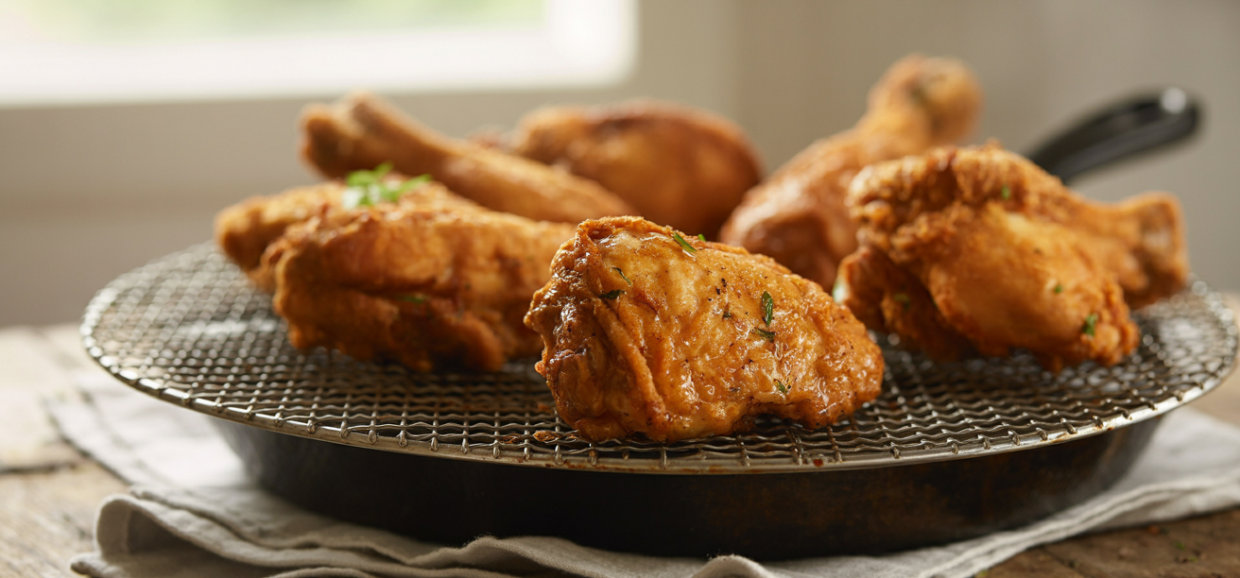
Fried chicken is one of those timeless comfort foods that can make or break a meal depending on one crucial decision most home cooks overlook: the oil you use. It’s tempting to grab whatever bottle is sitting on your counter, but the truth is that your choice of frying oil directly affects the flavor, crispiness, color, and even the healthiness of your finished chicken. Get it right, and you’ll pull golden, crackling pieces from the pan that taste like they came from a serious Southern kitchen. Get it wrong, and you’re dealing with greasy, pale, or oddly-flavored chicken that doesn’t do justice to all that prep work.
As an Amazon Associate, this site earns from qualifying purchases. Some links on this page are affiliate links.
We’re breaking down everything you need to know about choosing the best oil for frying chicken — from smoke points to flavor profiles to cost considerations — so you can fry with complete confidence every single time. Whether you’re doing a classic Southern pan-fry, deep-frying a whole batch for a crowd, or even air-frying with a light oil coating, this guide has you covered. Let’s get into the seven most important things you need to understand about frying oils before your next batch of chicken hits the pan.
Step 1: Understand Smoke Points and Why They’re Non-Negotiable
The smoke point of an oil is the temperature at which it stops shimmering and starts smoking — and that moment is a big deal. Once an oil hits its smoke point, it begins to break down chemically, releasing free radicals, acrolein (a harsh-smelling compound), and off-flavors that will absolutely transfer to your chicken. For frying chicken, you need to maintain an oil temperature between 325°F and 375°F throughout the cook, which means your oil must have a smoke point comfortably above that range.
Aim for oils with smoke points of at least 400°F to give yourself a solid safety buffer. When you drop cold chicken into hot oil, the temperature dips briefly, then climbs back up — you need an oil that can handle those fluctuations without breaking down. Oils with low smoke points like extra-virgin olive oil (around 325–375°F) are borderline dangerous for deep frying and will give your chicken a bitter, acrid flavor. This single factor eliminates a surprising number of popular kitchen oils from the frying equation.
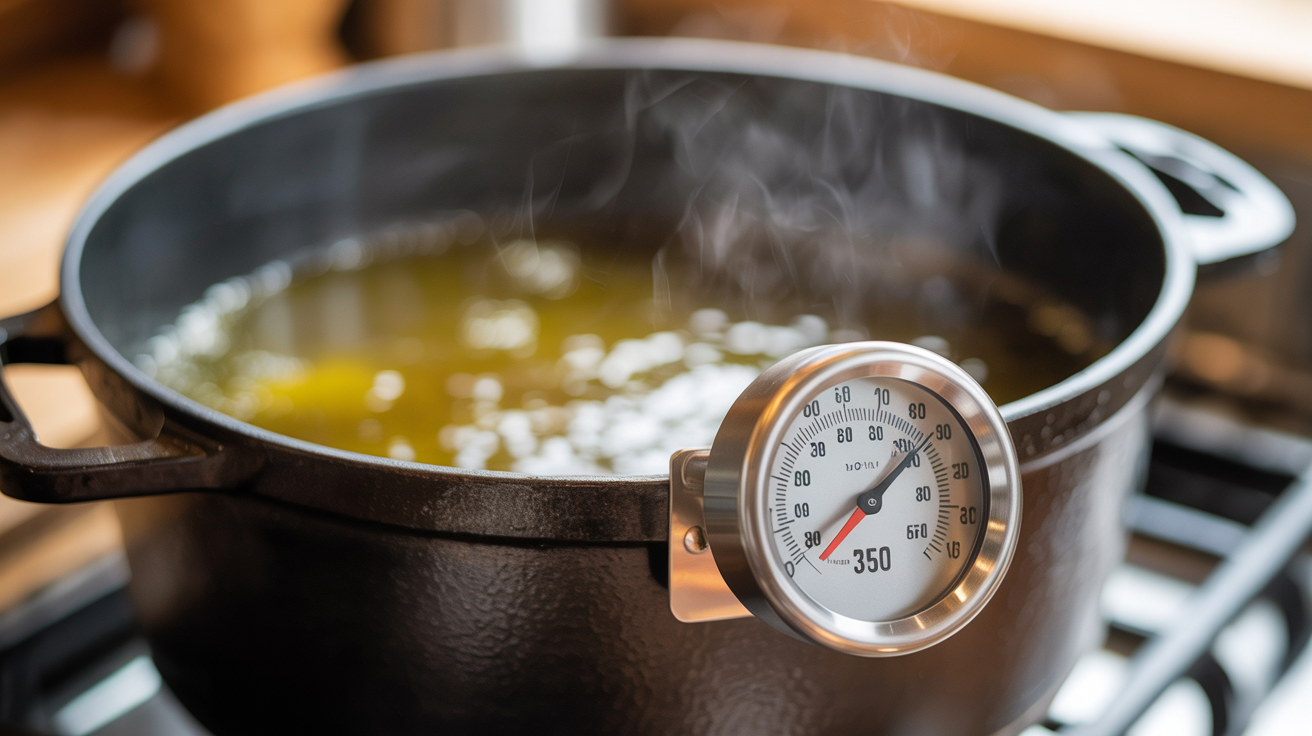
Use a reliable clip-on thermometer like a Polder or ThermoWorks model to monitor your oil temperature continuously. Never guess — even 25 degrees of variance can mean the difference between crispy, cooked-through chicken and greasy, undercooked disaster. Staying in the 350°F sweet spot for most cuts gives you the best combination of crispy exterior and fully cooked interior.
Step 2: Choose Refined Peanut Oil for the Gold Standard Result
If you want the absolute best frying oil for chicken, refined peanut oil is the answer that most professional fry cooks and Southern grandmothers would agree on without hesitation. It has a smoke point of around 450°F, which gives you a huge buffer above your working temperature. It’s exceptionally stable at high heat, meaning it doesn’t break down or go rancid quickly even after multiple uses — which matters a lot when you’re frying large batches.
The flavor profile of refined peanut oil is remarkably neutral, which allows the seasoned coating on your chicken to be the star of the show. This is distinct from unrefined or roasted peanut oil, which has a strong nutty flavor — refined peanut oil is processed to remove most of those flavor compounds. Crisco, Planters, and Lou Ana are all widely available refined peanut oil brands that perform beautifully. Many major fast food chains and dedicated fried chicken restaurants use peanut oil for exactly these reasons.
One important caveat: peanut oil is a top-8 allergen, so if you’re cooking for guests, always ask about allergies first. The good news is that highly refined peanut oil has the proteins largely removed during processing, meaning many people with mild peanut sensitivities can tolerate it — but anyone with a severe peanut allergy should avoid it entirely. For personal use at home, it’s hands-down one of the best investments you can make for your frying game.
Step 3: Use Vegetable Oil or Canola Oil for an Affordable, Reliable Option
If peanut oil isn’t accessible or you’re watching the budget, refined vegetable oil (typically a blend of soybean, corn, and canola oils) and pure canola oil are excellent alternatives that deliver genuinely great results. Both have smoke points in the 400–450°F range, are completely neutral in flavor, and are widely available at every grocery store for a fraction of the cost of peanut oil. A gallon of Wesson vegetable oil or store-brand canola is often all you need for a full deep-fry session.
Canola oil has the added benefit of being one of the lowest in saturated fat among common frying oils, with a favorable ratio of monounsaturated fats. This doesn’t make fried chicken health food, obviously, but if you’re going to fry regularly, canola is a reasonable choice from a nutritional standpoint. It also has a very light texture that produces an incredibly crispy coating without leaving a heavy, greasy mouthfeel on the finished chicken.
For pan-frying (using just 1–2 inches of oil in a cast iron skillet rather than fully submerging the chicken), vegetable or canola oil works beautifully and is incredibly economical. You can stretch a bottle across multiple cooking sessions if you strain and store it properly between uses. This is the everyday workhorse option for home cooks who fry chicken regularly.
Step 4: Try Lard or Tallow for Unbeatable Old-School Flavor
If you want to understand why your grandmother’s fried chicken tasted completely different from anything you can make today, the answer is almost certainly lard. Rendered pork fat (lard) and beef tallow were the traditional frying fats before vegetable oils became cheap and ubiquitous in the mid-20th century — and they produce a fried chicken that is genuinely in a different flavor category. The chicken skin becomes extraordinarily crispy, almost shattering when you bite into it, with a rich, savory depth that neutral vegetable oils simply cannot replicate.
Lard has a smoke point of around 370–400°F, which is workable for frying if you monitor your temperature carefully. Beef tallow runs slightly higher at around 400–420°F. Both are shelf-stable, especially when refrigerated, and can be reused multiple times. You can find leaf lard (the highest quality, most neutral-tasting lard) at butcher shops, farmers markets, or online through purveyors like Epic or Fatworks. It’s more expensive than vegetable oil but produces results that justify every penny.
The one mental hurdle most modern cooks have to get over is the saturated fat content — lard is roughly 40% saturated fat. But context matters: you’re not drinking the frying oil, and the chicken absorbs far less fat during frying than people assume when the oil temperature is properly maintained. If you fry chicken occasionally and want the most authentic, incredible result possible, lard is absolutely worth trying at least once.
Step 5: Consider Avocado Oil for High-Heat and Health-Conscious Frying
Avocado oil has become increasingly popular in home kitchens over the last several years, and for good reason — refined avocado oil boasts one of the highest smoke points of any cooking oil at around 500–520°F, making it practically bulletproof for high-heat frying. It also has a favorable fat composition (mostly monounsaturated), a clean, very mild flavor that doesn’t compete with your seasoning, and it remains stable for a long time without going rancid.
The primary drawback of avocado oil is cost. A quality bottle of refined avocado oil (look for brands like Chosen Foods or Primal Kitchen) costs significantly more per ounce than vegetable or canola oil, which makes it less practical for deep-frying large volumes where you need a gallon or more of oil. However, for pan-frying chicken thighs or cutlets in a skillet where you’re only using a cup or two of oil, avocado oil is an excellent choice that gives you high heat tolerance and a clean finish.
If health is your primary concern and budget isn’t a major constraint, avocado oil is genuinely one of the best choices available. It’s particularly good for recipes where you want the chicken’s own flavor and your spice blend to come through clearly without any background oil flavor. It also cleans up nicely from the pan, which is a small but appreciated bonus.
Step 6: Know Which Oils to Absolutely Avoid
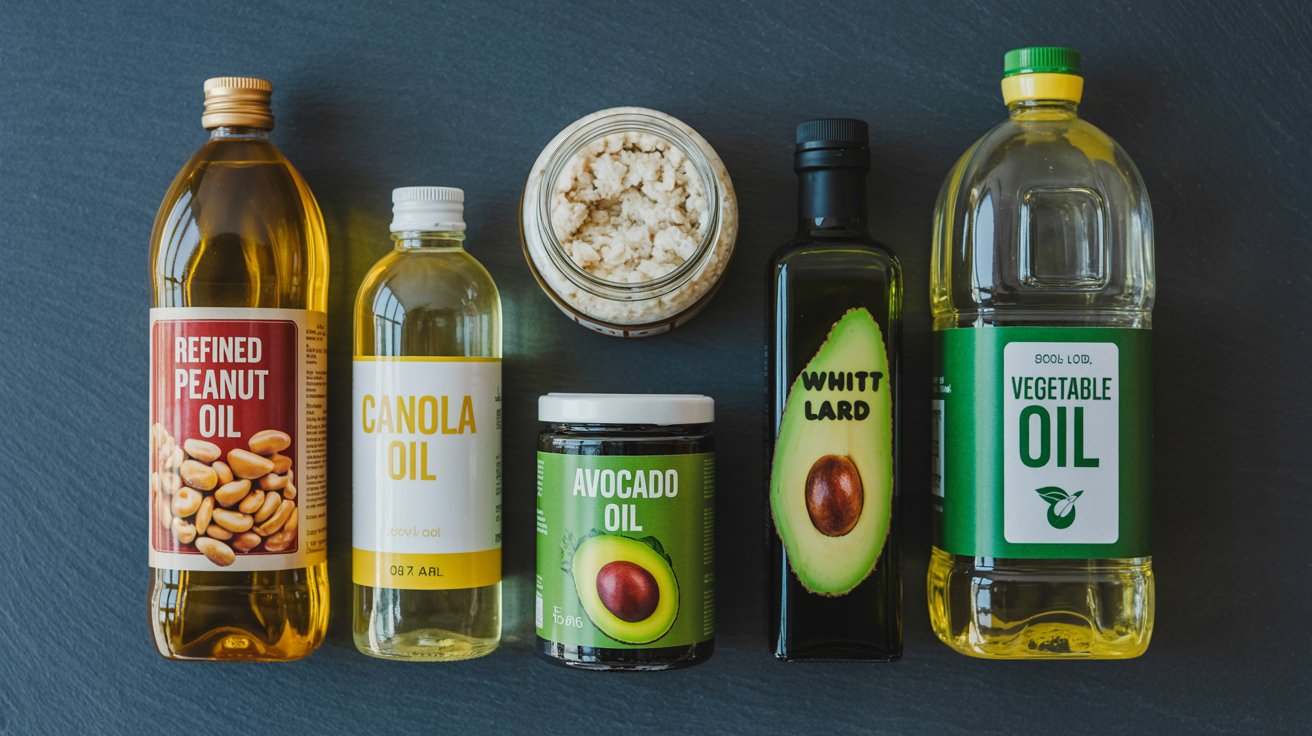
Understanding what not to use is just as important as knowing the best options. Extra-virgin olive oil is a common mistake — it has a smoke point of only 325–375°F and a bold flavor that will compete aggressively with your chicken’s seasoning. Unrefined coconut oil smokes at around 350°F and imparts a distinct coconut flavor that most people find odd on fried chicken. Butter and ghee (clarified butter) are wonderful for finishing chicken in a skillet but cannot sustain the temperatures needed for proper frying without burning.
Flaxseed oil, walnut oil, hemp oil, and other specialty oils marketed for their nutritional properties are completely unsuitable for frying — they have very low smoke points (often below 300°F) and are designed for raw or cold applications like salad dressings. Using them in a hot fryer would be expensive, dangerous, and would produce dreadful-tasting chicken. Sesame oil, while it has a moderate smoke point, has such a strong flavor that it would make your chicken taste like a stir-fry rather than Southern-style fried chicken.
Finally, any oil that has gone rancid — check for a crayon-like or paint-like smell — should never be used for frying. Rancid oil produces harmful compounds when heated and tastes absolutely terrible. Always store your frying oils in a cool, dark place and check their smell before using, especially if the bottle has been open for a while.
Step 7: Store, Filter, and Reuse Your Oil Properly to Maximize Value
Quality frying oil is an investment, and knowing how to extend its life will save you real money over time. After frying, let the oil cool completely to around 150°F (warm, but not dangerously hot), then pour it through a fine-mesh strainer or cheesecloth into a clean, airtight container. This removes the breading particles and chicken bits that would burn and turn your oil bitter during the next use. Store the strained oil in a cool, dark location — or in the refrigerator if you won’t use it again within a week or two.
Most quality oils can be safely reused 3–5 times for frying chicken before their quality degrades noticeably. Watch for signs that it’s time to discard: dark color, thick or foamy texture when heated, excessive smoking at normal frying temperatures, or an off smell. These are all signs of oil that has broken down past the point of usefulness. Never mix used frying oil with fresh oil, as the used oil will accelerate the degradation of the fresh batch.
To dispose of used cooking oil, let it solidify (if it does at room temperature), then seal it in its original container and put it in the trash. Many municipalities also have cooking oil recycling programs or drop-off locations where it gets converted to biodiesel — check your local waste management website. Never pour cooking oil down the drain, as it solidifies in pipes and contributes to serious plumbing and municipal sewer blockages.
Frequently Asked Questions
What is the healthiest oil for frying chicken?
Avocado oil and canola oil are both good choices if health is a priority. Both are high in monounsaturated fats, have neutral flavors, and maintain stability at frying temperatures. Avocado oil has a particularly high smoke point (around 500°F) and favorable nutritional profile, though it costs significantly more than canola oil.
Can I use olive oil to fry chicken?
Regular (not extra-virgin) olive oil with a smoke point of around 465°F can technically work for pan-frying at moderate temperatures. Extra-virgin olive oil, however, has too low a smoke point and too strong a flavor for frying chicken. For deep-frying, stick to a neutral oil with a higher smoke point.
How much oil do I need to fry chicken?
For deep-frying, you need enough oil to fully submerge the chicken pieces — typically 3–4 quarts in a Dutch oven or deep pot. For pan-frying in a cast iron skillet, 1–2 inches of oil (roughly 2–3 cups) is sufficient, and you’ll flip the chicken halfway through cooking.
What temperature should the oil be for frying chicken?
The ideal frying temperature for chicken is between 325°F and 375°F, with 350°F being the sweet spot for most pieces. Use a thermometer — don’t guess. The temperature will drop when you add the chicken, so let it recover to 350°F before adding more pieces, and adjust your heat accordingly throughout the cook.
Can I reuse oil after frying chicken?
Yes — strain it through a fine-mesh sieve or cheesecloth while still warm, store in a sealed container away from light and heat, and it will be good for 3–5 more uses. Discard it when it becomes dark, smells off, or starts smoking at lower temperatures than usual.
Conclusion
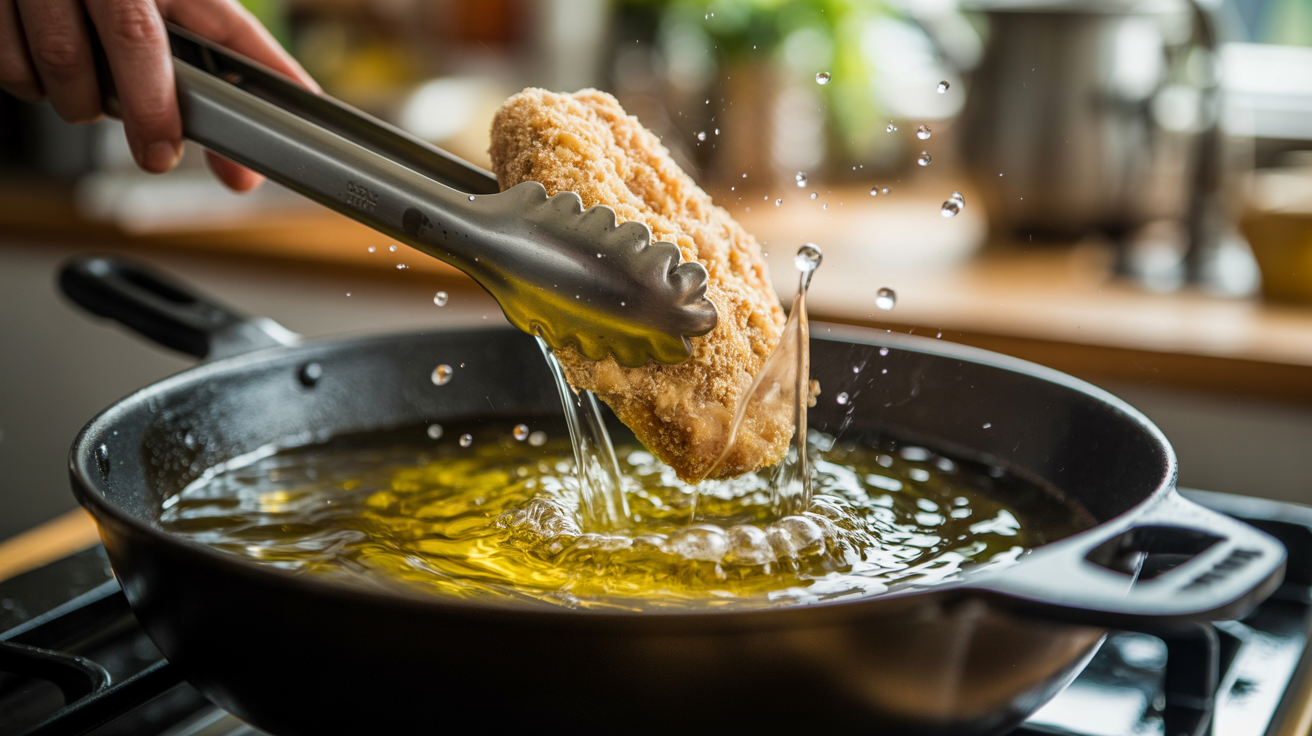
The oil you choose for frying chicken isn’t a minor detail — it’s a fundamental decision that affects everything from crispiness and color to flavor and health. Refined peanut oil is the gold standard for most situations, offering the perfect combination of high smoke point, neutral flavor, and exceptional stability. Vegetable or canola oil gives you nearly the same results at a lower price point and is the practical choice for everyday frying. Lard delivers unmatched old-school flavor and texture for special occasions, while avocado oil is the premium option for health-conscious cooks with a little extra budget. Now that you understand smoke points, flavor profiles, and proper oil care, you have everything you need to fry chicken that’s genuinely crispy, deeply flavored, and cooked perfectly every single time. Heat that oil up to 350°F, drop in your seasoned chicken, and enjoy the sizzle — you’ve earned it.