

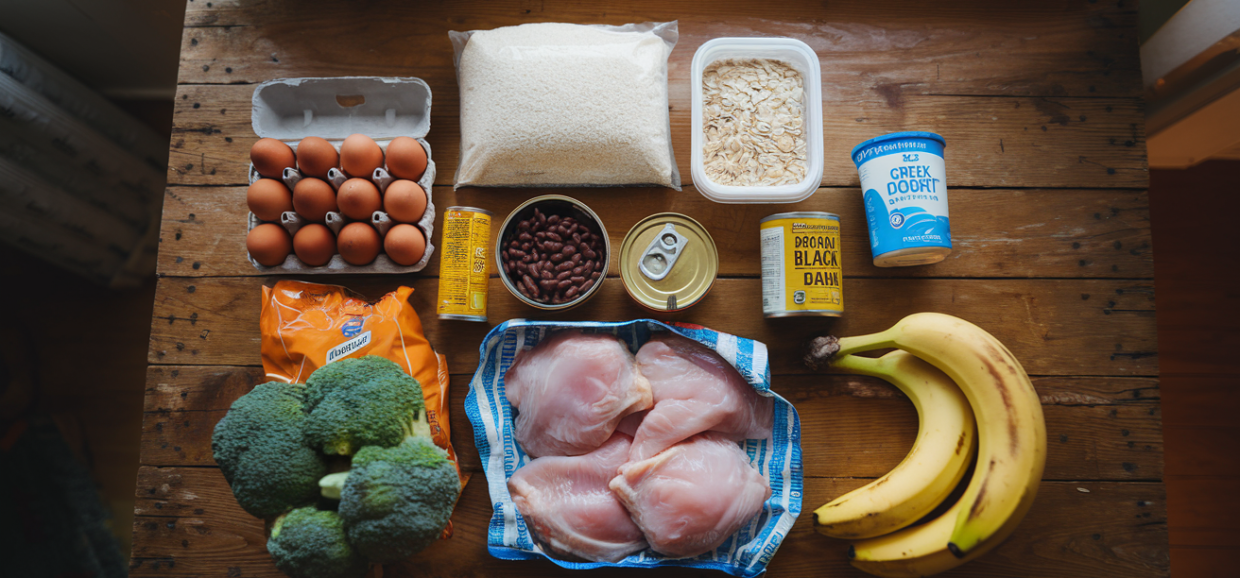
Grocery prices in 2026 are no joke. If you’ve been standing at the checkout watching the total climb past $80, then $100, then $120 for what feels like a pretty normal haul — you’re not imagining it. Food costs have gone up significantly, and without a real strategy, the money disappears faster than the food does.
The good news: eating well on $50 a week is genuinely achievable. Not theoretically achievable — actually achievable. Not “ramen every night” achievable or “skip lunch on Fridays” achievable. Real food, real meals, enough variety that you won’t feel deprived. The people who make this work consistently aren’t finding magical cheap food. They’re buying 12 specific ingredients that do 90% of the nutritional and culinary work — and they know how to combine them so Monday doesn’t taste identical to Friday.
Here’s the complete shopping list, the budget breakdown, and a 5-day meal plan built from a single grocery trip. No gimmicks, no extreme measures, just a framework that works.
Where Every Dollar Goes: The $50 Budget Breakdown
The mistake most people make is buying groceries without a category budget — tossing things in the cart and hoping the total comes in under $50. It won’t, not consistently. Allocating by category before you shop is what makes this repeatable every single week.
Here’s how to divide the $50 across four buckets:
- Grains and pantry staples — $12: Rice, oats, dried lentils, canned beans, and olive oil. These are your caloric foundation and flavor base. They store well, stretch far, and cost almost nothing per serving.
- Proteins — $20: Eggs, frozen chicken thighs, and canned tuna. This is where the biggest chunk of the budget goes — and where the best nutritional return lives. Eggs alone carry more weight in this budget than almost any other single item.
- Produce — $10: Frozen broccoli, frozen mixed vegetables, bananas, and one affordable fresh vegetable like cabbage or carrots. Frozen vegetables are nutritionally identical to fresh and consistently 40–60% cheaper. They’re also zero-waste — use exactly what you need.
- Dairy — $8: A large tub of plain Greek yogurt and shredded cheese. Two ingredients, dozens of uses across the week.
The total lands right around $50. Aldi and Walmart typically run 20–30% cheaper than mainstream grocery chains — if either is accessible to you, your $50 goes meaningfully further.
The Complete Shopping List (With Real 2026 Prices)
Here’s the exact list with approximate 2026 prices from mid-range U.S. grocery stores. Your totals may vary by 10–15% depending on location and what’s currently on sale. When something on this list goes on sale, buy two.
- White rice, 2 lbs — $2.00
- Rolled oats, 42 oz container — $5.00
- Dried green lentils, 1 lb — $2.00
- Canned black beans, 2 cans — $2.00
- Olive oil, 16 oz — $5.00
- Eggs, 2 dozen — $7.00
- Frozen chicken thighs, 2 lbs — $7.00
- Canned tuna in water, 3 cans — $4.00
- Frozen broccoli, 2 bags — $4.00
- Frozen mixed vegetables, 1 bag — $3.00
- Bananas — $2.00
- Cabbage or carrots — $2.00
- Greek yogurt, plain, 32 oz — $5.00
- Shredded cheese — $4.00
Total: approximately $54. If you need to trim, skip the shredded cheese (save $4) or buy one bag of frozen broccoli instead of two (save $2). The prices are estimates — the structure matters more than the exact dollar amounts, and the framework holds whether your total is $48 or $56.
The Sunday Batch Cook That Does Most of the Work
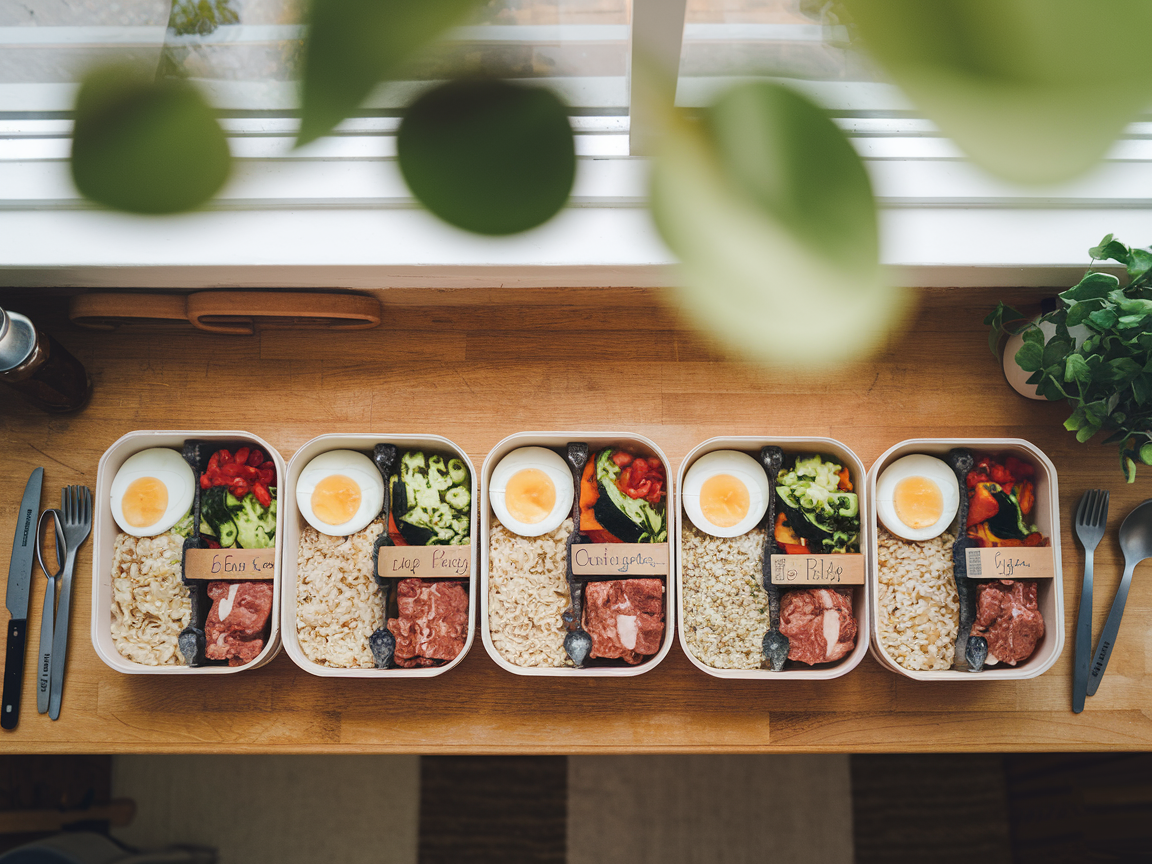
This is the move that separates people who actually eat well on a budget from people who buy the groceries and then order takeout on Thursday because they’re too tired to cook from scratch every single night. Spend 30–40 minutes on Sunday, and five days of lunches and dinners practically assemble themselves.
Here’s what to cook in one session:
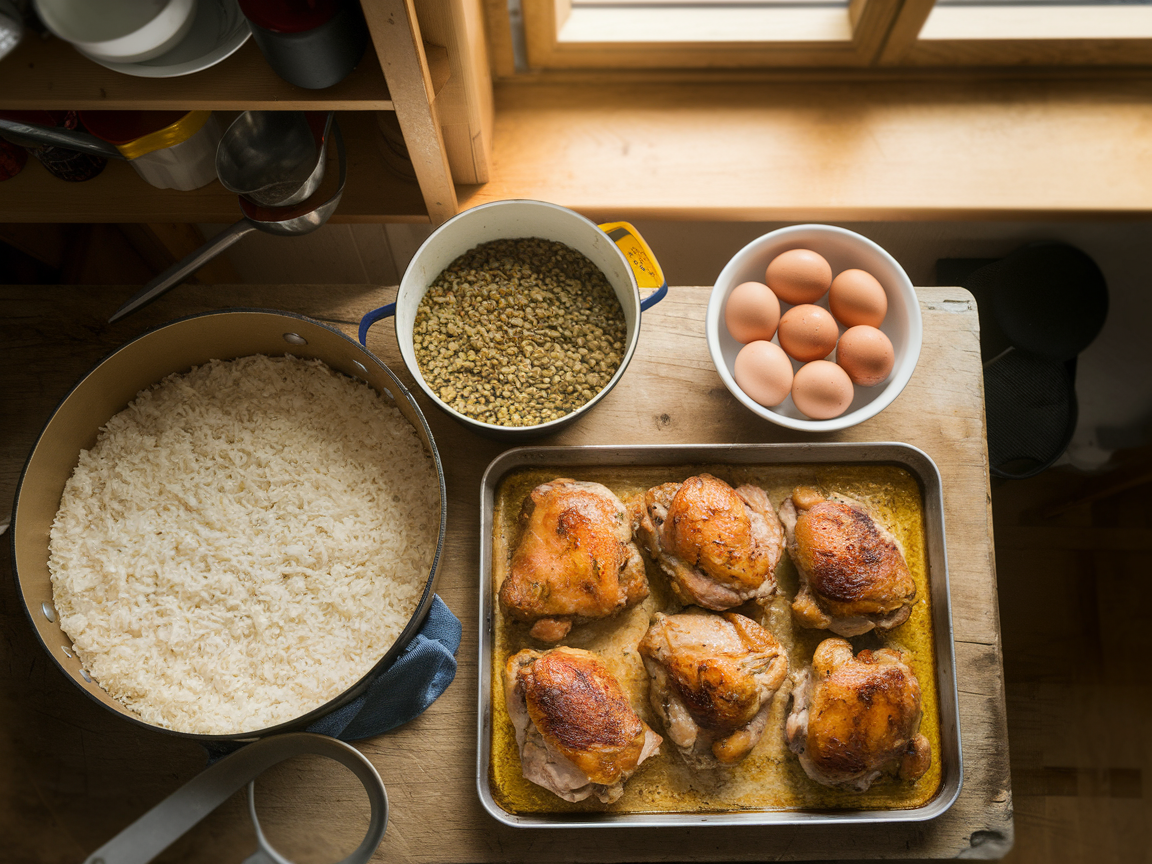
- A large pot of rice. Cook both pounds at once using a 1:1.75 water-to-rice ratio. This covers most of your lunches and dinners for the week. Let it cool completely before refrigerating — this actually improves the texture and makes it perfect for fried rice later.
- The full bag of lentils. Simmer in lightly salted water for 20–25 minutes until tender but not mushy. Lentils work as a soup base, a grain bowl protein, or a simple side dish. They reheat well and keep for 5 days in the refrigerator.
- All the chicken thighs. Season with salt, garlic powder, and black pepper. Roast at 425°F for 35 minutes until the skin is golden and the internal temperature hits 165°F. The meat stays juicy through reheating — which is why thighs beat breasts every time for batch cooking. Slice or shred and refrigerate.
- Half a dozen hard-boiled eggs. Boil for 8 minutes, transfer to ice water, peel and store. These fill breakfast gaps, bulk up salads, and make an emergency lunch disappear in two minutes.
Four items, one session. Everything else during the week is assembly, not cooking.
Your 5-Day Meal Plan — Built From One Shopping Trip
This plan uses everything you prepped on Sunday. None of these meals require more than 10 minutes of active work on a weeknight.
Monday
Breakfast: Oatmeal with banana. Cook ½ cup oats, slice half a banana on top, add a pinch of salt to balance the sweetness.
Lunch: Tuna over rice with steamed broccoli. Drain the can, pile it on a bowl of rice, steam a portion of frozen broccoli alongside. Season with salt and pepper.
Dinner: Baked chicken thighs with rice and roasted frozen vegetables. This is the meal that makes you glad you did the batch cook.
Tuesday
Breakfast: Greek yogurt with sliced banana. One serving of yogurt, half a banana — filling, high-protein, zero cooking.
Lunch: Lentil soup. Combine your cooked lentils with 2 cups of water or broth, garlic powder, salt, and cumin if you have it. Reheat and eat.
Dinner: Egg fried rice. Heat oil in a pan over high heat, add your day-old refrigerated rice, push it to the side, scramble 2 eggs into the gap, mix everything together. Ten minutes, one pan, genuinely satisfying.
Wednesday
Breakfast: Scrambled eggs. Two eggs, salt, a little butter or oil.
Lunch: Chicken rice bowl with broccoli. Reheat the prepped chicken and rice, add steamed frozen broccoli, finish with olive oil and salt.
Dinner: Black bean and rice skillet with cheese. Warm the canned beans in a pan with garlic powder and cumin, serve over rice, top with shredded cheese. Five minutes, under $1.50 per serving.
Thursday
Breakfast: Oatmeal again, or a hard-boiled egg if you need something faster.
Lunch: Tuna over shredded cabbage or carrots with olive oil and salt — a simple, protein-packed salad that holds up better than lettuce.
Dinner: Lentils and rice with a fried egg on top. Season the lentils with cumin, serve over rice, crown with a crispy fried egg. This is one of the most protein-dense budget meals you can make for under $1.50 per serving.
Friday
Breakfast: Eggs any style.
Lunch: Leftover chicken and rice in whatever configuration you prefer.
Dinner: Freestyle. Look at what’s left — beans, rice, eggs, cheese, vegetables — and make tacos, a rice and egg bowl, or a quick frittata. Friday dinner should use up the remaining proteins and produce before anything turns.
The Shopping Principles That Make the Math Actually Work
This plan isn’t magic — it works because of a few strategic decisions built into the shopping list. Understand the principles and you can adapt the list every week based on what’s on sale.
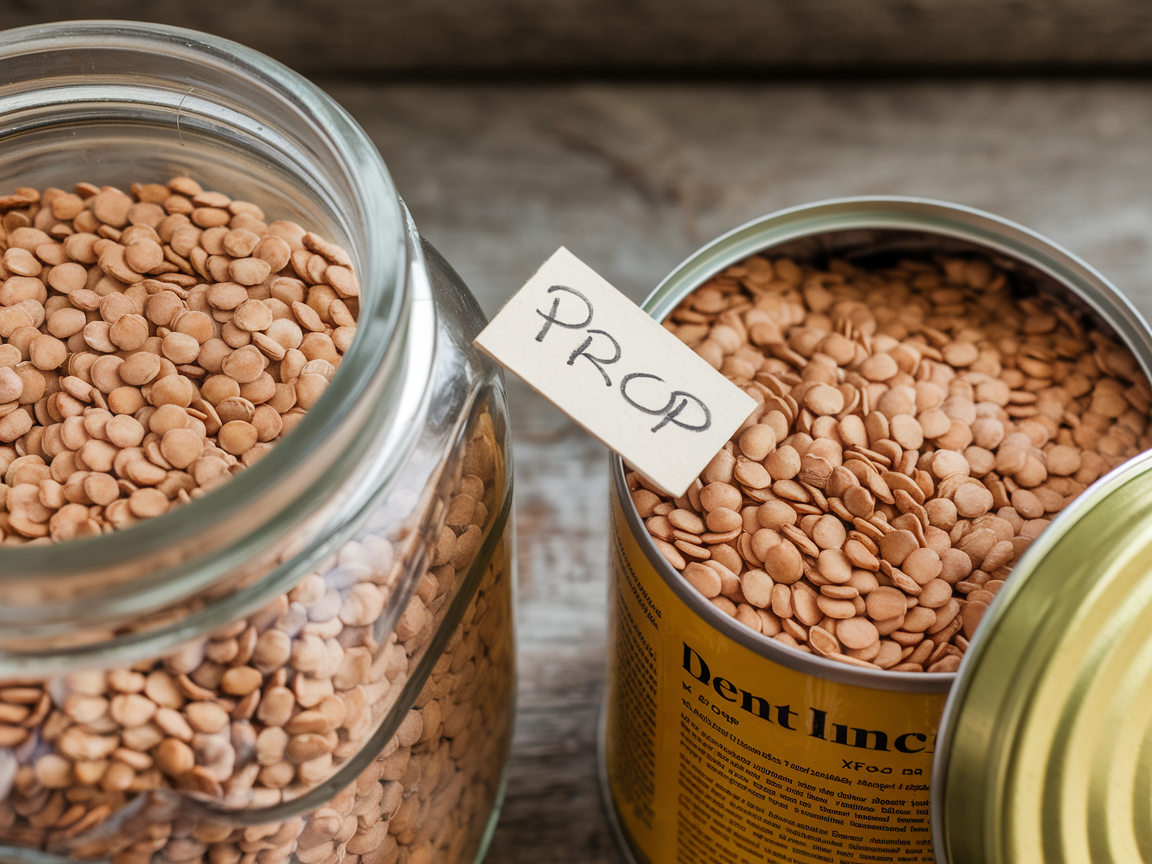
- Dried beats canned when you have time. Dried lentils are 60–70% cheaper per serving than canned lentils. Same story with dried beans versus canned. The tradeoff is 20–25 minutes of unattended simmering on a Sunday when you’re already in the kitchen anyway.
- Frozen vegetables are not a compromise. Frozen broccoli, mixed vegetables, and peas are harvested and frozen at peak ripeness. Nutritionally, they’re equivalent to or better than fresh vegetables that spent a week in transit and on a shelf. They’re cheaper, and there’s zero food waste — you use exactly what you need.
- Chicken thighs over breasts, every time. Thighs are cheaper per pound, have more fat (meaning more flavor), and are significantly harder to overcook. For batch cooking where you’re reheating throughout the week, this distinction matters a lot.
- Eggs are the budget kitchen’s most valuable player. At roughly $0.30 per egg, they’re one of the cheapest sources of complete protein available. They bridge every meal — breakfast, emergency lunch, dinner addition. Never cut eggs from this list.
- Buy the large yogurt tub, not single-serve cups. A 32 oz tub of plain Greek yogurt costs about the same as four single-serve flavored cups but gives you three times the servings. Add a little honey or a sliced banana if you want sweetness. You’ll save money and cut added sugar simultaneously.
What This Budget Doesn’t Cover (Being Honest With You)
This framework works — but it works within specific parameters. A few honest caveats before you go shopping:
- Spices and condiments are not included. If you’re starting completely from scratch, budget an extra $10–15 your first week for salt, black pepper, garlic powder, and cumin. Once you have them, they last months and cost fractions of a cent per use.
- Family of four. This plan is built for one person. Rough estimate for a family of four is 3x the shopping list, or around $150/week, though buying staples in bulk will pull that number down.
- Coffee, alcohol, and snacks are not in the calculation. If those are regular purchases, they’re real budget categories — account for them separately rather than cutting from the food list.
- Regional price variation is real. These prices reflect mid-range U.S. grocery stores. In high cost-of-living cities with limited store options, your baseline will be higher. With access to Aldi, Walmart, or Grocery Outlet, it’ll be noticeably lower.
None of these limitations break the framework — they just mean you’ll adapt it to your situation. The structure (two anchor proteins, batch-cooked grains, frozen produce) holds regardless. If you want to go deeper on the meal prep system side, our guide on how to meal prep for the week as a beginner covers the full process in more detail.
Frequently asked questions
Is $50 a week realistic for one person in 2026?
Yes, with deliberate planning. It requires choosing your grocery store strategically, building meals around dried grains, eggs, and frozen proteins, and doing a Sunday batch cook to eliminate the “too tired to cook” takeout trap. It’s not effortless, but it’s genuinely achievable and gets easier every week you run it.
What’s the cheapest protein per gram on this shopping list?
Eggs and dried lentils are the clear winners. Eggs run roughly $0.30 each for a solid hit of complete protein. Dried lentils are similarly economical and add significant fiber. Frozen chicken thighs cost a bit more but remain among the best protein values per dollar at the grocery store. See our full budget protein breakdown for a complete cost-per-gram ranking.
Can you actually eat healthy on this budget, or is it just carbs?
This plan is genuinely balanced. Eggs and chicken thighs provide complete protein with all essential amino acids. Lentils and beans add fiber and additional protein. Frozen broccoli and mixed vegetables cover most key micronutrients. Greek yogurt adds calcium and probiotics. The carbs from rice and oats are filling, energy-efficient, and paired with enough protein to keep blood sugar stable.
How do you avoid getting bored eating the same ingredients all week?
The framework is built for variety through combination. The same five ingredients taste different depending on how you cook them — rice on Monday becomes fried rice on Tuesday, chicken over a bowl becomes chicken tacos on Friday. Keeping a few condiments on hand (hot sauce, soy sauce, lemon) shifts the flavor profile of the same base ingredients dramatically without adding much to the budget.
Does this work for vegetarians?
Very close to it with minor adjustments. Drop the chicken thighs and canned tuna (saving roughly $11), and redirect that money toward more dried beans, lentils, eggs, or tofu if it’s on sale. The plant-based proteins in this list — eggs, lentils, beans — are already doing heavy lifting. A vegetarian version of this plan is achievable at $50 or slightly under with the same strategic principles.
It’s Not About Eating Less — It’s About Shopping Smarter
The $50/week approach works because it’s built around how budgets actually function: you allocate before you shop, not hope after. Once you identify the 12 ingredients that do the real work and build the Sunday batch cook habit, the weekly execution becomes almost automatic. Two or three rounds through the system and you’ll stop thinking of it as a constraint and start thinking of it as a strategy.
Give it one week. Run the full plan — the shopping list, the Sunday prep, the five days of meals. At the end of the week, you’ll have a concrete answer to whether how to eat well on $50 a week works for you. Most people who run it find they ate better than usual, because they were actually cooking instead of defaulting to whatever was fastest. If you’ve got budget tips of your own or want to swap out something on the list, drop it in the comments — always curious to hear what’s working in different kitchens.