
If you’ve ever stared into your fridge at 7pm on a Tuesday wondering what on earth you’re going to eat that’s actually good for you, high protein meal prep is about to become your new best friend. Spending a few strategic hours on the weekend building a arsenal of ready-to-go proteins, grains, and vegetables means you’ll sail through the week eating like you actually planned your life — because you did. Whether your goal is building muscle, losing weight, or simply staying fuller longer, getting your protein intake dialed in is one of the most powerful nutritional moves you can make.
As an Amazon Associate, this site earns from qualifying purchases. Some links on this page are affiliate links.
This complete weekly guide walks you through exactly how to approach high protein meal prep from start to finish. We’re talking real food, practical strategies, and specific instructions — not vague advice that leaves you more confused than when you started. By the end of this post, you’ll have a clear, executable plan to prep 4–5 days of high protein meals in roughly 2–3 hours. Let’s get into it.
Step 1: Plan Your Protein Sources Before You Shop
The biggest mistake people make with meal prep is walking into the grocery store without a protein strategy. Before you buy a single chicken breast, sit down for ten minutes and decide which proteins you want to feature across the week. A solid weekly rotation might include two animal proteins and one plant-based option — for example, ground turkey, salmon, and lentils. Variety prevents the dreaded meal prep fatigue where everything starts tasting the same by Wednesday.
Aim for proteins that cook differently so they don’t compete for oven space and time. Chicken thighs roast at 400°F for 35 minutes, while hard-boiled eggs take 12 minutes on the stovetop, and canned tuna requires zero cooking at all. When you stack these strategically, your prep session becomes a well-oiled machine rather than a chaotic juggling act. Write your plan out, even if it’s just a note on your phone, before you head to the store.
Budget tip: buying proteins in bulk almost always saves money. A 3-pound package of 93% lean ground turkey typically costs significantly less per ounce than buying two small 1-pound packs. Divide and freeze what you don’t need this week, or simply prep a larger batch and repurpose it into different meals — taco bowls on Monday, stuffed peppers on Wednesday, turkey soup on Friday.
Step 2: Choose Your Cooking Methods Wisely
The cooking method you choose has an enormous impact on both flavor and your overall time investment. For high protein meal prep, the four workhorses are oven roasting, stovetop browning, slow cooking, and hard boiling. Mastering all four and using them simultaneously is the key to cutting your prep time in half. While your chicken is roasting in the oven, you can be browning beef on the stove and hard boiling eggs simultaneously.
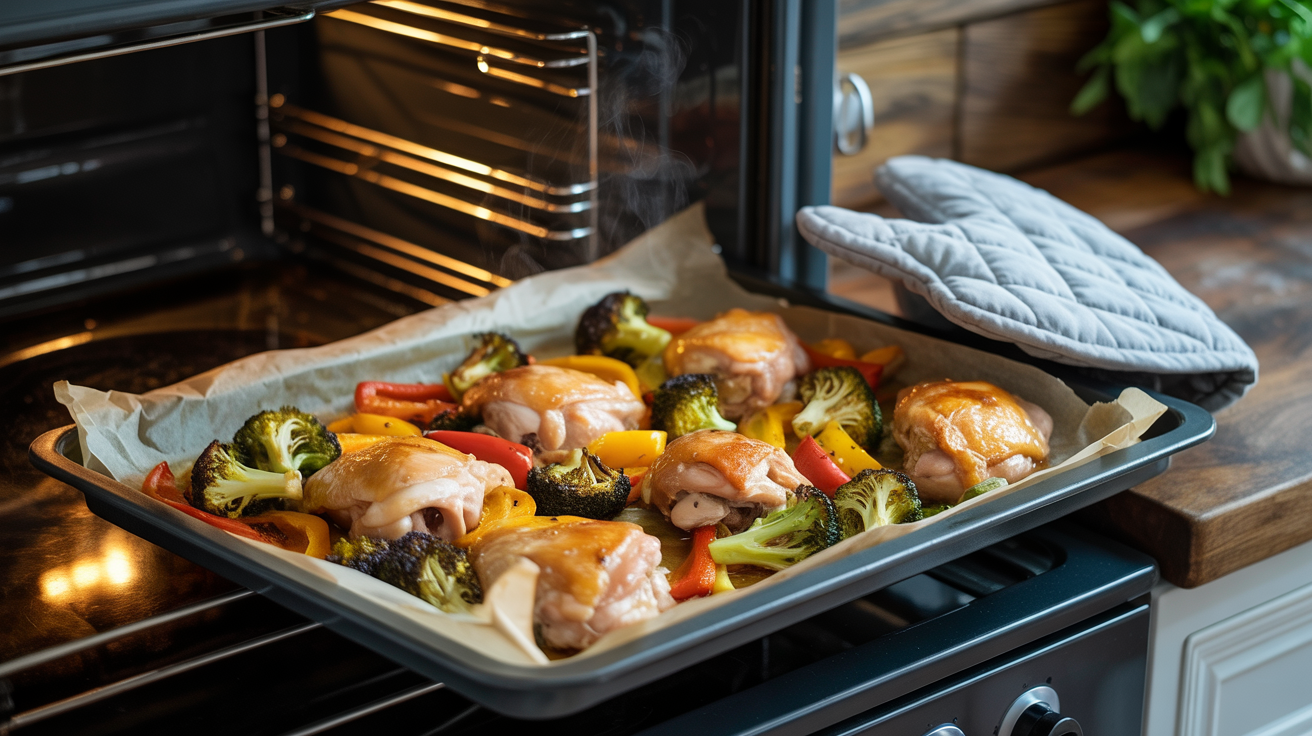
Oven roasting is your MVP for batch cooking proteins with minimal hands-on time. Sheet pan meals are particularly genius — line a rimmed baking sheet with parchment paper, arrange your protein and vegetables, season generously, and let the oven do the heavy lifting. Bone-in chicken thighs roasted at 425°F for 38–42 minutes come out juicy and develop a gorgeous golden skin. Salmon fillets at 400°F for 12–15 minutes are perfectly flaky and meal prep beautifully because they reheat gently without drying out.
Slow cookers and Instant Pots are absolute game changers for plant-based proteins and tougher cuts of meat. A batch of slow-cooked pulled chicken breast (set on low for 6–7 hours with broth and spices) shreds effortlessly and stores for up to 4 days in the fridge. Dried lentils in an Instant Pot cook in just 15 minutes and give you roughly 18 grams of protein per cup — a serious nutritional win for very little effort and cost.
Step 3: Prep Your Grains and Legumes Alongside Proteins
A high protein meal isn’t just about the centerpiece protein — it’s about building complete, satisfying meals. Quinoa is a meal prepper’s secret weapon because it’s one of the only plant foods that contains all nine essential amino acids and provides about 8 grams of protein per cooked cup. Cook a large batch (1.5 cups dry quinoa makes about 4.5 cups cooked) using the absorption method: rinse it well, combine with broth instead of water for extra flavor, bring to a boil, then simmer covered for 15 minutes, then let it steam off heat for 5 minutes.
Brown rice, farro, and chickpeas round out your carbohydrate and protein base beautifully. Brown rice (2 cups dry will yield about 5 cups cooked) takes 45 minutes to cook, so start it first before anything else. Canned chickpeas are your shortcut hero — drain, rinse, and toss them in olive oil and spices, then roast at 400°F for 25–30 minutes until crispy. They add texture, protein, and fiber to salads, bowls, and wraps all week long without any real cooking effort.
One pro tip that transforms your grain game: season your cooking water. A pinch of salt, a smashed garlic clove, and a bay leaf added to your rice or quinoa cooking water infuses flavor into every single grain. It’s a five-second step that makes meal-prepped bowls taste like you actually tried, even on a Thursday when you’re reheating something from Sunday.
Step 4: Hard Boil a Dozen Eggs
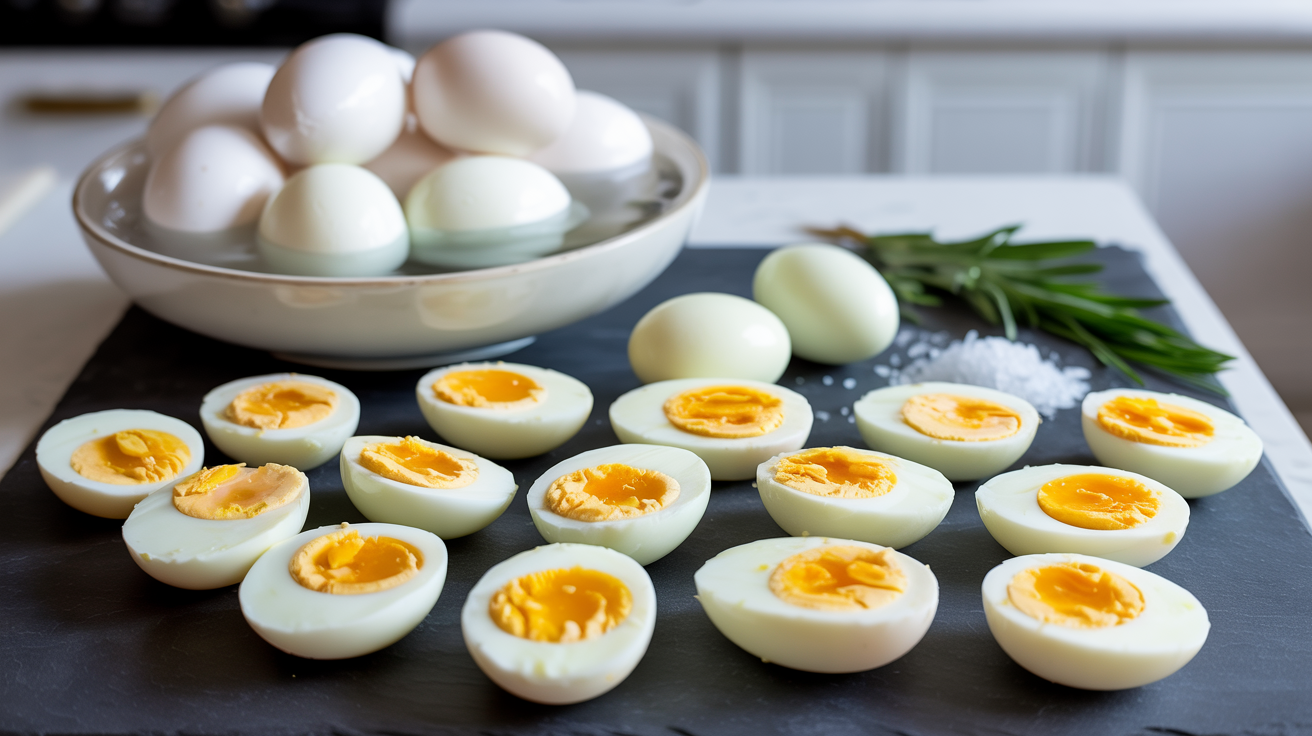
This might sound almost too simple, but hard boiling 12 eggs at the start of every week is one of the highest-return-on-investment moves in the entire meal prep playbook. Each egg delivers 6 grams of complete protein and requires absolutely zero effort to eat — grab and go, slice over a salad, mash into a quick egg salad with Greek yogurt instead of mayo for extra protein, or eat alongside anything that needs a protein boost.
The foolproof hard boiled egg method: bring a pot of water to a full rolling boil, gently lower in your cold eggs with a spoon, reduce to a steady boil (not a furious one), and cook for exactly 11 minutes for fully set yolks that aren’t chalky. Transfer immediately to an ice bath — a bowl of ice water — for 10 minutes. This stops the cooking instantly and makes peeling dramatically easier. Store them unpeeled in a covered container in the fridge for up to one week.
If you want to get fancy, meal prep a batch of marinated soft-boiled eggs inspired by Japanese ramen shops. Cook eggs for exactly 7 minutes, ice bath them, peel, and marinate in a mixture of 3 tablespoons soy sauce, 2 tablespoons mirin, 1 tablespoon rice vinegar, and 1 cup water for at least 4 hours. These soy-marinated eggs are absolutely addictive on grain bowls and add a punchy, savory depth that makes even the most straightforward meal feel intentional and delicious.
Step 5: Build Your Protein-Forward Sauces and Marinades
The single most powerful thing you can do to prevent meal prep boredom is building a lineup of different sauces that transform the same base proteins into entirely different eating experiences. The same grilled chicken breast tastes completely different slathered in a lemon-tahini sauce versus a chipotle lime yogurt drizzle versus a ginger-miso glaze. Your sauces do the heavy lifting when it comes to variety, and many of them take less than five minutes to make.
A high-protein tahini sauce is a weekly staple worth memorizing: whisk together 3 tablespoons tahini, juice of one lemon, 1 clove minced garlic, 2–3 tablespoons water to thin, salt and pepper. Done. It’s creamy, nutty, works on everything, and tahini itself has about 8 grams of protein per 2 tablespoons. For a Greek-inspired option, mix 1 cup plain Greek yogurt (20 grams of protein right there) with fresh dill, lemon zest, minced cucumber, garlic, and a pinch of salt for an instant tzatziki that doubles as a dip, sauce, and dressing.
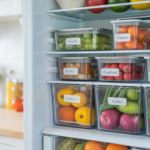
Make your sauces on Sunday and store them in small mason jars in the fridge. Label them with a piece of masking tape and a marker. Not only does this make meal assembly during the week lightning fast, it also means you’re actually excited to eat what you’ve prepped because you know it’s going to taste genuinely good. The psychological element of looking forward to your meals cannot be overstated when it comes to sticking to your nutrition goals.
Step 6: Assemble Your Meal Prep Containers Strategically
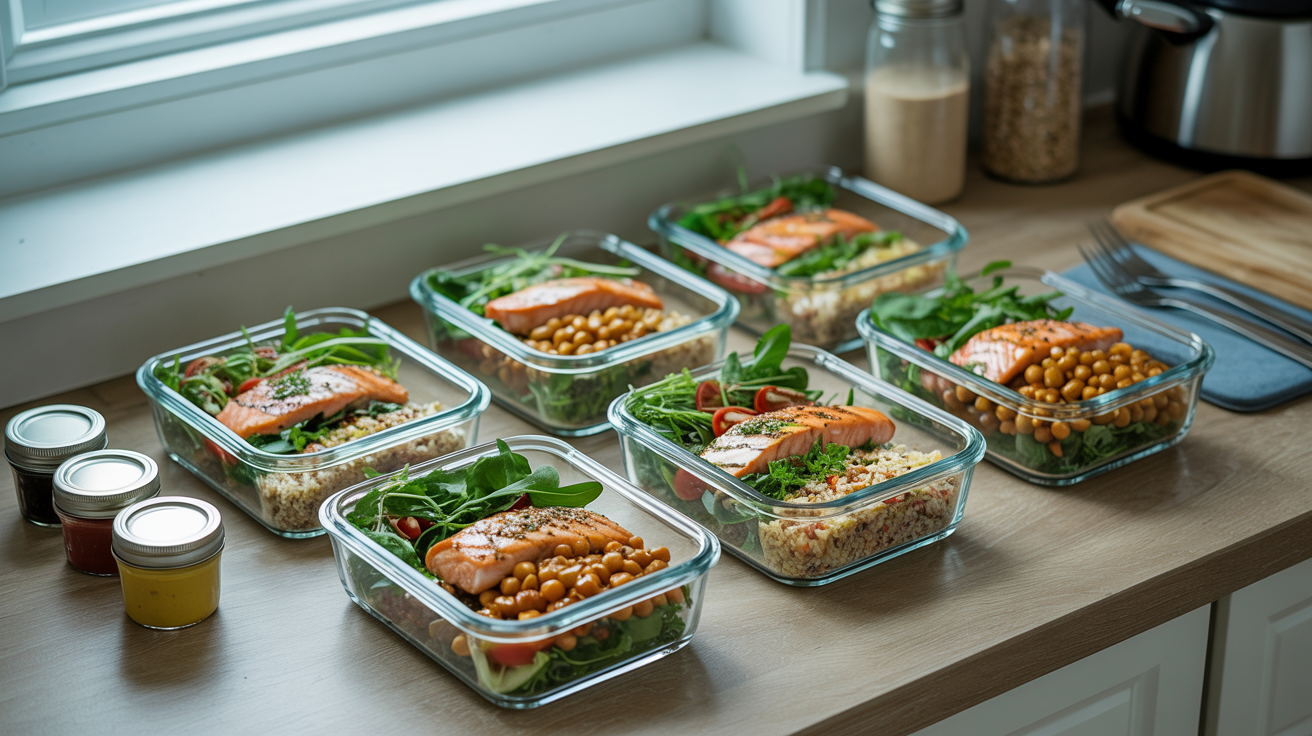
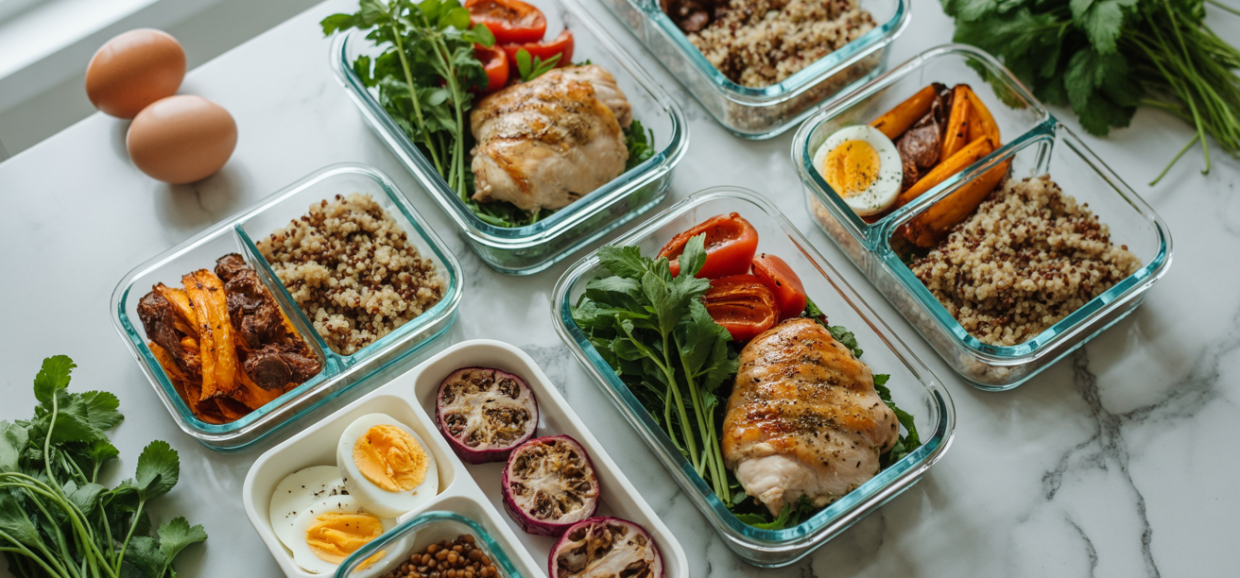
Now comes the satisfying part: actually putting everything together. Rather than fully assembling every single meal on Sunday, consider a hybrid approach — prep and store components separately, then do quick assembly on the day. This keeps textures better throughout the week. Leafy greens stored separately from warm proteins stay crisp. Sauces stored on the side mean nothing gets soggy. Grains stored in one container, proteins in another, and vegetables in a third gives you maximum flexibility to mix and match.
That said, some meals benefit from being fully prepped in advance. Overnight oats with protein powder, chia seeds, and Greek yogurt absolutely need to be made the night before to reach their thick, creamy texture. Lentil soups and stews actually taste better on day three than day one as the flavors meld. Hard-boiled eggs, roasted chickpeas, and pulled chicken can all be portioned into individual containers with grains and called done.
Invest in quality glass containers with locking lids if you haven’t already — they make a genuine difference. Glass doesn’t absorb odors or stains, you can see exactly what’s inside without opening anything, and you can go from fridge to microwave to table with one container. A set of 10–12 glass meal prep containers in 2-cup and 4-cup sizes covers virtually all your storage needs for a full week of high protein meals.
Step 7: Rotate Your Flavors Mid-Week to Stay Motivated
Even the most enthusiastic meal prepper can hit a wall by Wednesday if the food tastes identical to Monday. Build a mid-week reset into your plan — not a full re-prep, but a 20-minute touchup that refreshes your meals and keeps your motivation high. This might mean making a quick new sauce, roasting a different vegetable, or combining your existing prepped components in a brand new way.
On Wednesday evening, spend 15–20 minutes reassessing what you have left. If you’ve got cooked quinoa, leftover ground turkey, and some roasted vegetables, combine them in a skillet with a splash of coconut aminos and sriracha for a quick stir-fry that tastes completely different from the taco bowls those same ingredients made Monday. Creativity with your existing prepped ingredients is the skill that separates people who successfully meal prep long-term from those who give up after two weeks.
Also, don’t underestimate the power of fresh garnishes. A handful of fresh cilantro, a squeeze of fresh lime, a few sliced scallions, or a sprinkle of everything bagel seasoning added right before eating makes a day-old meal taste bright and fresh. These finishing touches take five seconds but make an enormous sensory difference. You’re not just eating fuel — you’re eating food that genuinely tastes good and makes you feel proud of your choices.
Frequently Asked Questions
How long does high protein meal prep last in the fridge?
Most cooked proteins — chicken, ground turkey, beef, salmon — stay safe and delicious in the refrigerator for 3–4 days. Cooked grains and legumes last up to 5 days. Hard-boiled eggs (unpeeled) keep for a full week. If you want to prep for a full 7 days, freeze portions on Sunday that you plan to eat Thursday through Sunday, then transfer them to the fridge Tuesday night to thaw.
How much protein should I actually be aiming for per meal?
A common target for active adults focused on muscle retention or building is 0.7–1 gram of protein per pound of bodyweight per day, spread across 3–4 meals. For a 150-pound person, that’s roughly 105–150 grams daily. Practically speaking, aiming for 30–40 grams of protein per main meal is a solid target that keeps you in that range comfortably.
What are the best high protein foods for meal prep beginners?
Start with the easiest wins: chicken thighs (forgiving and juicy even when slightly overcooked), ground turkey (cooks in 10 minutes and works in dozens of recipes), canned tuna and salmon (zero cooking required), hard-boiled eggs, Greek yogurt, and canned chickpeas. These six foods alone can form the backbone of an entire week of diverse, satisfying, high protein meals.
Can I meal prep high protein meals on a budget?
Absolutely — in fact, meal prepping is almost always cheaper than buying individual meals or takeout. Ground turkey, canned fish, eggs, dried lentils, and canned chickpeas are among the most affordable high-protein foods you can buy. A full week of high protein meal prep for one person can cost as little as $30–$50 depending on your market and choices. Buying in bulk and using whole food ingredients rather than packaged protein products stretches your dollar further.
Conclusion
High protein meal prep doesn’t have to be complicated, expensive, or time-consuming. With a clear plan, a handful of reliable cooking methods, and a commitment to variety through sauces and seasonings, you can set yourself up for a genuinely nutritious and delicious week in just a few hours on Sunday. Start with one or two of these steps this weekend, master them, then layer in the rest as they become second nature. Your future self — eating a perfectly seasoned quinoa bowl at lunch on Thursday while your coworkers scramble for takeout — will absolutely thank you for it.