
Every year, the average American household throws away nearly $1,500 worth of food — that’s groceries you paid for, carried home, and then tossed into the bin without a single bite. It’s a frustrating cycle that hits your wallet hard and takes a real toll on the environment. The good news? With a handful of smart, practical habits, you can dramatically cut down on what ends up in your trash can and actually stretch your grocery budget further than you ever thought possible.
Reducing food waste at home doesn’t require a complete lifestyle overhaul or fancy equipment. It’s really about shifting the way you shop, store, cook, and think about the food in your kitchen. Whether you’re a seasoned home cook or someone who survives mostly on takeout, these ten strategies are approachable, genuinely effective, and might even make cooking feel more creative and rewarding. Let’s dig in.
1. Plan Your Meals Before You Ever Hit the Grocery Store
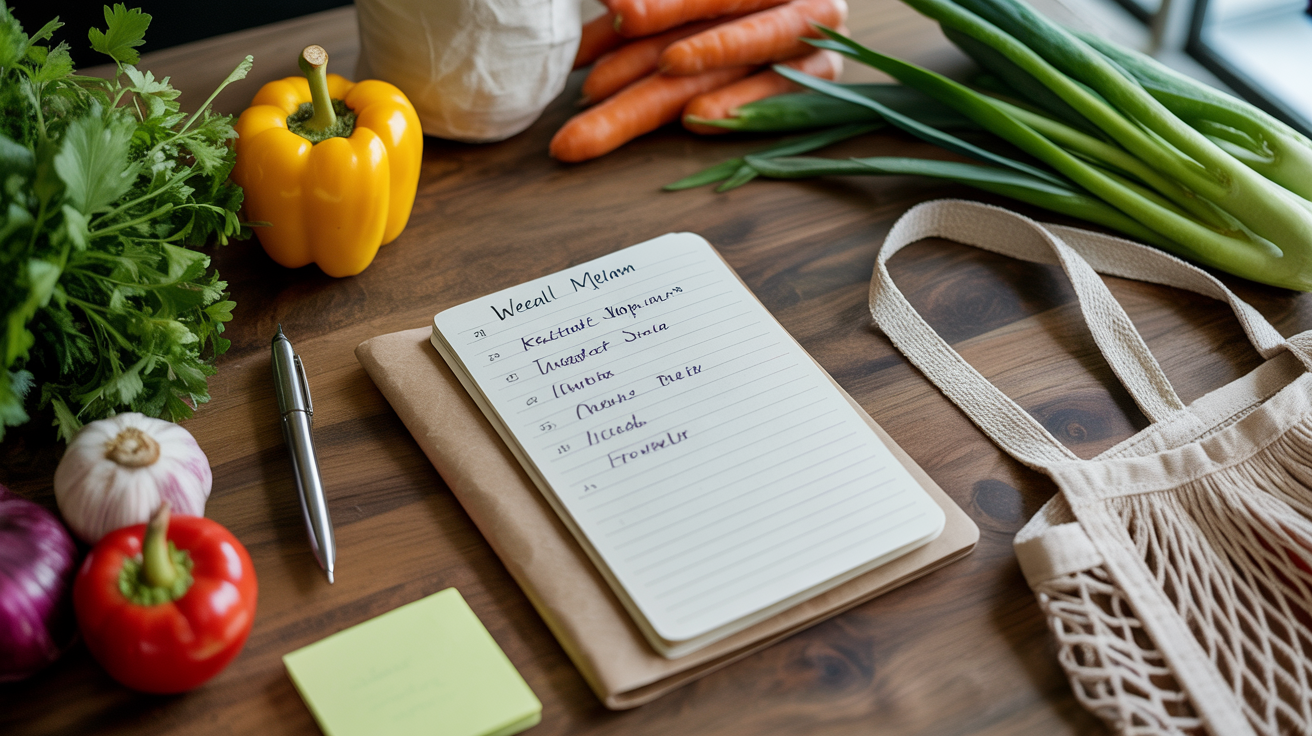
Meal planning is the single most powerful weapon in your food waste reduction arsenal. Before you shop, sit down for 10–15 minutes and map out what you’re actually going to eat that week — breakfasts, lunches, dinners, and snacks. Be realistic about your schedule: if you know Thursday is always chaotic, plan a 20-minute pasta dish, not a slow-braised short rib recipe that needs three hours of attention.
Once your meals are planned, build your grocery list directly from those recipes. Only buy what you need for those specific dishes, plus a few versatile staples you know you’ll use. This intentional approach eliminates the impulse buys that sit in your crisper drawer until they become science experiments. Apps like Paprika or even a simple Notes document can help you keep everything organized and avoid doubling up on ingredients you already have at home.
A bonus trick: plan meals that share ingredients. If you’re using half a can of coconut milk for Monday’s Thai curry, plan a coconut rice or a smoothie later in the week to use the rest. This kind of ingredient overlap thinking is how professional kitchens operate with zero waste, and it works beautifully at home too.
2. Master the Art of the Fridge Audit
Before every grocery run, spend five minutes doing a thorough fridge audit. Pull everything out, check what’s nearing its expiration, and take mental (or actual) notes on what needs to be used up first. This habit alone can save you from buying duplicates of things you already have tucked behind last week’s leftovers. It sounds simple, but most of us open the fridge, stare blankly, and close it without really seeing what’s in there.
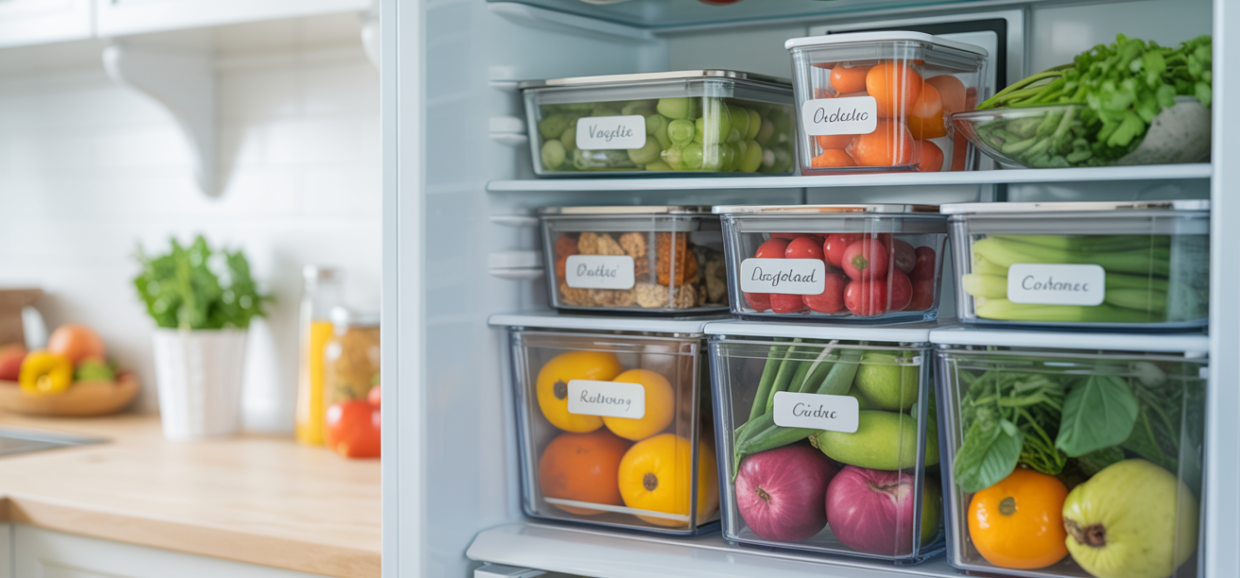
Organize your fridge with a “use first” zone — a dedicated shelf or bin at eye level where you keep items that are closest to going bad. Things like wilting herbs, leftover roasted vegetables, an open block of cheese, or that half-used can of tomatoes should live here. When you open the fridge hungry, you’ll see those items immediately and be more likely to incorporate them into your next meal rather than reaching past them for something fresh.
Make it a weekly ritual, ideally tied to a specific day — many people do it on Fridays before the weekend shop, or Sundays when they’re prepping for the week. Consistency is what makes this habit stick. After a few weeks, you’ll start noticing patterns: maybe you always buy too much spinach, or you never actually finish that block of feta. Use that data to shop smarter going forward.
3. Understand the Difference Between “Best By” and “Bad By”
Here’s a food waste truth bomb: most date labels on food packaging have nothing to do with safety. “Best by,” “sell by,” and “use by” dates are primarily quality indicators set by manufacturers, not hard safety deadlines. A carton of eggs marked “best by” last Tuesday is almost certainly still perfectly safe to eat — especially if stored properly at 40°F or below. The same goes for most dairy, dry goods, and canned foods.
The best way to judge whether food is still good? Use your senses. Give milk a sniff before pouring it out — if it smells fine and tastes fine, it is fine. Check for visible mold, off smells, or unusual textures. Hard cheeses with a small moldy spot? Cut an inch around and below the mold and the rest is safe to eat. This sensory approach to food evaluation can save you from throwing away a massive amount of perfectly edible food every single month.
Educate everyone in your household about this distinction. When family members understand that a yogurt that’s three days past its “best by” date is not going to make them sick, they’ll stop reflexively tossing things that are still completely usable. Knowledge is genuinely one of the most effective food waste reduction tools available.
4. Store Produce the Right Way to Make It Last
Improper storage is one of the leading causes of produce going bad before you ever get a chance to eat it. Different fruits and vegetables have wildly different storage needs, and getting this right can double or even triple the life of your fresh produce. For starters, keep ethylene-producing fruits — apples, bananas, peaches, avocados — away from ethylene-sensitive vegetables like leafy greens, broccoli, and carrots. Ethylene gas speeds up ripening and can cause your greens to wilt and yellow dramatically faster.
Herbs are a common casualty of poor storage. Treat fresh herbs like cut flowers: trim the stems, place them in a glass with an inch of water, and loosely cover with a plastic bag. Stored this way in the fridge, cilantro and parsley can last two to three weeks instead of a few days. Basil, however, hates the cold — keep it on the counter at room temperature. Mushrooms should be stored in a paper bag, not plastic, so moisture doesn’t build up and cause them to go slimy.
Most whole vegetables keep best unwashed until you’re ready to use them — moisture is the enemy of longevity. Berries are the exception: wash them in a diluted white vinegar solution (1 part vinegar to 3 parts water), rinse well, dry thoroughly, and store in a single layer on a paper towel-lined container. This kills mold spores and can extend berry life by up to a week, which feels like an absolute miracle the first time you try it.
5. Embrace the Freezer as Your Best Friend
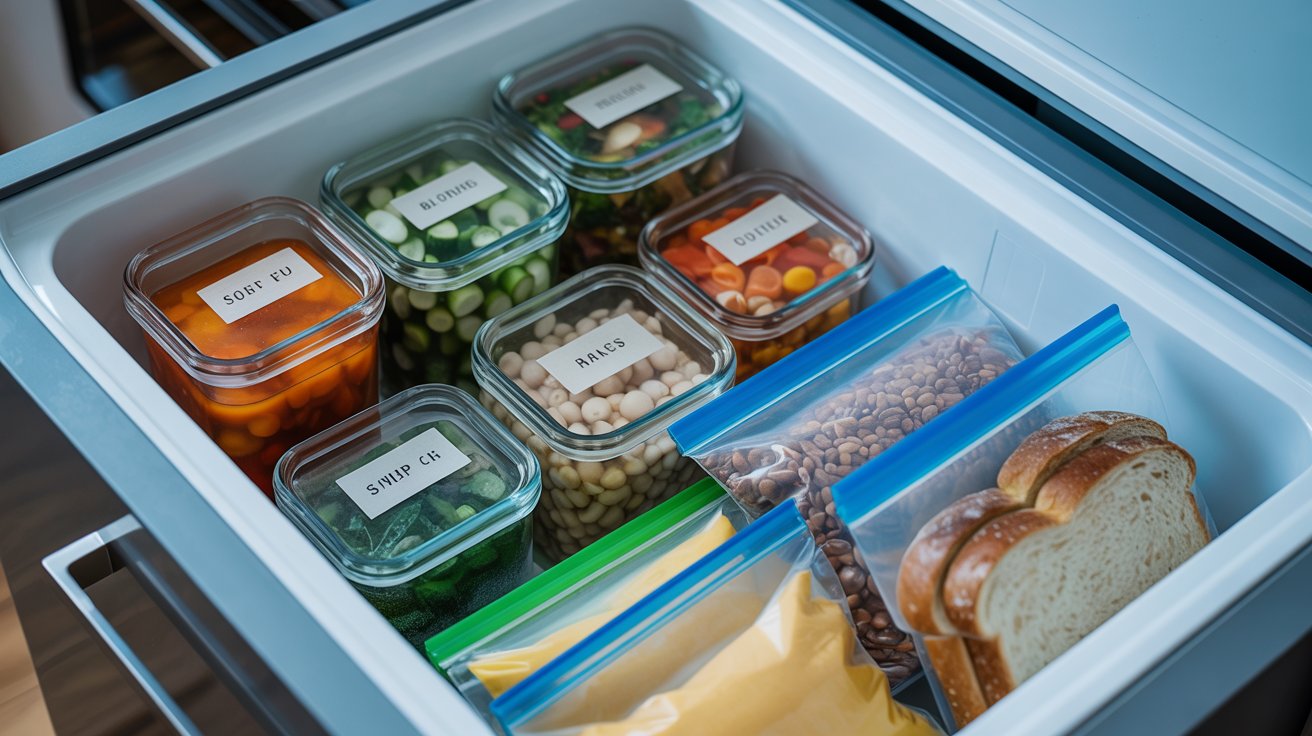
Your freezer is a powerful food preservation tool that most people dramatically underuse. Almost everything can be frozen: bread, cheese, cooked grains, soups, sauces, meat, fish, blanched vegetables, ripe bananas, fresh herbs in olive oil, and even egg yolks. If something is about to turn and you don’t have a plan to use it in the next 24 hours, freeze it before it goes bad, not after.
Label everything you freeze with the contents and the date using masking tape and a marker. Frozen food doesn’t technically go bad in a safety sense, but quality does degrade over time — most cooked foods are best used within three months. Keep a freezer inventory list on your phone or on the freezer door so you actually remember what’s in there and rotate through your frozen stock regularly instead of letting things get buried and forgotten for a year.
Get comfortable with freezing things in useful portions. Freeze leftover tomato paste in tablespoon-sized portions on a parchment-lined sheet, then transfer to a zip-lock bag so you always have exactly the amount a recipe calls for. Freeze broth in ice cube trays. Freeze overripe bananas peeled and ready for smoothies or banana bread. These small-batch freezing habits make it incredibly convenient to use your frozen stock rather than buying fresh unnecessarily.
6. Cook “Fridge Cleanout” Meals Once a Week
Designate one meal per week as a fridge cleanout meal — a dinner built entirely from whatever odds and ends are lingering in your refrigerator. This is where creativity shines and food waste dies. A frittata is perfect for this: whisk six eggs, pour into an oven-safe skillet at medium heat, and pile in whatever vegetables, meats, and cheese need using up. Cook the bottom on the stovetop for 3–4 minutes, then slide into a 375°F oven for 8–10 minutes until set. Done.
Fried rice, grain bowls, stir-fries, and hearty soups are all brilliant fridge cleanout formats because they’re endlessly flexible and genuinely delicious. That half-cup of leftover quinoa, the three wilting scallions, the bits of leftover roast chicken, the last quarter of a red bell pepper — all of them belong in a fried rice that can be on the table in under 15 minutes and tastes incredible. Think of these meals as a puzzle rather than a compromise, and they become something you actually look forward to.
Many experienced home cooks will tell you that their fridge cleanout meals are often their most satisfying of the week precisely because of the creative constraint. When you don’t have the option of following a recipe exactly, you start developing real cooking intuition. It’s skill-building disguised as waste reduction.
7. Use Every Part of Your Ingredients — Stems, Peels, and All
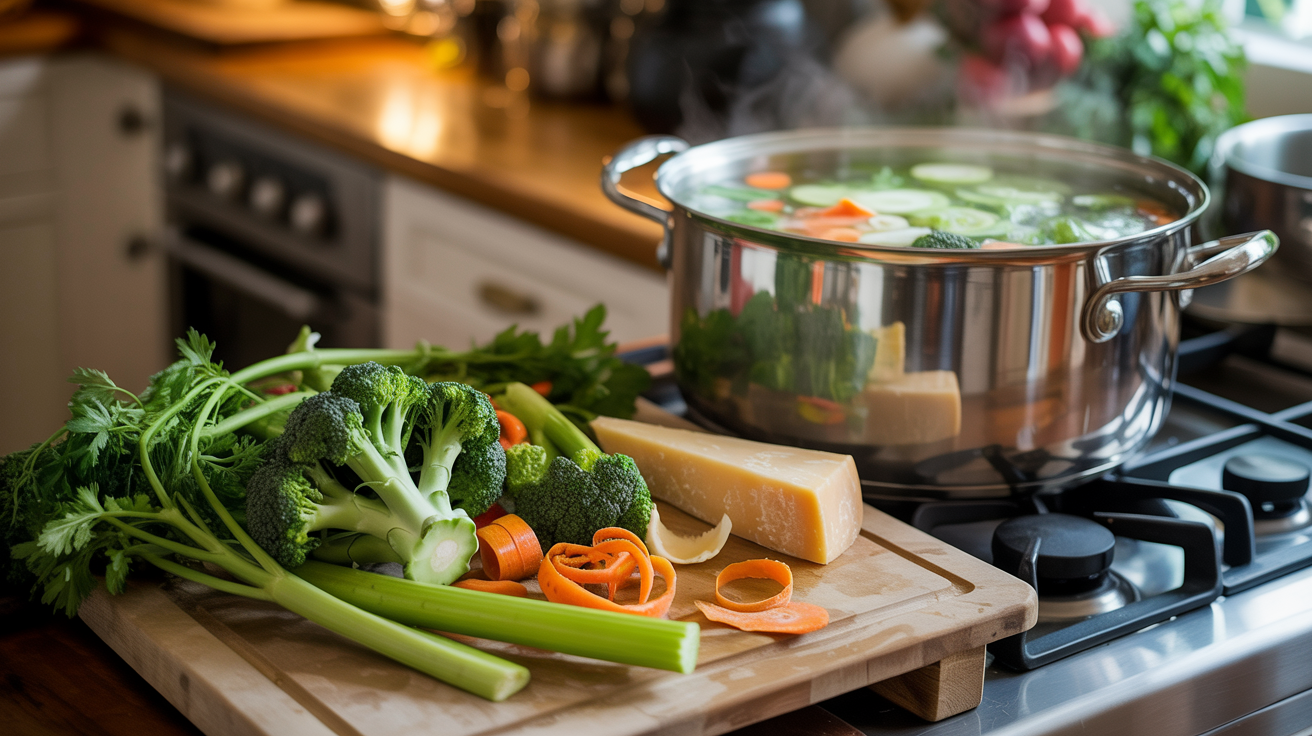
Most of us throw away an astonishing amount of completely edible and often nutrient-dense food without even thinking about it. Broccoli stems are just as good as the florets — peel the tough outer layer and slice the inner core into coins for stir-fries or roasting. Parmesan rinds can be simmered in soups and tomato sauces to add incredible depth of flavor (just fish them out before serving). Corn cobs make a beautifully sweet stock. Watermelon rinds can be pickled. Citrus peels can be candied or zested and frozen.
Save all your vegetable scraps — onion skins, carrot peels, celery leaves, herb stems, leek tops — in a zip-lock bag in the freezer. When the bag is full, cover the scraps with cold water in a large pot, bring to a boil, then simmer for 45 minutes to an hour. Strain and you have a rich, flavorful vegetable stock for absolutely free. This is a genuine restaurant technique that translates perfectly to the home kitchen.
Stale bread is another one people habitually throw away that has enormous culinary potential. Tear day-old or older bread into rough chunks, toss with olive oil, garlic, and salt, and bake at 375°F for 10–15 minutes until golden for the best croutons you’ve ever had. Or blend dried stale bread into breadcrumbs. Or make a panzanella salad, ribollita soup, or a classic bread pudding. Once you start seeing stale bread as an ingredient rather than garbage, you’ll never toss it again.
8. Shop More Frequently but in Smaller Quantities
The big weekly shop feels efficient, but for highly perishable items — leafy greens, fresh fish, certain fruits — buying large quantities that then sit in your fridge for a week often means throwing half of it away. Consider shifting to a hybrid approach: buy shelf-stable staples like grains, canned goods, and dried pasta in larger quantities, but shop for fresh produce and proteins two or three times a week in smaller amounts.
This approach is standard in much of Europe, where daily or twice-weekly trips to local markets mean produce is fresher, bought in smaller quantities, and wasted far less. It takes a small mental shift but dramatically reduces the “I bought a whole head of lettuce and only used two leaves” problem that plagues so many households. Buying just what you need for the next two or three days naturally aligns your purchasing with your actual consumption.
9. Compost What You Can’t Use
Even with the best planning, storage, and creativity, some food waste is genuinely unavoidable — coffee grounds, eggshells, banana peels, avocado pits. Composting transforms these unavoidable scraps into rich, nutrient-dense soil amendment instead of sending them to a landfill where they produce methane. If you have any outdoor space at all, a simple compost bin can be set up for under $30 and requires very little maintenance.
For apartment dwellers, countertop composting options like the Lomi electric composter can process food scraps into soil amendment overnight with minimal smell. Many cities also offer curbside compost pickup or drop-off locations at farmers’ markets and community gardens. Composting isn’t technically food waste reduction, but it closes the loop on the scraps that do occur and keeps organic material out of landfills where it does genuine environmental damage.
10. Track What You Throw Away for Two Weeks
This is the habit that makes all the other habits smarter. For two full weeks, keep a notepad on the counter or use the notes app on your phone and jot down everything you throw away — what it was, approximately how much, and why it went bad. Was it produce that sat too long? Leftovers that got forgotten? Something you bought with good intentions but never made the recipe for? This data is genuinely revelatory.
After two weeks, you’ll see clear patterns that are specific to your household. Maybe you consistently over-buy zucchini. Maybe you make too much rice every time. Maybe you buy fresh ginger but a recipe calls for half a teaspoon and the rest always goes bad. Once you can see your personal food waste patterns clearly, you can make targeted changes: buy zucchini less often, cook smaller batches of rice, buy ground ginger or freeze fresh ginger whole so you can grate it from frozen as needed.
This tracking exercise only needs to happen once or twice a year to recalibrate your habits. It’s the difference between making generic changes and making changes that are actually tailored to how your household specifically eats and shops. Think of it as a food waste audit that pays dividends in both dollars saved and guilt eliminated.
Frequently Asked Questions
How much food does the average family waste each year?
Research from the USDA and various food policy organizations suggests that American families waste between 30–40% of the food they purchase, which translates to roughly $1,500 per year for the average household of four. Globally, about one-third of all food produced for human consumption is wasted annually.
What foods go bad the fastest and need the most attention?
Leafy greens, fresh herbs, berries, and fresh fish are the most perishable items in a typical household. These should be used within 2–3 days of purchase or stored using the specialized techniques described above. Dairy, cooked leftovers, and cut produce also have relatively short windows and should be prioritized in your weekly meal planning.
Is it safe to eat food past its expiration date?
In most cases, yes — with common sense applied. “Best by” and “sell by” dates are quality indicators, not safety deadlines. Use your senses: smell, look, and taste (carefully) to assess food rather than relying solely on printed dates. The FDA and USDA both confirm that most date labels are not federally regulated safety standards.
What’s the easiest first step for someone just starting to reduce food waste?
Start with the fridge audit habit. Before every grocery trip, spend five minutes checking what you already have and what needs to be used soon. This single habit prevents duplicate purchases and keeps your “use first” items visible and top of mind. It costs nothing and takes almost no time, but the impact on your food waste is immediate and significant.
Can reducing food waste really make a meaningful environmental difference?
Absolutely. Food waste in landfills produces methane, a greenhouse gas significantly more potent than carbon dioxide. The UN Environment Programme identifies food waste reduction as one of the top three individual actions for reducing personal carbon footprints. When you waste less food, you’re also indirectly conserving the water, land, energy, and labor that went into producing it.
Conclusion
Reducing food waste at home is one of those rare habits that benefits you financially, makes you a better cook, and contributes meaningfully to a larger environmental good — all at the same time. You don’t need to implement all ten strategies at once. Start with one or two that feel most relevant to your current habits, let those become automatic, and then layer in more. Within a few months, you’ll likely be spending noticeably less at the grocery store, cooking more creatively, and feeling genuinely good about the food choices you’re making every single day. That’s a win in every direction worth chasing.