

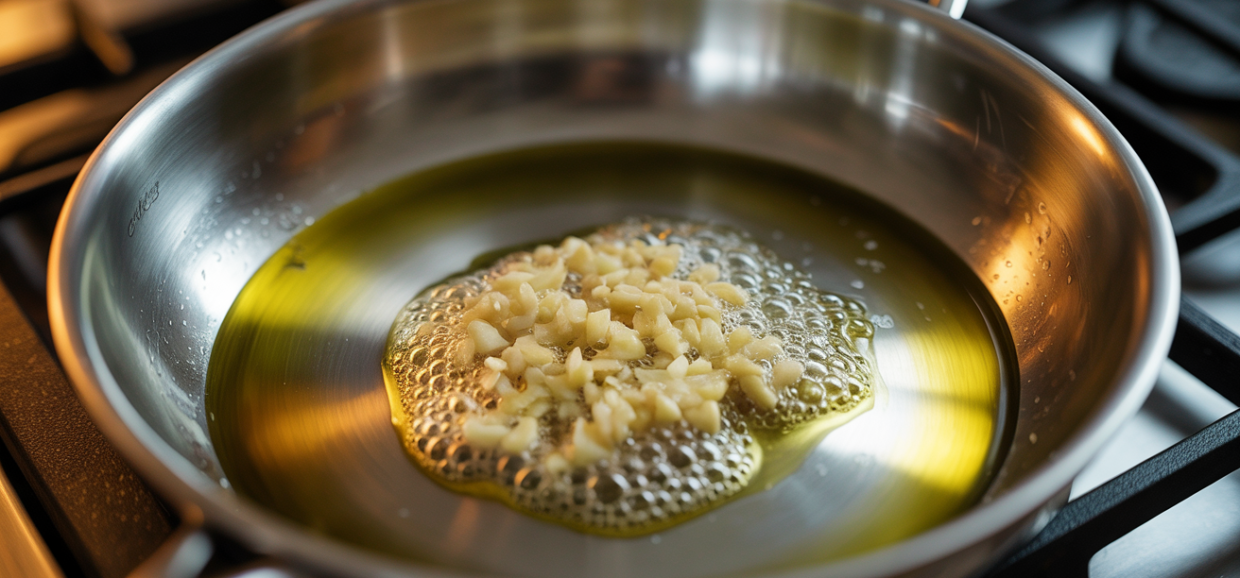
Okay, here’s something nobody really teaches you when you start cooking: garlic goes from perfectly golden and fragrant to bitter and burnt in about fifteen seconds flat. I’ve been there more times than I’d like to admit — standing at the stove, turning away to chop something, and suddenly that sweet, nutty aroma turns acrid and sharp. Ruined garlic can wreck an entire dish, and the worst part is that most recipes just say “cook until golden” and leave you to figure out the rest.
After years of burning (and undercooking) more garlic than I care to count, I’ve developed a pretty reliable internal checklist for knowing exactly when garlic hits that sweet spot. Whether you’re sautéing minced garlic for a quick pasta sauce, roasting whole cloves, or making something like my Honey Garlic Butter Shrimp, these ten signs will help you nail it every single time. Let’s get into it.
1. The Color Has Shifted to Light Gold
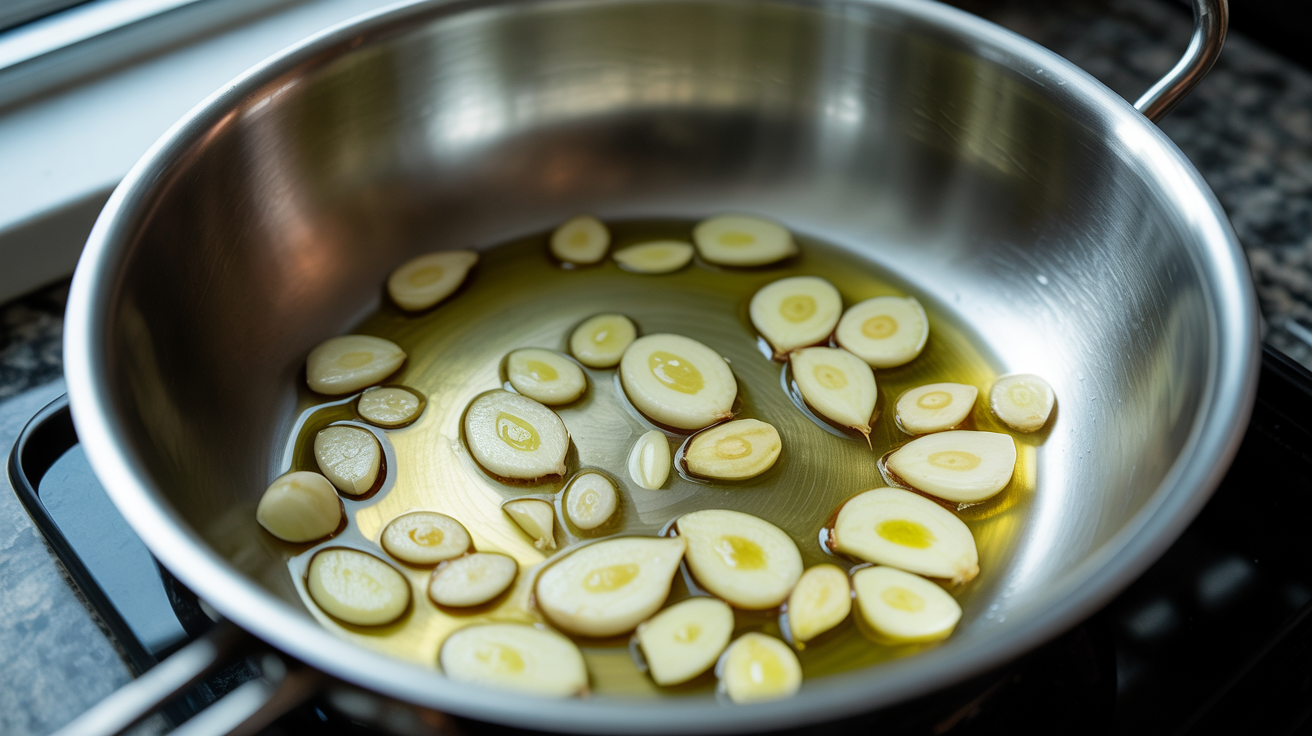
This is the most obvious visual cue, but people get it wrong all the time because they wait too long. You’re looking for a pale, straw-like gold — think the color of a wheat field in late summer, not the color of a toasted almond. If your garlic is the color of peanut butter, you’ve already gone too far. The window between “perfect” and “burnt” is incredibly narrow, especially with minced garlic.
Here’s the thing that trips people up: garlic continues cooking even after you pull it off the heat. The residual heat in the pan will carry it another shade or two darker. So when it looks almost-but-not-quite golden enough, that’s actually the moment to act. Pull it off the burner or add your next ingredient (like tomatoes or broth) to drop the temperature fast.
2. The Kitchen Smells Sweet and Nutty, Not Sharp
Your nose is honestly a better garlic thermometer than your eyes. Raw garlic has that sharp, almost stinging smell that hits the back of your sinuses — you know the one. As it cooks, that sharpness mellows into something warm and toasty, almost like roasted nuts. When you catch a whiff that makes you think “mmm” instead of “whoa,” you’re in the zone.
The danger signal is when it starts smelling acrid or slightly sulfurous. That burnt garlic smell is unmistakable — it’s bitter and unpleasant, and it’ll cling to everything in the pan. If you smell even a hint of that bitterness creeping in, get the garlic out of the pan immediately. Don’t try to save it. Start over. Trust me, a dish made with burnt garlic will taste off no matter what you do to compensate.
3. It’s Sizzling Gently, Not Popping or Smoking
Sound is your second-best friend after smell. Properly cooking garlic should produce a gentle, steady sizzle — like a quiet rain on a tin roof. If your garlic is popping and spitting, your oil is way too hot. If there’s smoke coming off the pan, you’ve crossed into the danger zone and the garlic is almost certainly burning or already burnt.
This is why I almost always cook garlic over medium or medium-low heat. I know, I know — it feels painfully slow when you’re hungry and ready to eat. But garlic is thin and full of sugars that caramelize quickly. High heat is garlic’s enemy. The gentle sizzle tells you the water is evaporating and the sugars are browning at the right pace. If the sizzle gets aggressive, pull the pan off the heat for a few seconds to let things calm down.
4. The Edges Are Starting to Crisp
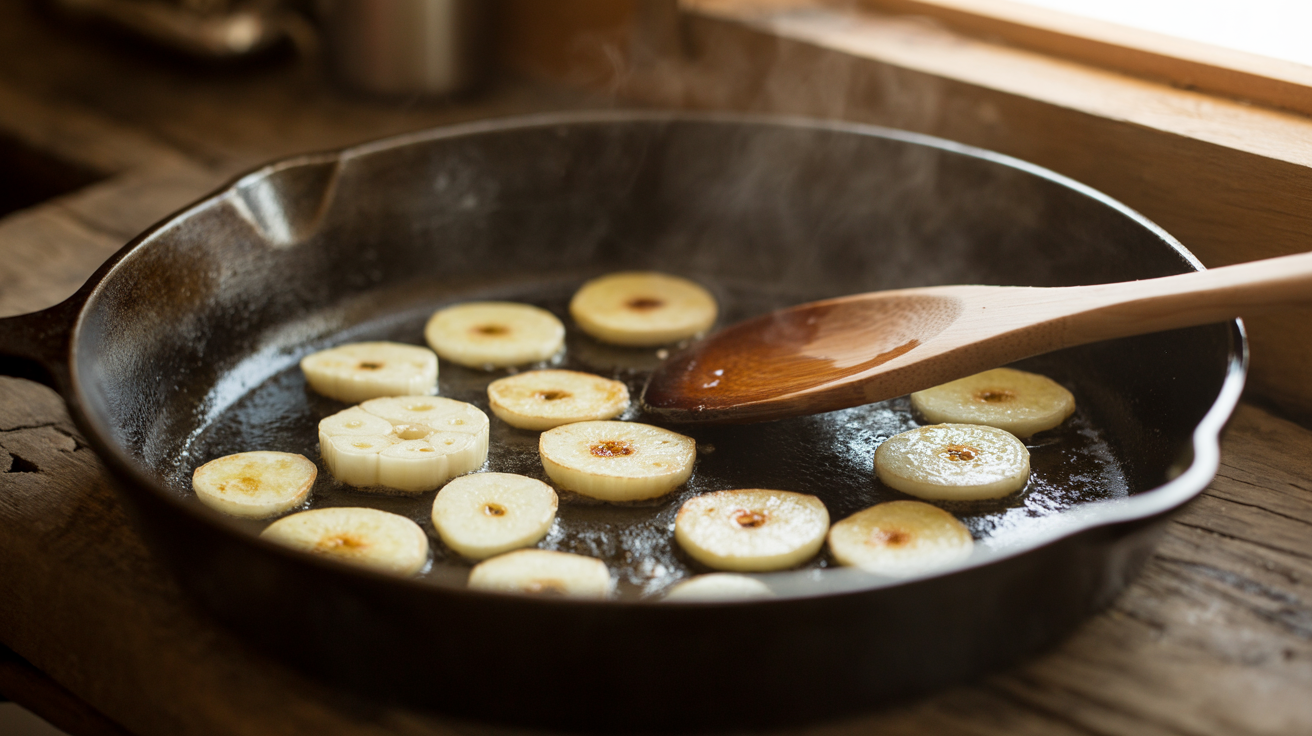
When you’re working with minced or sliced garlic, check the thinnest pieces first. The edges and the smallest bits will cook faster than the centers of larger pieces. When those edges just barely start to turn crispy and brown, the rest of the garlic is right where you want it.
This is actually why I prefer thinly sliced garlic over minced for a lot of applications. Slices give you a more visible surface area to monitor, and they cook a bit more evenly. Minced garlic has all these tiny uneven pieces — some paper-thin, some thicker — so you end up with some burnt bits and some undercooked bits. If you do use minced garlic, stir constantly and keep that heat moderate.
5. The Garlic Has Shrunk Slightly
Fresh garlic is full of moisture, and as it cooks, that water evaporates. You’ll notice that your garlic pieces look a bit smaller and more compact than when they went into the pan. This shrinkage means the water has cooked off and the natural sugars are concentrating and beginning to caramelize.
If the garlic looks exactly the same size as when you added it, it probably needs more time. But if it’s looking shriveled, dried out, and dark — like tiny raisins — it’s overdone. You want that middle ground where it’s clearly reduced in size but still plump and slightly translucent in the center.
6. The Texture Has Softened
Press a piece of garlic gently with your spatula or wooden spoon. Raw garlic is firm and crunchy — you can feel the resistance when you press on it. Properly cooked garlic should feel tender and give way easily, almost like it could melt into the oil. It should spread slightly when you press on it rather than holding its shape rigidly.
This is especially important for whole or halved cloves, which take longer to cook through. You can’t always judge whole cloves by color alone since the outside might look golden while the inside is still raw and pungent. The press test tells you what’s happening on the inside. For dishes like Honey Garlic Butter Shrimp, where garlic flavor is front and center, getting this right really matters.
7. The Oil Around the Garlic Is Fragrant
Here’s something cool that happens: as garlic cooks, it infuses the oil around it with flavor. Dip the tip of a spoon into the oil (away from the garlic pieces) and give it a sniff. When the oil itself smells warm, toasty, and garlicky, the garlic has done its job. That oil is now liquid gold for your dish.
This is particularly useful when you’re making a garlic-infused oil base for sauces or soups. The oil absorbing garlic flavor is actually the whole point — the garlic pieces themselves are almost secondary. Once that oil smells incredible, you can add your next ingredients with confidence knowing the foundation of your dish is solid.
8. It’s Been About 30 to 60 Seconds (For Minced)
I hate giving exact times because every stove, pan, and amount of garlic is different. But as a general rule, minced garlic over medium heat in a decent amount of oil takes roughly 30 to 60 seconds to hit the sweet spot. That’s it. Not two minutes, not five minutes — less than a minute in most cases.
This shocks people, but think about how thin those little pieces are. They’re basically tissue-paper-thin shreds sitting in hot fat. Sliced garlic gets a bit more time — maybe one to two minutes. Whole crushed cloves can go three to five minutes. And roasted garlic in the oven is a whole different ballgame at 40 to 50 minutes. The finer the cut, the faster it cooks, and the more vigilant you need to be.
9. The Bubbling Has Slowed Down
When you first drop garlic into hot oil, you’ll see a burst of bubbling as the moisture in the garlic hits the fat and starts evaporating rapidly. As the garlic cooks and that moisture leaves, the bubbling will gradually slow down and become smaller, finer bubbles instead of big aggressive ones.
When those bubbles have noticeably calmed — still present but quieter and more delicate — your garlic is approaching done. This is basically the visual version of the sizzle test, and it’s especially helpful in deeper pans or pots where you can’t hear the sound as well. Watch those bubbles like a hawk, and start checking your other cues when they begin to settle.
10. A Small Taste Reveals Sweetness, Not Bite
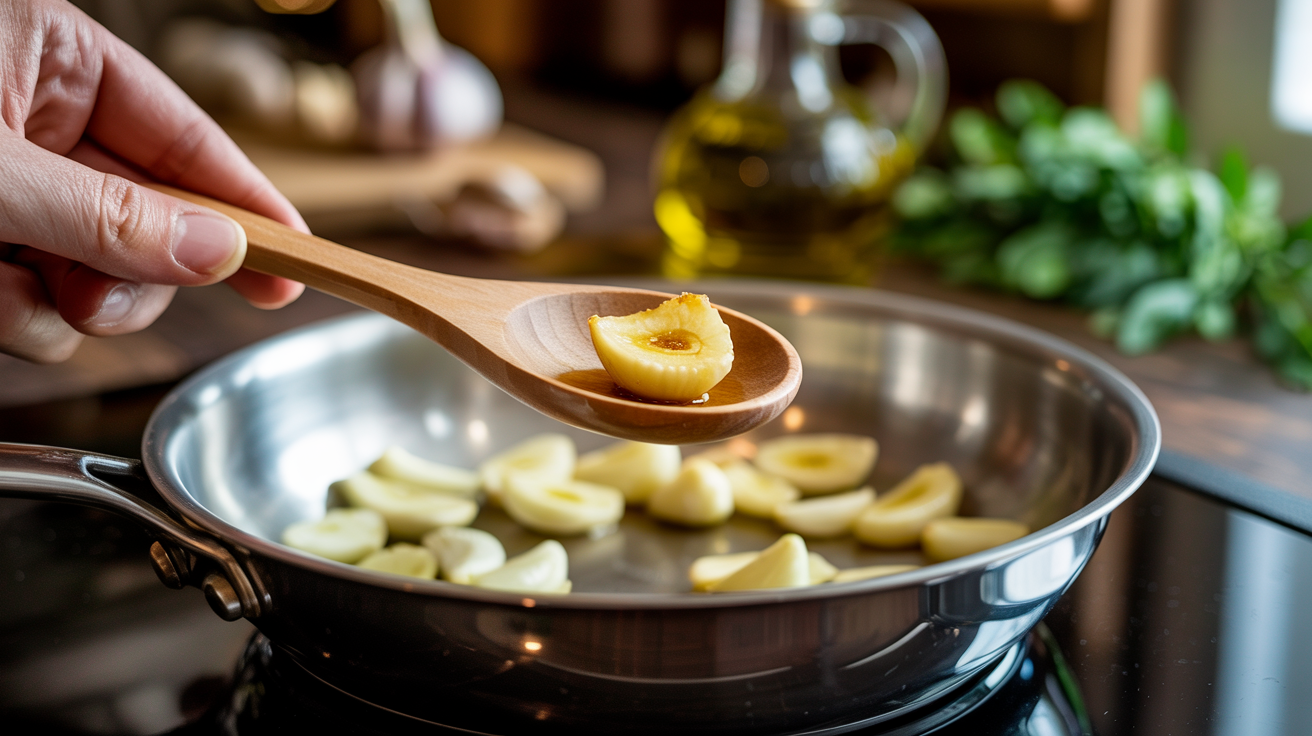
When in doubt, taste it. Grab a tiny piece with a spoon, blow on it for a second, and pop it in your mouth. Raw garlic bites back — it’s sharp and almost spicy on your tongue. Perfectly cooked garlic should taste mellow, sweet, and almost buttery. There should be zero sharpness or burn. It should just taste warm and rich and deeply savory.
If it tastes bitter, it’s overcooked. If it still has that raw, sharp bite, give it another 15 to 20 seconds. The taste test is the ultimate confirmation that all your other senses are pointing you in the right direction. I do this almost every time I cook garlic, and it’s the single most reliable way to know you’ve nailed it.
Frequently Asked Questions
Can you fix burnt garlic?
Honestly, no. Burnt garlic tastes bitter and that bitterness will spread through your entire dish. Your best bet is to wipe out the pan, start fresh with new oil and new garlic, and just be more careful this time. It takes an extra two minutes and saves your whole meal.
Should you add garlic at the beginning or end of cooking?
It depends on the dish. For most sautés and stir-fries, add garlic after your onions have softened — the onions release moisture that helps buffer the garlic from burning. For roasted dishes or slow braises, garlic can go in early because the lower, slower heat is more forgiving. For raw applications like dressings, just mince it fine and let it mellow in the acid for a few minutes.
Why does my garlic always burn?
Nine times out of ten, the heat is too high. Turn it down to medium or medium-low and be patient. The other common mistake is adding garlic to a dry pan or one with very little oil — garlic needs a buffer of fat to cook evenly rather than scorching on direct contact with the hot pan surface.
Is it better to slice or mince garlic?
Minced garlic distributes more evenly and releases more flavor, but it burns faster. Sliced garlic is easier to monitor and gives a milder, more subtle garlic flavor. I use sliced for dishes where I want to see and bite into the garlic, and minced when I want it to disappear into a sauce or coating.
Cooking garlic well is one of those foundational skills that quietly makes everything you cook taste better. It’s not complicated — it just requires your attention for about 60 seconds. Keep your heat moderate, use all your senses, and don’t be afraid to taste as you go. Once you can consistently nail that perfect golden moment, you’ll notice a real difference in everything from simple pasta aglio e olio to more complex dishes. Your garlic deserves those 60 seconds of undivided attention. Give it that, and it’ll reward you every time.