
You grabbed a rotisserie chicken from the grocery store because it was convenient, delicious, and honestly one of the best deals in the entire store. But now you’re staring at a carcass with plenty of good meat still clinging to the bones, and you’re wondering what on earth to do with it all. Sound familiar? You’re not alone — and the good news is that leftover rotisserie chicken is one of the most versatile ingredients in your entire kitchen arsenal.
Whether you’ve got a few shredded cups of chicken or a whole bird that barely got touched, we’re going to walk you through everything you need to know to make the most of every last bite. From quick weeknight dinners to meal prep strategies and even that magical liquid gold known as homemade chicken stock, this guide covers it all. Let’s get into it.
How Long Does Leftover Rotisserie Chicken Last?
Before you start cooking, let’s talk safety — because nobody wants a stomach ache when all they wanted was a great meal. Properly stored in an airtight container, leftover rotisserie chicken will stay good in the refrigerator for 3 to 4 days. Make sure you’re pulling all the meat off the bones and storing it separately from the carcass for the easiest access later.
If you know you won’t use it within that window, freeze it. Shredded chicken freezes beautifully for up to 3 months. Portion it into 1 to 2 cup servings in zip-lock freezer bags, press out as much air as possible, and label them with the date. This way, you’ve essentially made your own freezer meal shortcut for future busy nights. Thaw overnight in the fridge or run the sealed bag under cold water when you need it fast.
One pro tip: never leave cooked chicken sitting at room temperature for more than 2 hours. That’s the food safety rule that applies no matter how good your intentions are. Get it in the fridge as soon as your meal is done.
How to Properly Shred and Store the Chicken
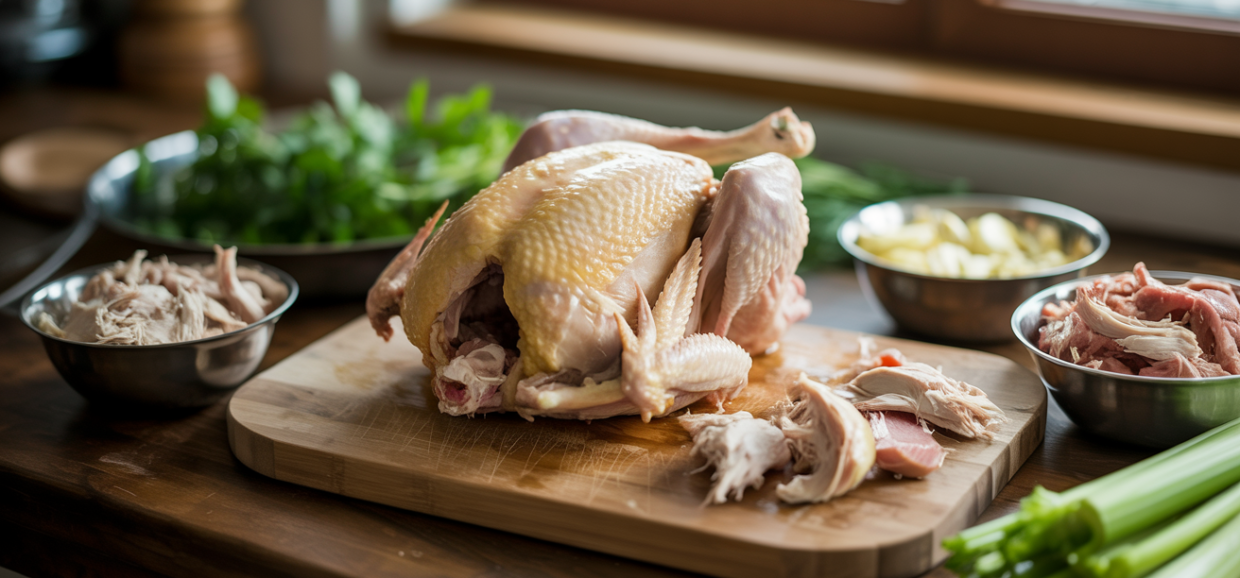
The first thing you want to do with your leftover rotisserie chicken is break it down properly. Start by stripping all the meat off the carcass while it’s still slightly warm — it’s much easier than working with cold chicken. Use two forks to shred the breast meat, and use your fingers to pull apart the thigh and leg meat, which tends to be more tender and fall apart naturally.
Sort your chicken into two categories as you go: white meat (breasts) and dark meat (thighs and legs). White meat is dryer and works best in dishes with sauces or broths, like soups, casseroles, and pasta. Dark meat is juicier and more flavorful, making it perfect for tacos, grain bowls, and sandwiches where it won’t dry out as quickly.
Don’t toss that carcass! Set it aside in a separate zip-lock bag in the fridge or freezer. We’ll come back to it when we talk about making chicken stock. Every single part of this bird has value, and treating it that way is the key to getting the absolute most out of your purchase.
Turn It Into a Hearty Chicken Soup or Broth
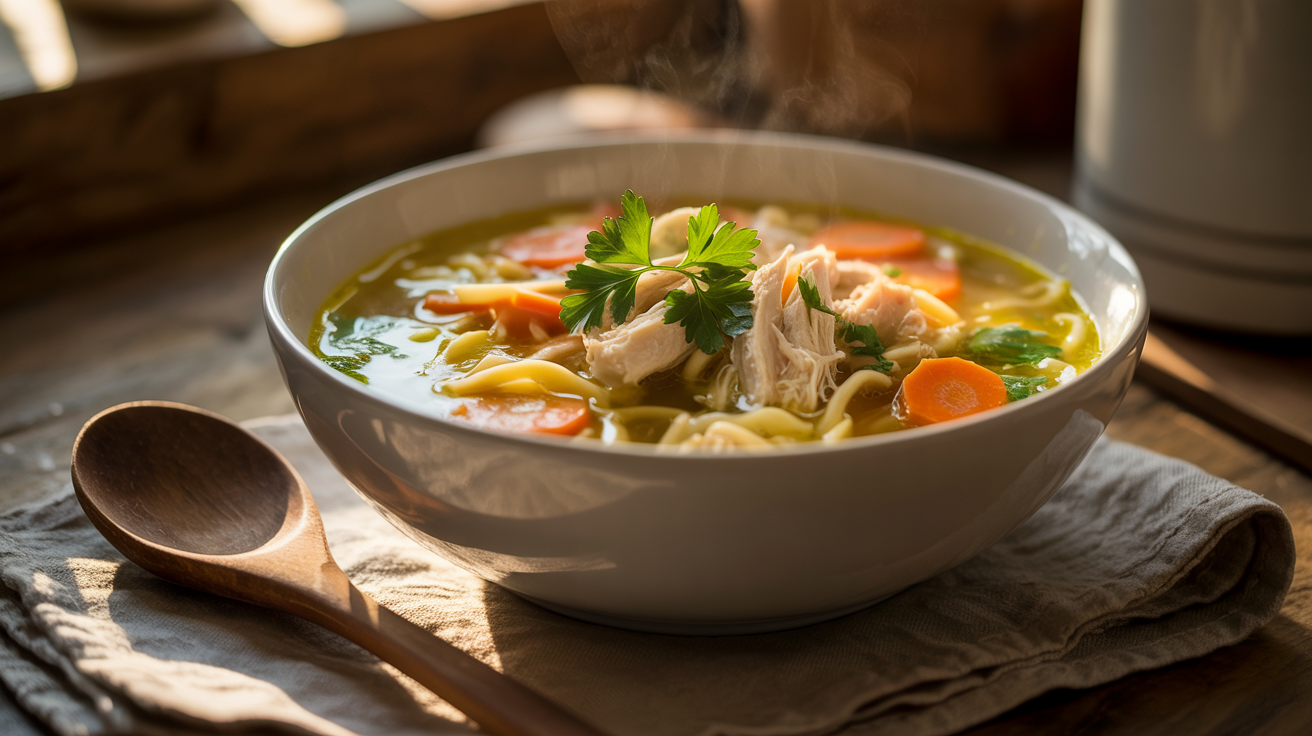
Perhaps the most classic and satisfying use for leftover rotisserie chicken is a big pot of chicken soup. And when you combine the shredded meat with a homemade stock made from the carcass, you’re creating something that’s genuinely better than anything from a can. Place the carcass in a large pot with a quartered onion, a few smashed garlic cloves, two celery stalks, two carrots, a bay leaf, and a generous pinch of salt. Cover with cold water — about 10 to 12 cups — and bring it to a boil, then reduce to a gentle simmer for 2 to 3 hours.
Strain the stock through a fine-mesh sieve and you’ve got the most flavorful base imaginable. From there, add diced carrots, celery, and onion, cook until tender, toss in egg noodles or rice, and add your shredded chicken back in at the very end so it warms through without getting rubbery. Season generously with salt, pepper, and fresh parsley.
This soup freezes incredibly well, making it a perfect candidate for batch cooking. Make a double batch on Sunday and you’ll have lunches or easy dinners sorted for weeks. It also makes a wonderful gift for a sick friend — just saying.
Make Quick and Easy Chicken Tacos

Rotisserie chicken tacos might be the fastest legitimate dinner you can make on a weeknight. Warm your shredded dark meat in a skillet over medium heat with a drizzle of olive oil, a teaspoon of cumin, half a teaspoon of smoked paprika, a pinch of garlic powder, and salt to taste. It takes about 5 minutes, and the smell alone will have everyone running to the kitchen.
Load up warm corn or flour tortillas with the seasoned chicken and pile on your toppings: shredded cabbage or lettuce for crunch, diced white onion, fresh cilantro, a squeeze of lime, and either salsa verde or a creamy chipotle sauce. Crumbled cotija cheese or a slice of avocado takes it over the top without adding much prep time.
The beauty here is customization. Set up a little taco bar and let everyone build their own — it works for picky kids and food-adventurous adults alike. This meal comes together in under 15 minutes start to finish, which makes it one of the best tools in your weeknight dinner rotation.
Toss It Into a Creamy Pasta Dish
Chicken pasta is a weeknight hero, and leftover rotisserie chicken makes it even easier. For a classic crowd-pleaser, cook 12 ounces of penne or rigatoni according to package directions. While the pasta cooks, melt 2 tablespoons of butter in a large skillet over medium heat, add 3 minced garlic cloves, and cook for 60 seconds until fragrant. Pour in 1 cup of heavy cream and ¾ cup of grated Parmesan, whisk until smooth, then fold in 2 cups of shredded white meat chicken.
Reserve about ½ cup of pasta water before draining — this starchy liquid is your secret weapon for loosening the sauce to the perfect consistency. Combine the drained pasta with the chicken cream sauce, add a splash of pasta water as needed, and finish with fresh cracked black pepper and a handful of fresh basil or flat-leaf parsley.
You can riff on this endlessly. Add sun-dried tomatoes and spinach for a Tuscan spin. Stir in pesto instead of cream sauce for something lighter. Toss with olive oil, lemon zest, capers, and arugula for a bright Mediterranean version. The chicken is the constant — everything else is totally flexible.
Build a Protein-Packed Grain Bowl
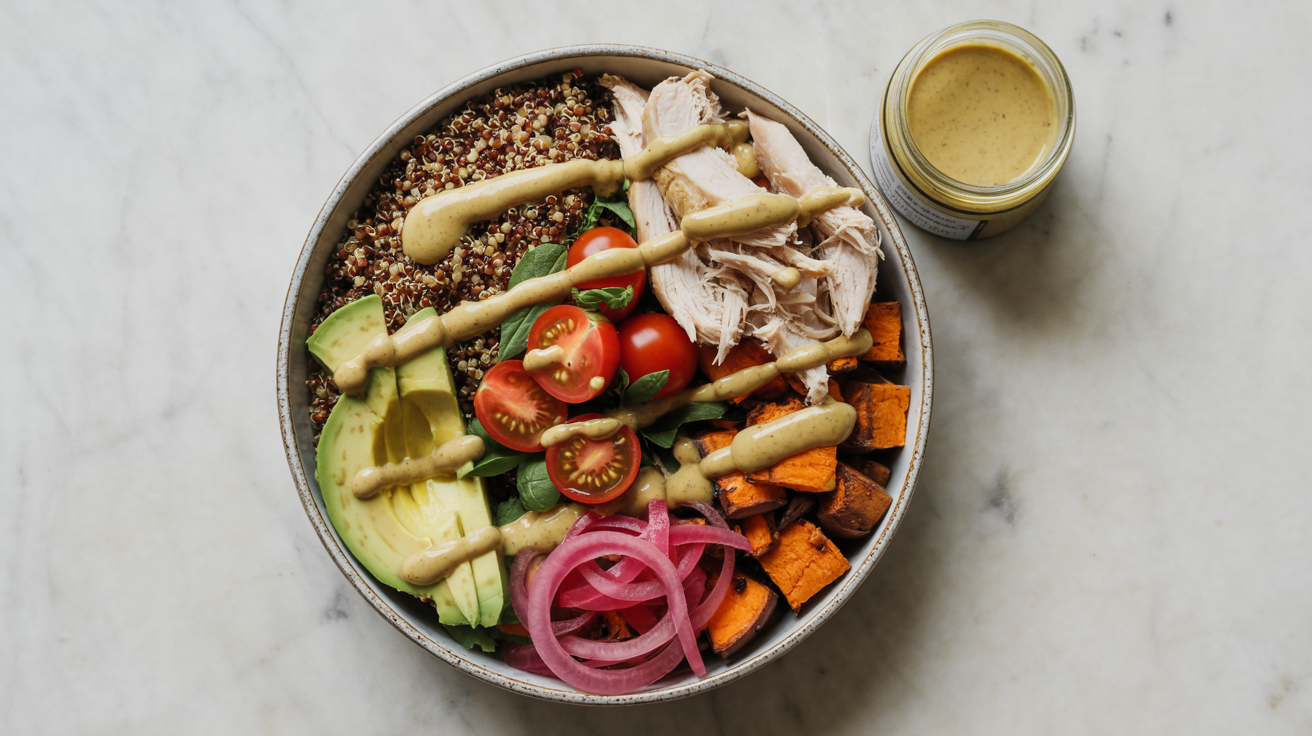
Grain bowls have earned their place as a lunchtime staple, and leftover rotisserie chicken makes them incredibly easy to pull together. Start with a base of cooked quinoa, brown rice, farro, or even cauliflower rice if you’re going lower carb. Aim for about 1 cup of grains per bowl as your foundation.
Layer on your shredded chicken — about ½ to ¾ cup per serving — then pile on roasted or raw vegetables. Roasted sweet potato, cucumber, cherry tomatoes, shredded red cabbage, pickled red onions, and sliced avocado are all fantastic options. The key to a great grain bowl is contrast: something warm, something cool, something crunchy, something creamy.
Finish with a drizzle of sauce to tie it all together. A lemon-tahini dressing (2 tablespoons tahini, 1 tablespoon lemon juice, 1 tablespoon olive oil, 1 clove garlic grated, water to thin) is endlessly versatile. So is a simple Greek yogurt-based tzatziki, a honey-sriracha glaze, or even a good store-bought balsamic vinaigrette. Meal prep four of these on Sunday and you’ve got lunches handled through Thursday.
Whip Up a Classic Chicken Salad Sandwich
There’s a reason chicken salad has stood the test of time — it’s comforting, satisfying, and endlessly customizable. The base is simple: 2 cups of finely chopped or shredded chicken, ⅓ cup of good-quality mayonnaise, 1 tablespoon of Dijon mustard, 2 stalks of celery finely diced, salt, pepper, and a squeeze of lemon juice. Mix it together and let it chill for at least 30 minutes in the fridge so the flavors can meld.
From there, you can take it in several directions. Add halved grapes and toasted walnuts for a classic Waldorf-style version. Stir in diced apple and a pinch of curry powder for something with a little more intrigue. Mix in chopped fresh tarragon and a handful of sliced almonds for a French-inspired twist that feels genuinely elevated.
Serve it on thick-cut toasted sourdough, in a buttery croissant, stuffed into a pita with lettuce and tomato, or scooped into lettuce cups for a lighter option. It keeps well in the fridge for up to 3 days, making it one of the best make-ahead lunches you can prep on a Sunday afternoon.
Frequently Asked Questions
Can I freeze shredded rotisserie chicken?
Absolutely. Shredded rotisserie chicken freezes well for up to 3 months. Store it in airtight freezer bags in 1 to 2 cup portions with the date labeled. Thaw overnight in the fridge or under cold running water in a sealed bag.
Can I use the rotisserie chicken skin in recipes?
Yes! The skin is packed with flavor. You can crisp it up in the oven at 400°F for 8 to 10 minutes on a baking sheet and use it as a topping for soups or salads — essentially homemade chicken cracklings. It also adds incredible flavor to the stock when simmered with the carcass.
What’s the best way to reheat leftover rotisserie chicken without drying it out?
The microwave can dry chicken out quickly, so if you use it, add a tablespoon of water or broth to the dish and cover it with a damp paper towel. For better results, reheat in a skillet over medium-low heat with a splash of broth or olive oil, stirring gently until just warmed through. This keeps moisture intact and gives you much better texture.
How many cups of shredded chicken does one rotisserie chicken yield?
A standard rotisserie chicken typically yields between 3 and 4 cups of shredded meat, depending on the size of the bird. That’s enough for two generous meals for a family of four when used as part of a dish with other ingredients.
Leftover rotisserie chicken is genuinely one of the most useful ingredients you can keep in your fridge. It’s already cooked, it’s already seasoned, and it plays well with nearly every cuisine and cooking style imaginable. Whether you’re stretching it into a week’s worth of meals or just trying to use up what’s left before it goes bad, the possibilities are so much broader than you might have initially thought. Stock your pantry with a few staple ingredients — canned tomatoes, pasta, good broth, grains — and you’ll never be at a loss for what to make. Now go raid that fridge and get cooking.