
You followed the recipe exactly. It said “caramelize the onions, about 10 to 15 minutes.” You used medium heat, you stirred, you waited — and what you got was a pan of soft, translucent onions that tasted fine but had none of that deep, jammy, almost-sweet richness you were hoping for. Or worse: you cranked the heat to speed things up and ended up with burnt edges and a bitter mess. Either way, the recipe let you down.
Here’s the thing: almost every published recipe that calls for caramelized onions lies about the timing. Not maliciously — food editors shorten cook times to make recipes seem more accessible. But the result is that generations of home cooks have been set up to fail at one of the most transformative techniques in the kitchen. Real caramelized onions — the kind that are deep golden-brown, jammy, sweet, and complex — take 45 to 60 minutes. Not 10. Not 20. Forty-five.
This guide explains the science behind why that’s true, gives you the no-fail method, and tells you exactly what went wrong the last time you tried. Once you know how long it really takes to caramelize onions, you’ll never waste a batch again.
The Real Answer: 45 to 60 Minutes (Not 10 to 20)
The gap between what recipes say and what actually works is one of the most frustrating lies in home cooking. When a recipe says “caramelize the onions, 10–20 minutes,” the writer almost certainly means something different than what you’re picturing.
At 10 to 20 minutes on medium heat, onions become translucent and soft. They lose their raw bite. They taste mellow and a bit sweet. That’s great — it’s a useful state — but it’s not caramelized. True caramelization is a chemical transformation: the sugars in the onion break down into hundreds of new flavor compounds that create that unmistakable deep, savory-sweet complexity. That process takes time, and it can’t be rushed without burning.
What you should expect at each stage:
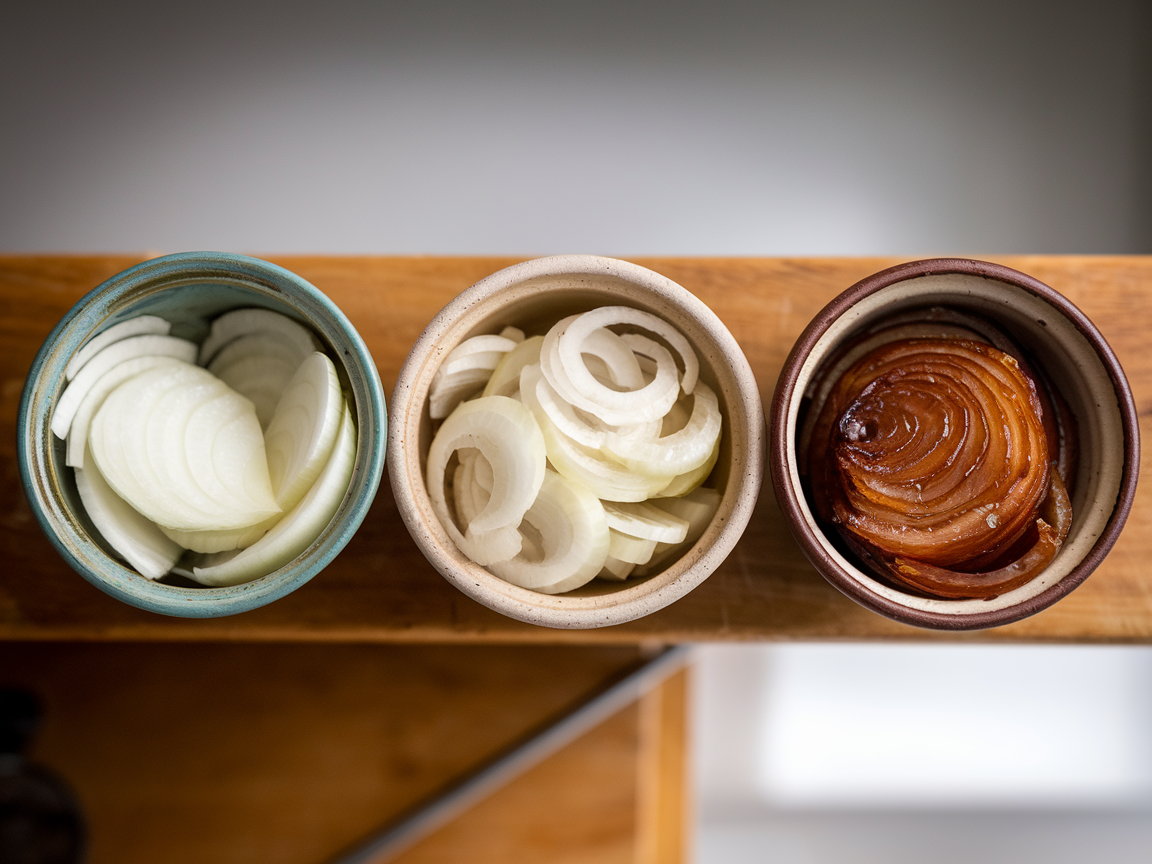
At 15–20 minutes: translucent, soft, slightly sweet. Sautéed. Good for many dishes, but not the goal here.
At 30–35 minutes: golden and starting to shrink significantly. You can smell the sugars.
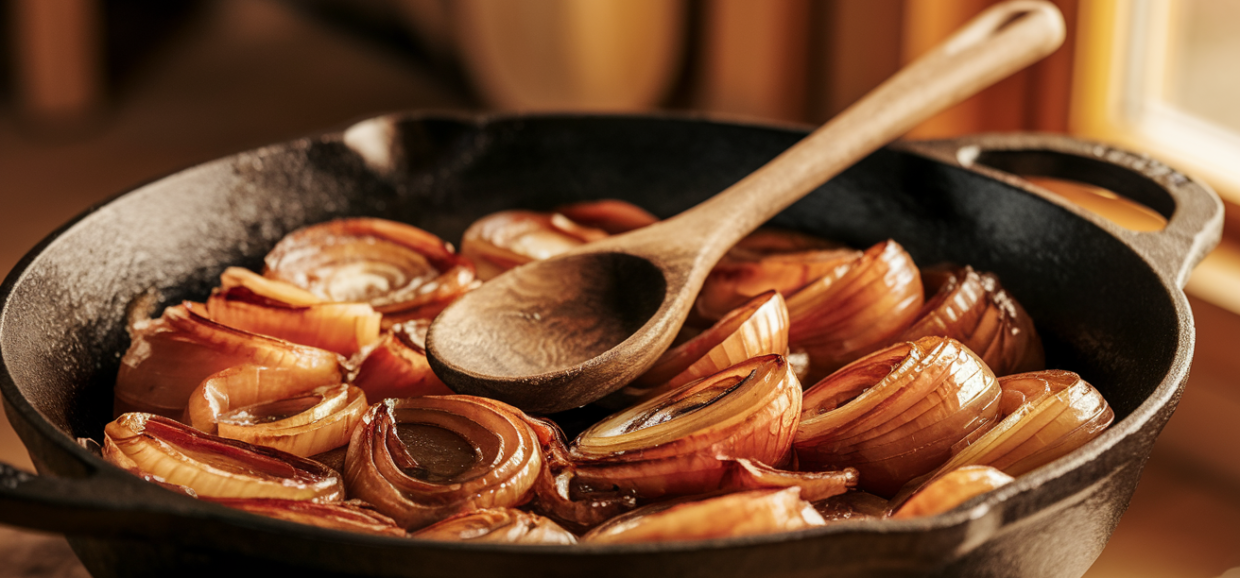
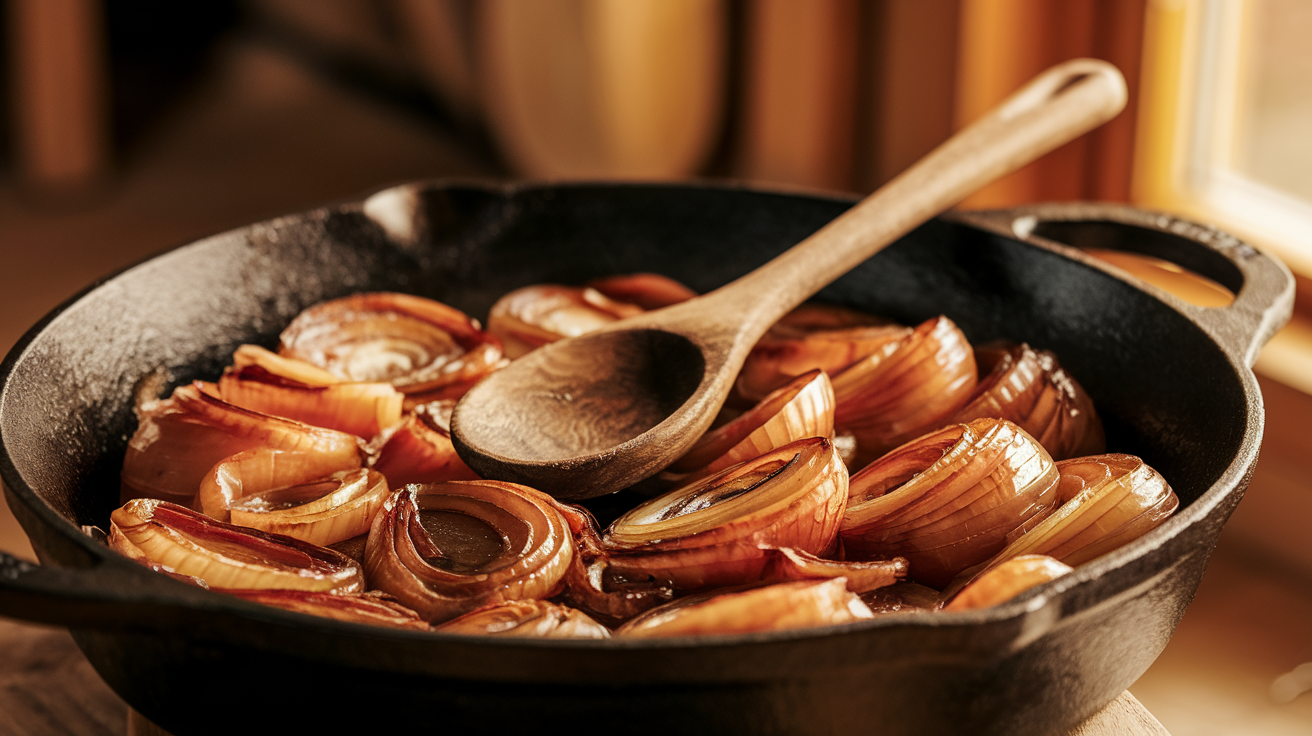
At 45–60 minutes: deep amber to dark brown, jammy, sweet, intensely flavored. This is caramelized.
Don’t stop at golden. Golden is a waypoint, not the destination.
Why Does It Take So Long? The Science, Simply Explained
Raw onions are roughly 89% water. Before any browning can happen, that water has to evaporate. At medium-low heat, that process alone takes 20 to 30 minutes. You’re not failing during this phase — you’re just waiting for physics.
Once enough moisture leaves, the temperature of the onions can rise above 212°F and the real transformations begin. Two overlapping reactions are responsible for the color and flavor you’re after. Caramelization is the breakdown of the onion’s natural sugars at temperatures above 320°F. The Maillard reaction — technically involving proteins and sugars reacting together — adds the savory depth and complexity. Both require sustained heat and time.
The reason you can’t just turn up the heat is simple: the outside of the onion burns before the inside finishes evaporating its water and softening. You get bitter, scorched edges on an onion that’s still essentially raw in the center. Low, slow heat is the only path to the real thing. As one comparison: if you’ve ever made a truly good restaurant-quality dish at home, the answer was almost always patience with heat.
The No-Fail Caramelized Onion Method
The technique matters as much as the timing. Follow this method and the 45-minute investment becomes nearly foolproof.
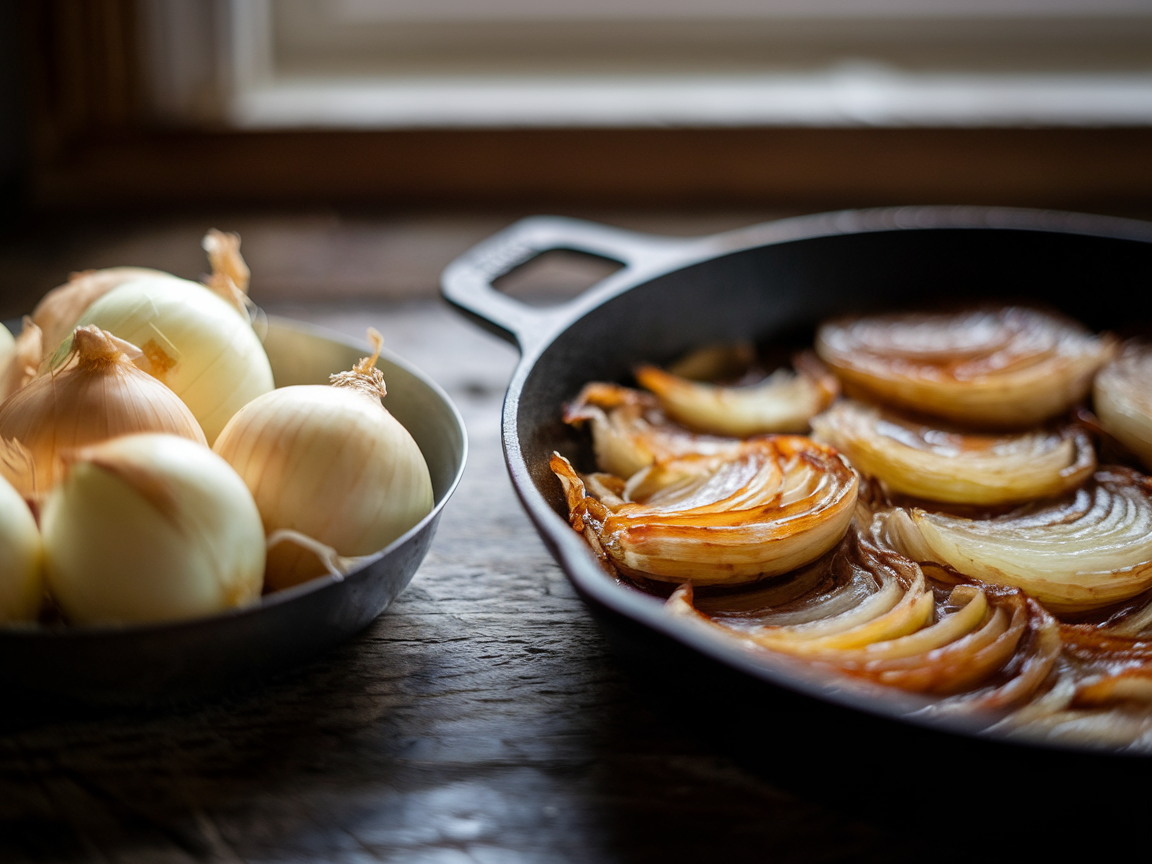
Choose the right pan. A wide, heavy pan — cast iron or stainless steel — gives you the most surface area, which means faster moisture evaporation and more contact between onion and hot metal. Avoid nonstick: it traps steam and inhibits browning.
Use more onions than you think. Two to three pounds of raw onions will yield about one cup of caramelized onions. They shrink dramatically. If you’re making caramelized onions for four people to top burgers, start with at least 2 lbs.
Fat: oil and butter. Use a tablespoon of neutral oil plus a tablespoon of butter. The oil raises the smoke point; the butter adds flavor and helps browning. Add a pinch of salt at the start — it draws out moisture and speeds the softening phase.
Heat: medium-low. Not medium. Not medium-high. Set your burner to medium-low and commit to it. If you hear loud sizzling, your pan is too hot.
Stir every 5 to 7 minutes. Not constantly. Letting the onions sit undisturbed builds fond — those brown bits on the pan that add flavor. When you stir, scrape the bottom. If the fond is getting dark between stirs, drop the heat slightly.
The last 15 minutes require attention. Once the onions hit deep golden, they’re close. Stir every 2 to 3 minutes and watch carefully. The sugar concentration is high and they can go from perfect to burnt quickly.
Common Mistakes That Ruin Caramelized Onions
Most failed batches come down to one of four problems:
Heat too high. This is the most common mistake. The onion edges brown and char before the sugars inside have fully broken down. You get bitterness instead of sweetness, and there’s no fixing it. If you turn the heat down at the first sign of burning, you can usually salvage the batch — but the damage to the scorched pieces is permanent.
Pan too small or too crowded. When onions are piled up instead of spread out, they trap each other’s steam. Instead of evaporating and browning, they essentially steam themselves in their own moisture. The result is soft onions that never develop real color no matter how long you cook them. Use the largest pan you have, and don’t worry about the onions mounding at the start — they’ll cook down to a fraction of their volume.
Stirring too often. It feels like the responsible thing to do, but constant stirring prevents the onion surface from making sustained contact with the hot pan. That contact is what creates the Maillard reaction and builds the color. Stir every 5 to 7 minutes during the first 30 minutes. Then every 2 to 3 in the final stretch.
Stopping at “golden.” Pale golden onions at the 30-minute mark look close, but they still have significant water content and have only begun caramelizing. The flavor jump from golden to deep amber is enormous. Push through. Set a timer if you have to.
Can You Speed It Up? Shortcuts That Work (and One That Doesn’t)
There are a few legitimate ways to shave time off the process — and one method that people swear by but doesn’t actually work.
Cover the pan for the first 15 minutes. This traps steam and speeds up the initial softening phase dramatically. After 15 minutes, remove the lid and let the moisture evaporate. This can cut the total time to 35–40 minutes without sacrificing quality.
Deglaze with a splash of liquid at the 30-minute mark. A tablespoon or two of red wine, dry sherry, or balsamic vinegar added when there’s fond sticking to the pan adds flavor complexity and loosens the brown bits back into the onions. This doesn’t speed the caramelization itself, but it deepens the flavor significantly. Use balsamic sparingly — a teaspoon goes a long way.
A pinch of baking soda accelerates browning. A tiny pinch (less than ⅛ teaspoon per 2 lbs of onions) raises the pH slightly, which accelerates the Maillard reaction. The flavor is slightly different — some cooks love it, some find it changes the taste too much. Worth experimenting with.
What doesn’t work: turning up the heat. Every cook has tried this at least once. The result is consistently the same: burnt outside, raw-ish inside, bitter aftertaste. There’s no temperature that caramelizes onions faster without burning them. The chemistry requires time. Accept it, and you’ll be rewarded every time.
What to Do With Perfectly Caramelized Onions
The effort is worth it — and once you have a batch, a small amount goes an enormous distance in flavor. Here’s where they shine:
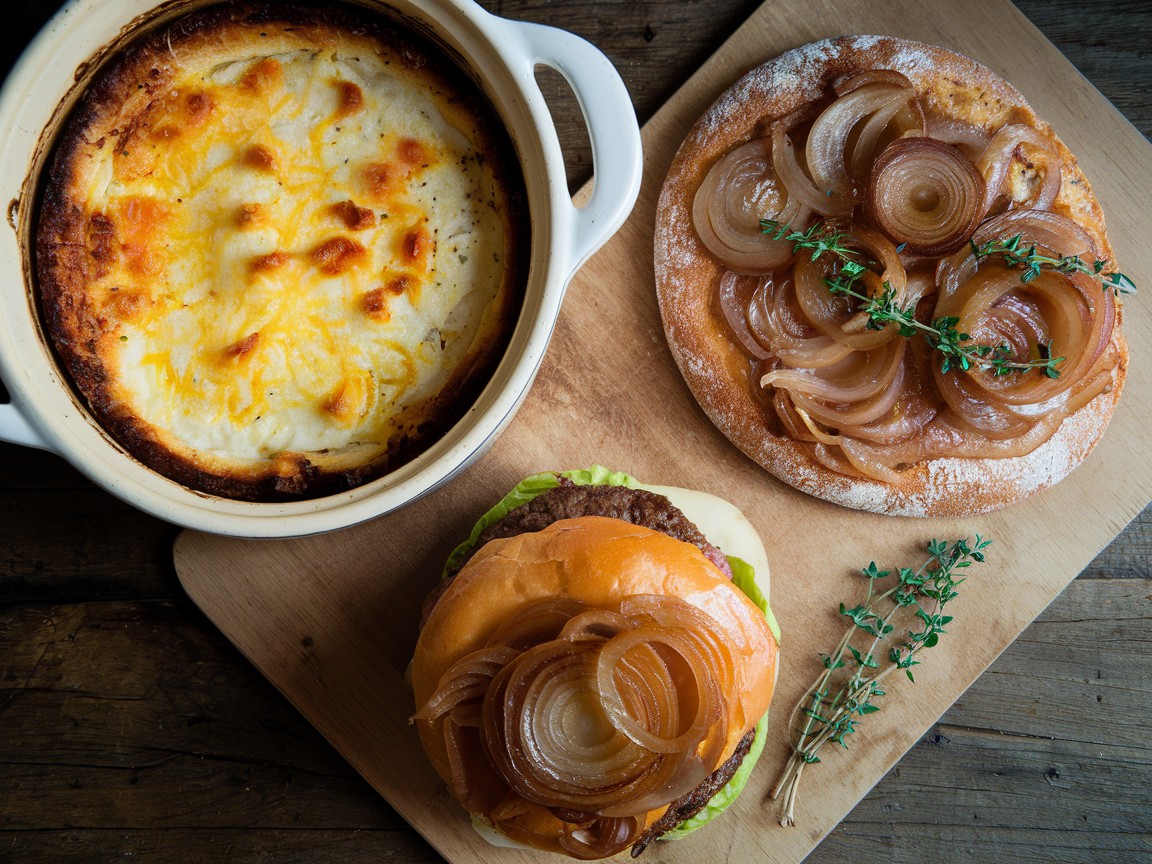
- French onion soup — the gold standard for a reason. A batch of properly caramelized onions plus beef broth, a crouton, and melted Gruyère is one of the best things you can make in a home kitchen.
- Burger topping — one of the fastest ways to take a basic burger to restaurant level. Try them paired with blue cheese or sharp cheddar.
- Pizza and flatbread — a few spoonfuls with fresh thyme and goat cheese on a homemade flatbread is exceptional. Also great on one-pan dinner recipes built around a focaccia base.
- Stirred into pasta, mashed potatoes, or risotto — a tablespoon or two transforms a simple starch dish into something complex and deeply savory.
- Storage — refrigerate in an airtight container for up to 5 days, or freeze in tablespoon-size portions in a muffin tin, then transfer to a zip bag. Frozen caramelized onions are one of the most useful things you can have on hand.
Frequently Asked Questions
Why are my caramelized onions bitter instead of sweet?
Bitterness almost always means the heat was too high and the onions scorched before the sugars could break down properly. Once the bitter compounds form, there’s no reversing them. Lower your heat significantly next time — if you hear active sizzling at any point in the first 30 minutes, it’s too hot. The pan should be quiet-ish, with just gentle activity.
Can you caramelize onions in advance?
Yes, and honestly it’s the best way to use them. Caramelized onions keep in the refrigerator for up to 5 days and reheat beautifully in a pan with a splash of water or broth. They also freeze well for up to 3 months. Making a double batch on a Sunday afternoon sets you up for the whole week.
Do caramelized onions have more sugar than raw onions?
No — the total sugar content stays roughly the same. What changes is concentration: as water evaporates, the sugars are packed into a much smaller volume, so the sweetness is more intense per bite. The caramelization process also converts some simple sugars into more complex flavor compounds that read as “deep sweetness” rather than sharp or raw sweetness.
What type of onions are best for caramelizing?
Yellow onions are the standard for good reason — they have a balanced sugar and sulfur content that caramelizes well and produces a complex flavor. Sweet onions (Vidalia, Walla Walla) caramelize faster and taste sweeter, but they can become almost candy-like. Red onions add beautiful color but slightly more bitter notes. White onions work but are less common in this application. For most purposes, yellow onions are the answer.
How do I know when the onions are truly done?
Color and texture are your best indicators. Done caramelized onions are deep amber to dark brown — not pale gold. They should be completely limp and jammy, with no firm texture remaining. They should have reduced to roughly one-quarter of their original volume. If you taste them and they’re sweet, rich, and slightly savory all at once with no raw onion bite, you’re there.
Good Things Take Time — and This Is One of Them
Knowing how long it really takes to caramelize onions changes how you cook. You stop feeling like you failed when your onions aren’t golden at 15 minutes. You set a timer, lower your expectations for speed, and let the chemistry do its work. And then, around the 45-minute mark, you taste a spoonful of something that’s worth every minute of the wait.
Make a big batch this weekend, freeze what you don’t use, and see what happens when you drop a tablespoon of them into your next bowl of pasta or your next burger. Share what you made in the comments — we want to see it.