
You’ve just cooked a beautiful pot of pasta — drained it, walked away for two minutes, and returned to find a clumped-together, sticky mess that looks more like a pasta brick than a delicious dinner. Sound familiar? You’re definitely not alone. Pasta sticking together is one of the most common kitchen frustrations, and it happens to home cooks at every skill level. The good news is that once you understand why it happens, fixing and preventing it becomes incredibly simple.
As an Amazon Associate, this site earns from qualifying purchases. Some links on this page are affiliate links.
The culprit is almost always starch. When pasta cooks, it releases a coating of gelatinized starch onto its surface. The moment that starchy pasta hits cool air — or sits in a colander without anything to keep the strands separate — those starches bond together like glue. But don’t panic. Whether you’re dealing with clumped leftover pasta or trying to prevent sticking in real time, we’ve got every fix and prevention trick you need right here.
Step 1: Use a Large Pot With Plenty of Water
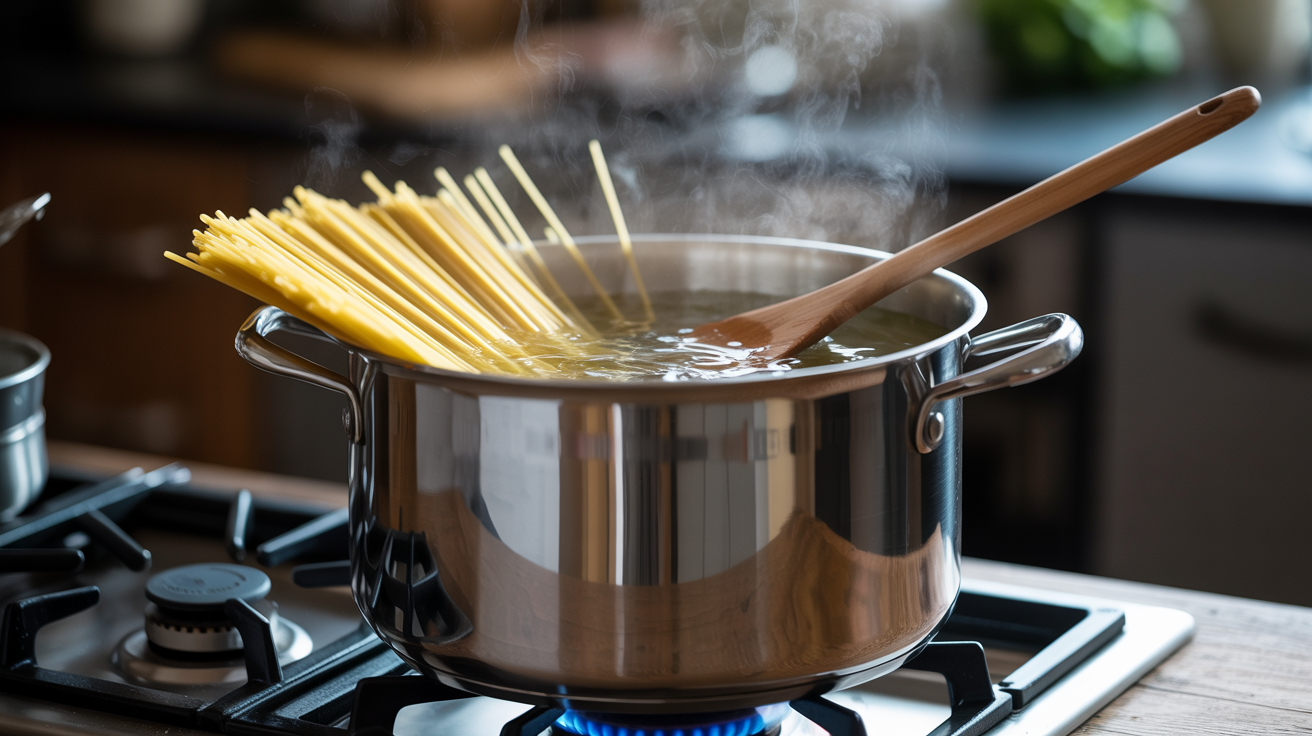
This is where pasta success starts — before you even turn on the stove. If you’re cooking pasta in too little water, the concentration of released starch in the pot becomes extremely high. That starchy water coats each strand so thickly that sticking becomes almost inevitable, even while the pasta is still cooking. The standard rule is to use at least 4 to 6 quarts of water per pound of pasta. Yes, that’s a lot — but it gives your pasta room to move freely and dilutes the starch so it doesn’t become a paste.
A large pot also means your water returns to a boil faster after you add the pasta. Cold pasta hitting water that’s dropped below a boil will sit there getting increasingly starchy and gummy before it even has a chance to cook properly. Bring your water to a rolling, aggressive boil before adding the pasta, and keep the heat on high so it recovers quickly. Give it a good stir right when the pasta hits the water to separate the strands immediately.
One more thing: stir your pasta regularly throughout cooking — every minute or two is ideal. This constant movement prevents the strands from settling against each other and fusing together as the starch gelatinizes. It’s a small habit that makes a huge difference in the final texture and stickiness of your cooked pasta.
Step 2: Salt Your Water Generously — But Skip the Oil
You’ve probably heard the advice to add oil to your pasta water to prevent sticking. It sounds logical, but it’s actually counterproductive. Oil is hydrophobic — it floats on top of the water and doesn’t actually coat the pasta while it cooks. The only time the oil makes contact with the pasta is when you drain it, and at that point it coats the noodles in a slick layer that prevents your sauce from adhering properly. You’ll end up with pasta that slides right off your fork and a sauce that pools at the bottom of the bowl.
Salt, on the other hand, is your real best friend here. Generously salted water — we’re talking water that tastes like mild seawater, roughly 1 to 2 tablespoons of kosher salt per gallon — seasons the pasta from the inside out and actually strengthens the gluten structure slightly. A stronger gluten network means the pasta holds its shape better and releases slightly less surface starch. This isn’t just about flavor; it’s about texture and stickiness too.
Skip the oil entirely and lean into the salt. Your pasta will taste better, your sauce will cling better, and you’ll have fewer sticking problems to deal with. This is one of those cases where the traditional Italian approach — seasoned water, no oil — is genuinely the right call both culinarily and scientifically.
Step 3: Don’t Rinse Your Pasta After Draining
Rinsing cooked pasta with cold water is another common mistake that seems like it should help but actually makes things worse — at least when you’re serving hot pasta with sauce. Rinsing does remove some of the surface starch, which means less sticking immediately after draining. But that surface starch is also what allows your sauce to grab onto the pasta and create a cohesive, restaurant-quality dish. Without it, your sauce sits on top of the pasta rather than becoming one with it.
Rinsing also drops the temperature of your pasta dramatically, which means your sauce won’t heat through properly when you toss them together, and the fat in your sauce may not emulsify correctly. The result is a greasy, separated sauce instead of a silky, unified one. The only time you should rinse pasta is when you’re making a cold pasta salad, where you actually want to stop the cooking and don’t need the sauce to adhere the same way.
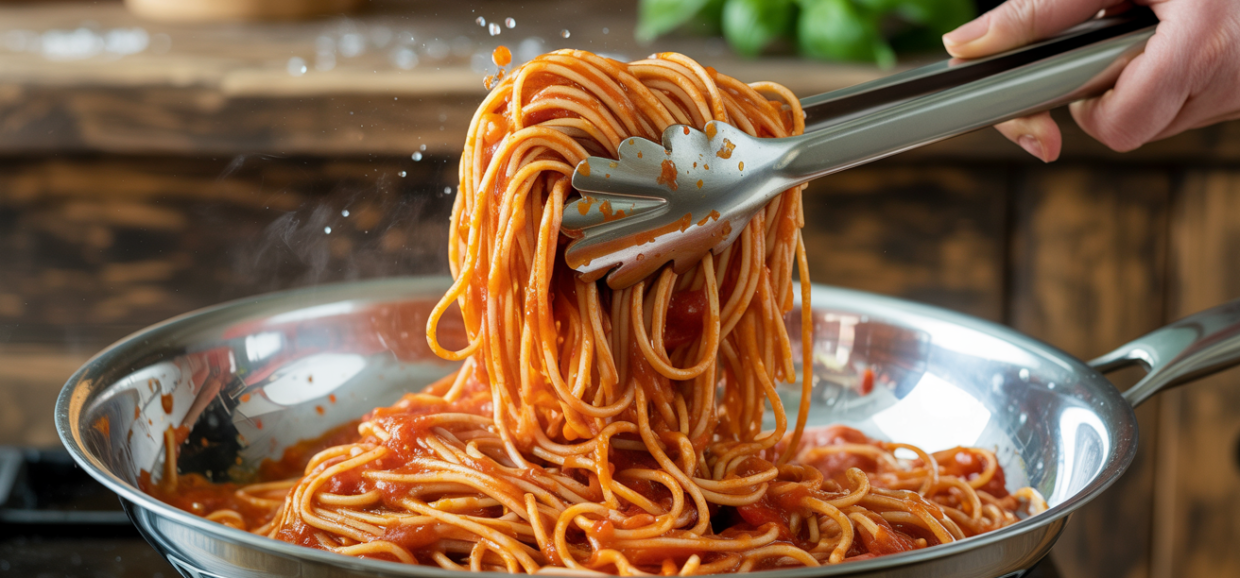
Instead of rinsing, transfer your pasta directly from the boiling water into your sauce using tongs or a pasta spider — or drain it and immediately toss it with your sauce in a hot pan. That constant motion and heat is all you need to prevent sticking and create a beautifully emulsified dish.
Step 4: Save and Use Your Pasta Water
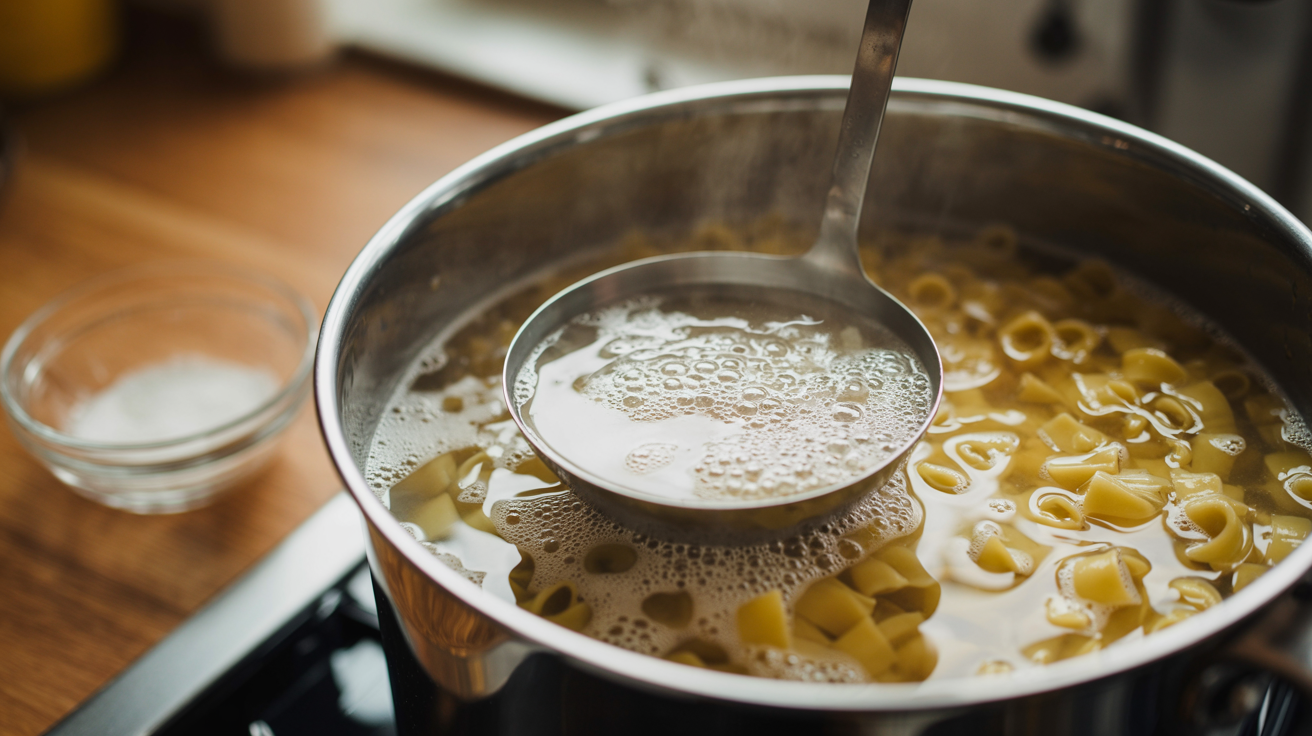
Before you drain that pot, scoop out at least 1 to 2 cups of the cooking water and set it aside. This starchy, salty liquid is liquid gold in Italian cooking for a reason. When you add it to your sauce — even just a few tablespoons — it helps the sauce emulsify and cling to the pasta beautifully. The starch in the water acts as a natural thickener and binder, making your sauce silky and cohesive rather than thin and watery.
But pasta water also does double duty as an anti-sticking tool. If your drained pasta is sitting in the colander or a bowl and starting to clump while you finish the sauce, add a splash of that warm pasta water and toss. The warm starchy water rehydrates the surface of the pasta just enough to loosen the bonds forming between strands without washing away the good surface starch you need for the sauce.
Think of pasta water as your emergency rescue tool for sticky pasta. Keep a ladle or measuring cup near the stove specifically for this purpose so you never forget to save it in the rush of draining. Once you start using pasta water routinely, you’ll wonder how you ever cooked pasta without it.
Step 5: Toss Immediately With Sauce or a Little Fat
The window between draining your pasta and it turning into a sticky clump is surprisingly short — we’re talking 60 to 90 seconds in some cases. This means you need to have your sauce ready and waiting before the pasta is done, not after. Get your sauce hot in a wide pan, taste and adjust the seasoning, and then the moment that pasta is drained, it goes straight into the sauce and gets tossed vigorously.
If for some reason your sauce isn’t ready or you need to hold the pasta for a few minutes, toss it immediately with a drizzle of good olive oil or a small pat of butter. Just one to two teaspoons of fat per serving is enough to coat each strand and create a barrier that slows the starch-to-starch bonding. This buys you several minutes of non-sticky time while you finish whatever you’re working on.
The key word here is immediately. Every second counts once that pasta leaves the boiling water. Set up your workspace in advance so you’re not scrambling — warm bowl ready, sauce hot, pasta water saved. Treat the drain-and-toss moment like a relay race handoff: smooth, fast, and intentional.
Step 6: Fix Already-Stuck Pasta
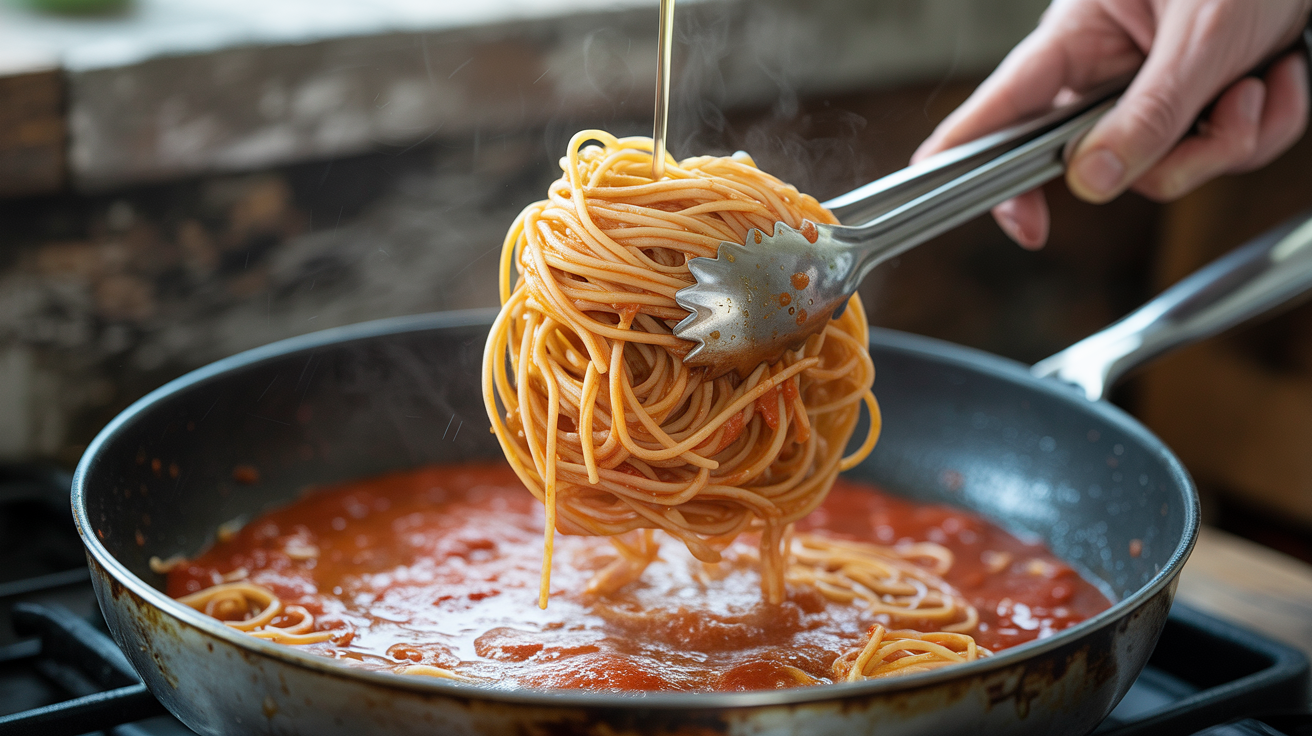
If you’ve already got a clumped pasta situation on your hands, don’t throw it out — it’s very fixable. The quickest method is to dunk the stuck pasta back into a pot of hot (not necessarily boiling) water for about 30 to 60 seconds. This rehydrates the surface starches and breaks the bonds that formed between the strands. Use tongs to gently separate them as they loosen up, then drain quickly and move directly into your sauce.
If you don’t want to rewarm in water, place the clumped pasta in a microwave-safe bowl, add a tablespoon or two of water, cover loosely, and microwave in 30-second intervals, stirring between each. The steam will loosen the strands. Alternatively, add the clumped pasta directly to a hot pan with your sauce and some pasta water — the combination of heat, moisture, and movement will typically break it apart within a minute or two of tossing.
For leftover pasta that’s been refrigerated and has turned into a solid mass, the same principles apply. Add moisture (olive oil, butter, pasta water, a splash of the sauce) and heat gently while stirring. Never try to force cold, stuck pasta apart dry — you’ll break the noodles and end up with a frustrating mess. Give it heat and liquid, and it will cooperate.
Step 7: Store Leftover Pasta Correctly
If you’re cooking pasta ahead or storing leftovers, the way you store it makes all the difference between a sad, glued-together lump and a still-enjoyable next-day meal. For pasta that’s already sauced, store it in an airtight container in the fridge — the sauce itself acts as a barrier between the strands and prevents the worst of the sticking. Add a tablespoon of extra sauce or olive oil before sealing if the pasta seems dry.
For unsauced cooked pasta — say, you’re batch-cooking for meal prep — toss it thoroughly with a generous drizzle of olive oil (about one tablespoon per two servings) immediately after draining and cooling slightly. Spread it out on a sheet pan to cool fully before transferring to a storage container. This prevents the residual heat from creating steam that accelerates sticking, and the oil coating keeps each strand separate for up to 3 days in the fridge.
When reheating stored pasta, always add moisture back in. A splash of water, broth, or sauce in the pan or microwave makes the difference between gummy and great. Heat gently over medium-low, stirring frequently, and your pasta will come back to life beautifully — no brick pasta in sight.
Frequently Asked Questions
Why does pasta stick together even when I stir it while cooking?
Stirring during cooking helps, but if you’re using too small a pot or too little water, the starch concentration gets too high regardless. Make sure you’re using at least 4 to 6 quarts of water per pound of pasta and stirring every 1 to 2 minutes throughout cooking for best results.
Does olive oil in the pasta water prevent sticking?
No — oil floats on top of the water and doesn’t coat the pasta while it cooks. It only coats the pasta at draining, where it creates a barrier that prevents sauce from adhering. Skip the oil in the water and use properly salted water with a large pot instead.
How long can I hold cooked pasta before it sticks?
Without any fat or sauce, cooked pasta will start sticking within 60 to 90 seconds of draining. Tossed with olive oil or butter, you can hold it for 5 to 10 minutes. Always have your sauce ready before draining.
Is it okay to rinse pasta after cooking?
Only if you’re making cold pasta salad. Rinsing removes the surface starch that helps sauce cling to the pasta and cools it too much for hot dishes. For hot pasta dishes, skip the rinse and go straight into your sauce.
Can I fix pasta that has already stuck together?
Absolutely. Dunk it in hot water for 30 to 60 seconds while gently separating with tongs, or add it directly to a hot pan with sauce and a splash of pasta water. Heat and moisture will break up the clumps within a minute or two.
The Bottom Line
Sticky pasta is almost always a starch problem, and starch is something you can absolutely control with a few smart habits: a big pot of salted water, constant stirring, no rinsing, saved pasta water, and immediate saucing. Once these steps become second nature, you’ll never face the pasta brick problem again. The Italian nonnas had it right all along — respect the pasta, respect the water, and have your sauce ready and waiting. Now go cook something delicious.