
If you’ve ever followed a baking recipe and stumbled across the instruction to “fold” an ingredient, you might have paused and wondered exactly what that means — and why you can’t just stir like you normally would. Folding is one of those technique words that gets tossed around in recipes without much explanation, yet it can make or break your baked goods. Get it wrong, and your gorgeous soufflé collapses, your angel food cake turns dense, or your mousse loses that airy magic that makes it worth making in the first place.
The good news is that once you truly understand what folding means in baking — not just the motion, but the science and purpose behind it — you’ll approach every recipe with much more confidence. We’ve broken down the 10 most important things you need to know about folding in baking, from the basic definition all the way through common mistakes, tools, and when to break the rules. Let’s dig in.
1. Folding Is a Gentle Mixing Technique Designed to Preserve Air
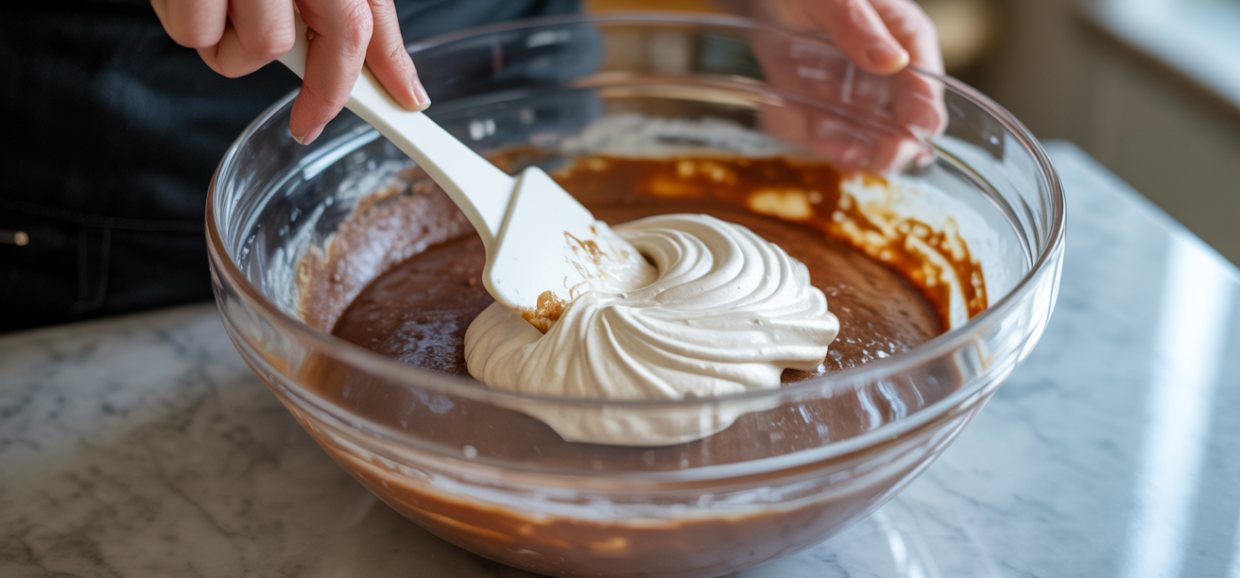
At its most fundamental level, folding means combining two mixtures together using a careful, deliberate motion that minimizes the loss of air already trapped inside one or both of them. Unlike stirring — which moves ingredients in fast, circular motions — folding uses a slow, sweeping arc that goes down through the center of the bowl, across the bottom, and up the sides to turn the mixture over on itself.
The reason this matters comes down to physics. When you whip egg whites or heavy cream, you’re forcing millions of tiny air bubbles into the mixture. Those bubbles are what give your baked goods their lift and lightness. Aggressive stirring breaks those bubbles almost immediately, collapsing the structure you worked so hard to build. Folding protects them.
Think of it like gently tucking a blanket rather than throwing it across the bed. The goal is always the same: get two things combined without destroying what makes one of them special.
2. The Classic Folding Motion Has a Specific Path to Follow
Proper folding technique follows a very specific movement. Start by adding your lighter mixture (like beaten egg whites or whipped cream) on top of the heavier base. Using a large rubber spatula, cut straight down through the middle of the bowl all the way to the bottom. Then sweep the spatula across the bottom and up the far side of the bowl, bringing the heavier batter up and over the lighter foam.
Rotate the bowl about a quarter turn and repeat. After each fold, you should be turning both the bowl and the batter in a continuous rhythm — cut, sweep, fold, rotate. Most recipes need between 20 and 40 folds before everything is properly incorporated, but you should stop the moment you no longer see large white streaks of egg whites or cream.
A few small streaks are totally fine — they’ll disappear during baking. Overmixing, even with the gentlest folding motion, is still a threat, so trust your eyes over your instinct to keep going.
3. Folding Is Most Critical When Working With Whipped Egg Whites
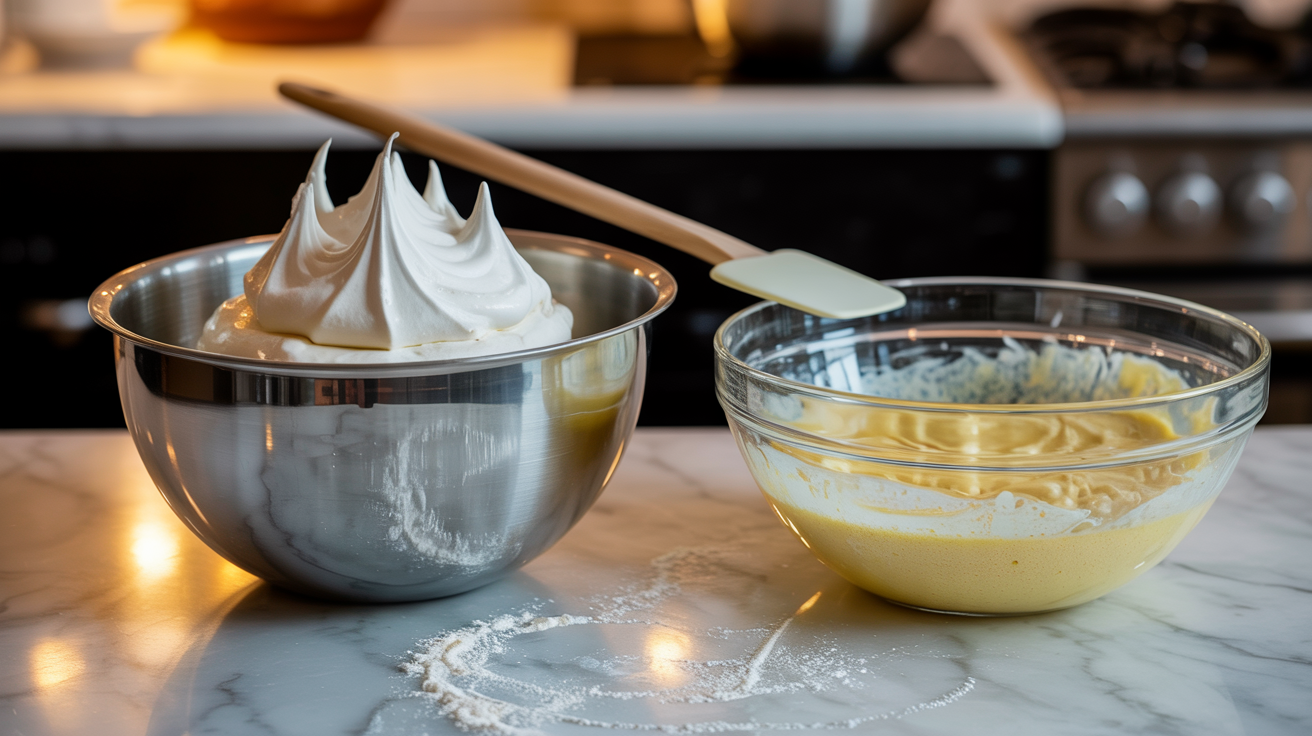
The most common situation where folding is absolutely non-negotiable is when you’re incorporating whipped egg whites into a batter. This comes up in recipes for soufflés, angel food cake, chiffon cake, mousse, and certain sponge cakes. In every case, those whipped whites are doing the heavy lifting — literally — providing the air that makes the final product rise and stay light.
Egg whites whipped to stiff peaks are incredibly fragile. The proteins have stretched and reorganized around air pockets, creating a foam that can collapse within seconds if treated roughly. Even one or two aggressive stirs with a spoon can deflate your whites significantly, resulting in a flat, rubbery cake or a soufflé that never achieves that dramatic puff.
Pro tip: always fold a small amount of the whipped whites into your heavier batter first — about one-third of the total. This “sacrificial” portion loosens the batter and makes it easier to fold in the rest without deflating everything. It’s a small step that makes a huge difference.
4. Whipped Cream Also Requires Gentle Folding
Just like egg whites, whipped cream is a foam structure built around air bubbles. When you fold whipped cream into a mousse base, a cheesecake filling, or a chilled dessert, the technique requires the same patience and care. Stirring whipped cream into a mixture turns it grainy and flat, giving you a dense, heavy result instead of the billowy cloud you were aiming for.
The temperature of your base matters a lot here too. If you’re folding whipped cream into a chocolate ganache or a custard, make sure that base has cooled down to room temperature or is slightly chilled. Adding whipped cream to a warm mixture will melt the fat structure before you even get the chance to fold, making the effort pointless.
For the best results, use cream that’s been chilled in the refrigerator for at least 30 minutes before whipping, and work quickly once it’s folded in. Cold temperatures help maintain the structure throughout the mixing process.
5. Your Tool Choice Matters More Than You Think
The right tool for folding is a large, wide, flexible rubber spatula — not a wooden spoon, not a whisk, and definitely not an electric mixer. A rubber spatula conforms to the shape of your bowl, allowing you to scrape cleanly along the bottom and sides with each pass. This maximizes efficiency and means you need fewer total folds to fully incorporate the mixture, which reduces deflation.
Bowl shape matters too. A wide, shallow bowl makes folding harder because you lose surface area to work with. A deep, round bowl — ideally wider at the top than the bottom — lets you use the full sweeping arc of the folding motion without ingredients spilling over the sides.
Some bakers swear by using their hands for certain folding tasks, particularly in enriched doughs or very thick batters. For most foam-based folding, though, a high-quality silicone spatula in the 11- to 13-inch range is the single best investment you can make for your baking toolkit.
6. Folding Flour Into Cake Batters Prevents Tough Gluten Development
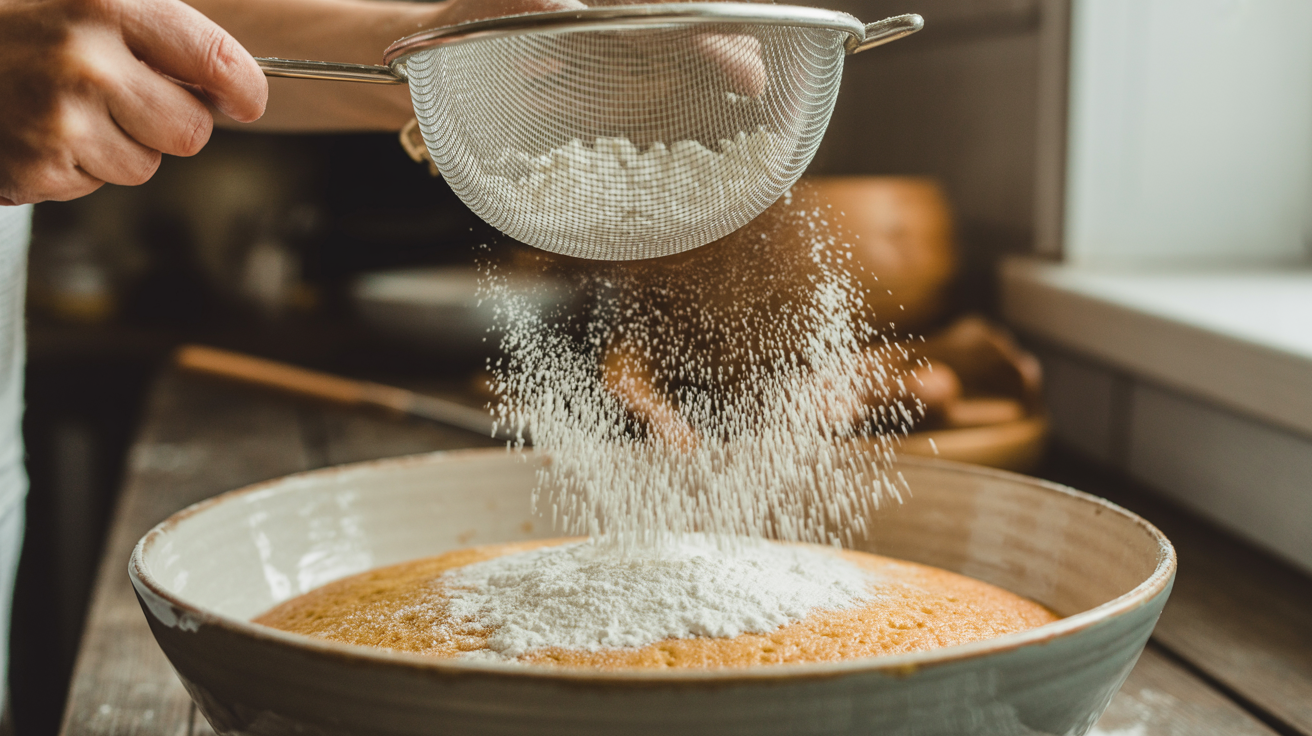
Folding isn’t just for foams. When a recipe tells you to fold flour into a cake batter — particularly a delicate sponge or a genoise — it’s because overmixing flour activates gluten proteins, which make your cake tough, chewy, and dense rather than tender and crumbly. The longer and more vigorously you mix flour, the more gluten you develop.
Folding flour into a batter sifts it in gradually and works it in with minimal mechanical action, dramatically reducing gluten formation. You’ll often see this in French-style sponge cakes where flour is sifted directly over the surface of the batter and then folded in using just 15 to 20 gentle strokes.
The same principle applies when making pancakes, muffins, and quick breads. Even if a recipe doesn’t specifically say “fold,” stopping once the flour is just barely combined — a few lumps are fine — will always produce a more tender result than mixing until perfectly smooth.
7. Temperature and Timing Affect How Well Folding Works
Baking is science, and folding is no exception to the rule that temperature affects everything. Cold butter-based batters are too stiff to fold properly — the heavy base resists incorporating the lighter foam, forcing you to work too hard and deflate it in the process. Room temperature batters fold more easily and require fewer strokes.
Timing is equally critical. If you whip your egg whites 20 minutes before your batter is ready, they’ll start to weep liquid at the bottom and become grainy, making them nearly impossible to fold in cleanly. Always prepare your foam last, right before you need it, and fold it in immediately.
Similarly, don’t let your folded batter sit before baking. Air cells start collapsing the moment mixing stops, so get that soufflé into the preheated 375°F oven or pour that chiffon batter into its ungreased tube pan as quickly as possible after folding is complete.
8. Over-Folding Is Just as Damaging as Under-Folding
Here’s the mistake most beginner bakers make: they’re so nervous about under-incorporating their ingredients that they fold too many times. Over-folding deflates your foam just as surely as stirring does — it just does it more slowly. By the time your batter looks perfectly uniform, you may have already lost 30 to 40 percent of the air you built up during whipping.
The key benchmark is this: stop folding the moment you no longer see distinct streaks of white. Small ribbons or faint swirls are perfectly fine and will bake out completely. If you’re unsure, err on the side of a few remaining streaks rather than one more fold.
Practice helps enormously here. Make a batch of simple whipped cream, fold it into plain yogurt, and compare the texture after 10 folds versus 30 folds. The visual and textural difference will train your hands and eyes better than any written description ever could.
9. Some Recipes Use a “Cut and Fold” Variation for Heavier Mixtures
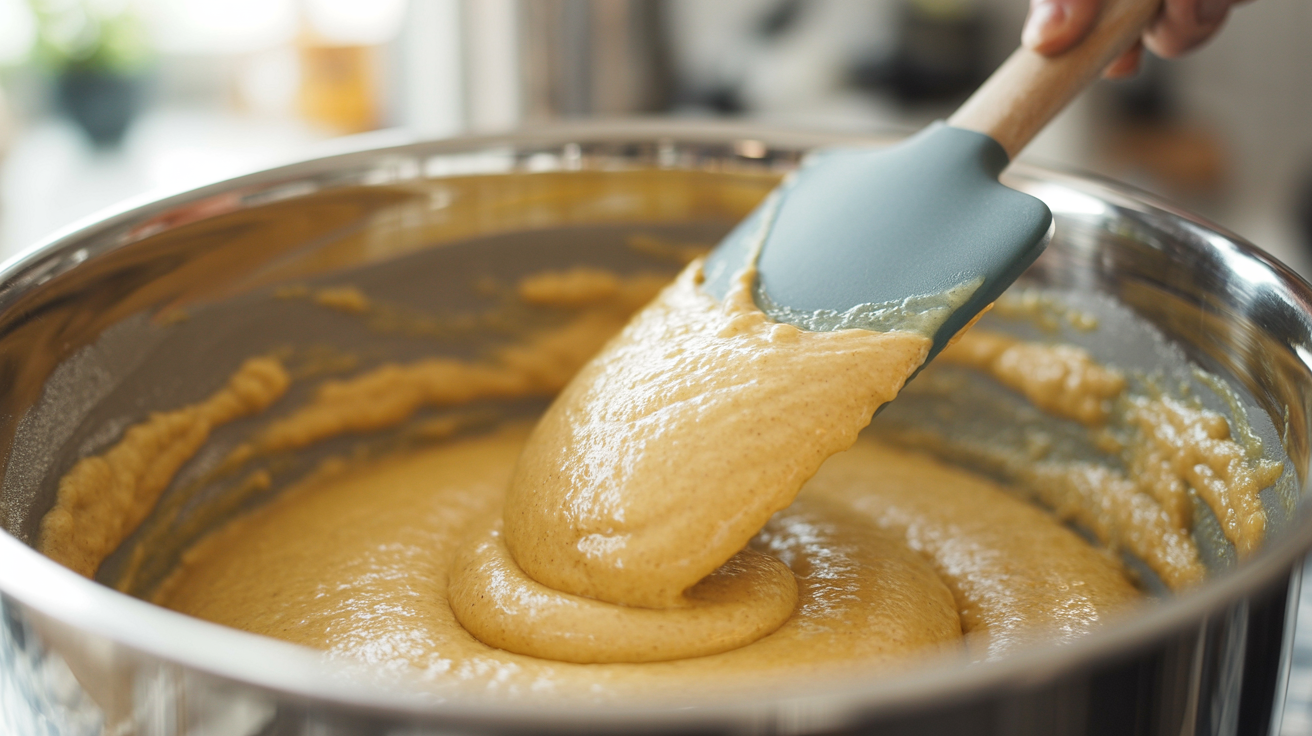
For thicker batters or denser mixtures — think poppy seed cake, carrot cake, or a heavily fruit-loaded muffin batter — a variation called “cut and fold” is sometimes the better choice. Instead of the full sweeping arc, you use the edge of your spatula to cut down through the middle of the batter repeatedly while simultaneously folding it over, almost like you’re slicing and stacking cards.
This technique distributes mix-ins like nuts, dried fruit, chocolate chips, or poppy seeds evenly without crushing them or overworking the gluten in the surrounding batter. It’s gentler on delicate inclusions and ensures even distribution in fewer total strokes.
You’ll also see this approach used when combining two different-colored batters for a marble cake effect. A few deliberate cut-and-fold strokes create those beautiful swirls without fully blending the colors into a muddy mess.
10. Knowing When NOT to Fold Is Just as Important
Understanding folding also means knowing when the instruction is unnecessary or even counterproductive. If you’re making a dense brownie, a fudgy cookie dough, or a yeasted bread dough, folding offers no benefit over regular stirring or beating. These recipes don’t rely on trapped air for texture, and over-thinking the mixing technique wastes time without improving the result.
Recipes that specifically call for creaming butter and sugar together are actually building air through mechanical action — the exact opposite philosophy from folding. Switching to a folding technique in those cases would undermine the structure the recipe depends on.
The simple rule: if a recipe includes a whipped foam component (egg whites, whipped cream, meringue) or asks you to add flour to an already-aerated batter, fold. If it’s asking you to combine non-aerated, sturdy ingredients, stir or beat with confidence.
Frequently Asked Questions About Folding in Baking
Can I use a whisk to fold ingredients together?
A whisk is generally not ideal for folding because its multiple wires deflate foam much faster than a rubber spatula. In a pinch, you can use a large balloon whisk with just 3 to 4 extremely gentle strokes, but a spatula will always give you better results and more control.
How do I know if I’ve folded enough?
Stop folding when you no longer see large, distinct streaks of white from the whipped egg whites or cream. A few faint swirls are perfectly fine. If everything looks uniform and no white patches remain, you’re done — stop immediately even if it feels too soon.
Why does my soufflé fall flat after folding?
A flat soufflé after folding usually means the egg whites were over-beaten to a dry, crumbly foam before folding, or the folding was too aggressive and took too many strokes. Aim for stiff but still glossy peaks, and use no more than 30 to 35 folding strokes total.
Is folding the same as stirring slowly?
No — slow stirring still moves in a circular pattern that drags and pops air bubbles. True folding uses a vertical cut-and-sweep motion that moves batter from the bottom up and over the top. The path of the spatula is fundamentally different from any form of stirring.
Conclusion
Mastering the fold is one of those baking skills that quietly levels up everything you make. It’s not flashy, it doesn’t require expensive equipment, and it takes only minutes to learn — but the difference between a properly folded soufflé and a deflated one is the difference between a show-stopping dessert and a disappointing one. Remember: use a large rubber spatula, work quickly, incorporate your foam last, and stop the moment streaks disappear. Once folding becomes second nature, an entire category of elegant, airy baked goods opens right up to you.